

Who Makes The Super T10 Transmission & Which Cars Used It?
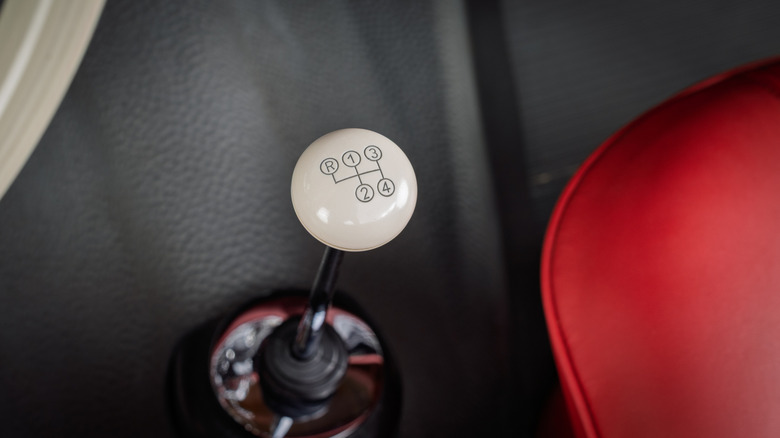
During the glory days of the American muscle car, saying that your car had a four-speed was a big deal, both for bragging rights and actual performance. The term, of course, refers to the four-speed manual transmission, which earned you so much street cred in the 1960s that rock and roll bands even dedicated entire songs to it.
Not all four-speed transmissions are equal, though; some developed their own legendary reputations, including the famed Muncie M22 "Rock Crusher" gearbox from General Motors. Another pivotal four-speed transmission was the BorgWarner T10, which ushered in a new era of American performance beginning in the late 1950s. The original T10 featured in a wide variety of performance cars in the '50s and early '60s, and was later followed up by an updated, stronger version called the Super T10.
BorgWarner developed and built the original Super T10 four-speed, and the most popular version of the gearbox was available in General Motors vehicles from the early '70s through the early '80s — including the Camaro and Corvette. Richmond Gear later purchased the rights from BorgWarner and took over manufacturing of the Super T10. Today, Richmond still builds and sells the transmission and its individual components.
From T10 to Super T10
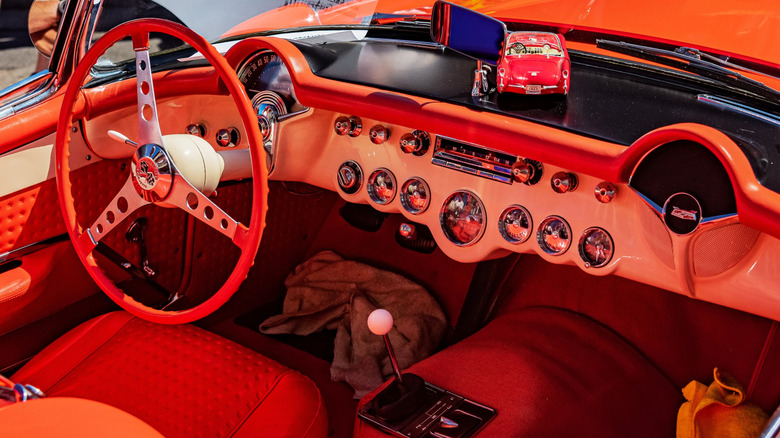
You can't get to the Super T10 without first talking about the original T10. The BorgWarner T10 gearbox debuted in the 1957 Chevrolet Corvette at a time when a manual transmission with four forward gears was a big deal, especially in an American car.
Unlike engines, American automakers could (and often did) share transmissions, and that was the case with the T10. It would eventually become available in high-performance Ford, GM, and Chrysler vehicles. It was popular enough that, if you found, say, a 389-powered Pontiac lined up at the drag strip against a 406-powered Ford in the early '60s, chances are both drivers would be ripping gears on the same T10 four-speed. Beyond the big three, American Motors also used the T10 in muscle car offerings like the AMX.
An updated Super T10 transmission first appeared in 1966, followed by a "second design" Super T10 in the mid-'70s. The revised Super T10 used a stronger 26-spline input shaft, had hardened gears, and offered more ratio options, making it well-suited to high-powered muscle car engines. However, the muscle car era was fading by the early '70s, and the second-design Super T10 transmission was only used as factory equipment in General Motors cars, namely the mid-sized A-Body, the F-Body platform used by the Camaro and Firebird, and the Corvette.
A transmission for the muscle car era and beyond
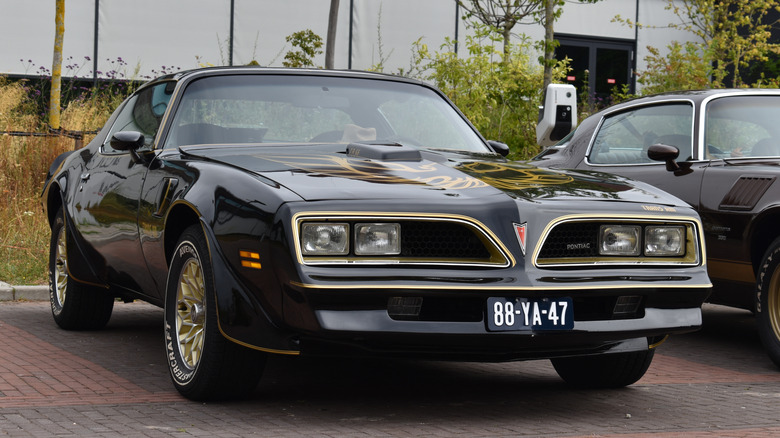
While Detroit's original, high-horsepower, high-displacement muscle cars had died off by the second design Super T10's mid-'70s debut, it still shifted some memorable machines, including the second-gen Chevy Camaro Z/28 and the iconic "Screaming Chicken" Pontiac Trans Am of the late '70s and early '80s. BorgWarner also sold the Super T10 as an aftermarket upgrade at speed shops under the Power Brute name.
GM stopped using the Super T10 four-speed in the early 1980s, by which point the five-speed manual had started to replace the four-speed in performance car applications. That said, the "4+3" transmission in the C4 Corvette was basically a Super T10 with an added overdrive gear, keeping the transmission's legacy alive in a sense. BorgWarner eventually sold the Super T10's production rights to Richmond Gear, which has kept it in production, ensuring the transmission remains a popular upgrade and replacement option for vintage four-speed muscle cars.
After the Super T10, BorgWarner continued developing and building transmissions, including some for well-known high-performance American vehicles. These transmissions include the T5 five-speed manual and the legendary T-56 six-speed, later acquired by Tremec, which was used in iconic American performance cars like the Dodge Viper, the C5 and C6 Chevy Corvettes, and the Ford Mustang.