

How A 2026 California Law Change Closes The Montana License Plate Loophole
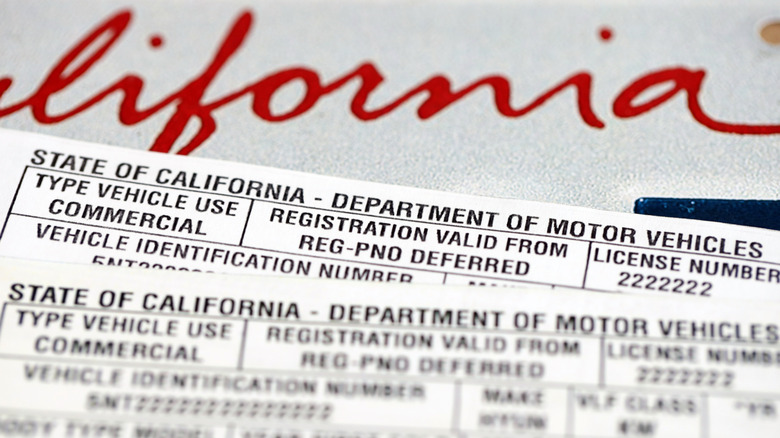
Californians both love and need their automobiles. The state offers car lovers some of the best driving roads and weather anywhere in the United States. Conversely, sprawling cities like Los Angeles, where public transportation options lag far behind other large cities, are home to millions of vehicles that residents rely on to get around town.
That said, California is also known for being one of the most expensive states to own a car, not least thanks to its vehicle registration fees and taxes. It's not surprising, then, that some drivers in the Golden State have looked for ways to save on vehicle ownership costs, sometimes by registering their vehicles in another state.
In October 2026, though, California took a major step to combat these moves, enacting a new law that cracks down on California residents using out-of-state plates — and, more specifically, out-of-state shell companies — to avoid paying sales tax and vehicle registration fees, particularly on high-end exotic cars, RVs, and other expensive vehicles. Officially designated Senate Bill 1406, the new law should close the so-called Montana license plate loophole, so named because Montana was one of the most common locations for these shell companies.
No more Montana plates in California?
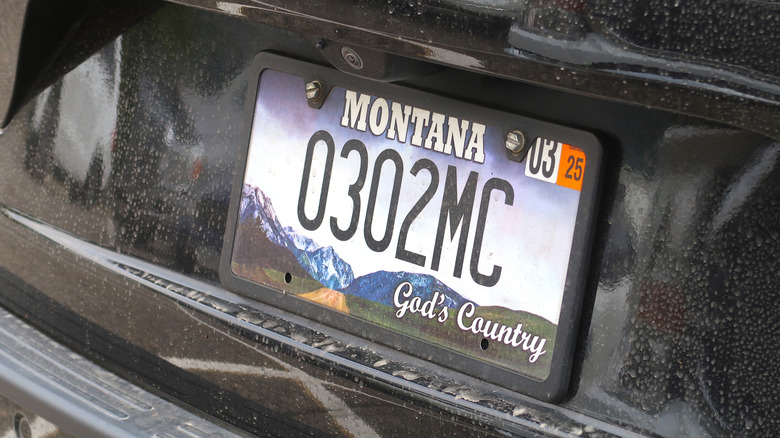
The Montana loophole works — or worked — like this: Rather than registering a vehicle in their own name, Californians would instead register the car to an LLC formed in another state, often Montana. These states either have no sales tax at all, such as Montana, or much lower rates than California.
In some cases, these LLCs are registered entities that do business in both states or that want to reduce business costs, but residents often set them up expressly to avoid California vehicle registration fees and taxes. In fact, there are several companies dedicated to helping out-of-state residents form LLCs and register their vehicles in Montana, without even going there in person
SB 1406 changes state tax policy so that if any partner, manager, or owner in an out-of-state shell company is a California resident, any assets of that shell company that are located in California will be subject to the state's taxes. The law will also hold LLC partners liable for all due taxes on vehicles, and nonpayment may be considered a crime.
Will the law work?
SB 1406 took effect at the end of September 2026, so it's too early to know exactly how the state plans to monitor and enforce these vehicles, given that the assets will still be registered in other states. It will also be interesting to see how the law changes things. Will owners of million-dollar cars just give up and pay California's taxes? Will they find another way to get around the costs? Or will they leave the state for good or set up primary residence elsewhere? These aren't new questions for the state, and have already become issues under California's proposed billionaire law.
Finally, while SB 1406 aims to cut down on tax evasion around high-end assets, that isn't the only reason California drivers have used Montana LLCs. Some owners have instead used them to get around California's notoriously strict smog and emissions laws, which can make it difficult and prohibitively expensive to register older and hobbyist vehicles in the state.
For now, at least, this new law seems primarily focused on tax collection, so California car enthusiasts won't have to worry too much. They will also benefit from California's signing of Leno's Law, which, starting in 2028, will extend some of California's smog check exemptions to include classic vehicles built in the late 1970s and early 1980s.