

What Does A Day Beacon Mean In Boating & How Is It Different From A Buoy?
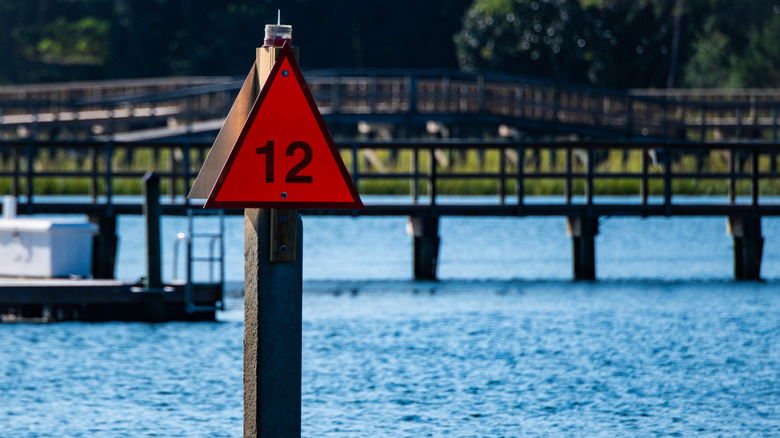
On waters where its jurisdiction applies, the U.S. Coast Guard provides boaters with essential information via several types of navigation aids. Private entities may also use aids based on the same system the Coast Guard uses. These aids are like the marine equivalent of traffic signs, alerting boaters to potential hazards, speed limits, and other such relevant information. While buoys may be the most well-known form such aids take, another common type of navigation aid is a beacon, which come in multiple varieties, including "day beacons" or "daybeacons."
While a buoy is a navigation aid that floats on the water, a beacon is fixed to the surface. A lighthouse, for example, technically qualifies as a beacon. There are also beacons in the water, but unlike floating buoys, they're built into the ocean floor below them so they remain in a static position. A daybeacon is a specific type of beacon that doesn't have a light attached to it.
How daybeacons work in boating
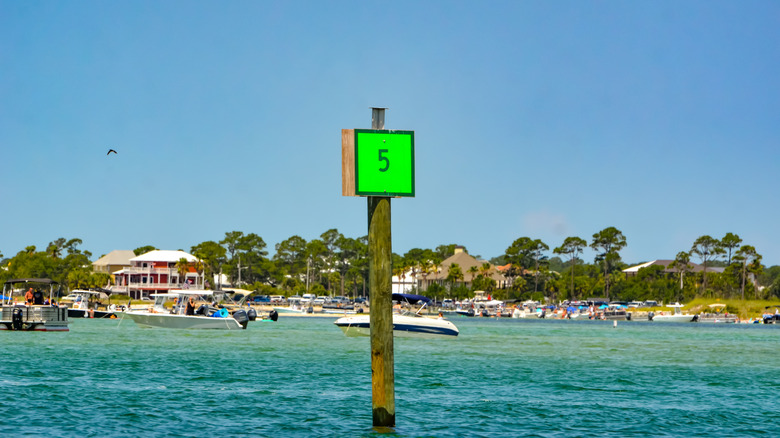
As their name and design imply, daybeacons are meant to share information with boaters exclusively during the daytime. They're typically found near coastal areas and may exist alongside buoys. Their purpose is usually to mark channels and routes, and will usually feature some sort of mark that's easily visible compared to the daybeacon's surroundings. The information this mark shares is the same information a light on a lighted beacon or buoy would share with a boater at night.
It's important to review the specific laws, guidelines, and regulations that may apply in the area where you're boating. They can sometimes vary from the system the Coast Guard uses. For example, in the Mississippi River and a few others, the Western Rivers Marking System applies. This system uses daybeacons of different colors in the same way green and red buoys are used, with red daybeacons marking the starboard side of a channel and green daybeacons marking the port side.
That's just one example of how daybeacons may be used on the water. If you're a boater, keep an eye out for these navigation aids. Just as it's necessary to equip your boat with the right tools before heading out, you also need to actively pay attention to buoys, beacons, and other such aids while actively operating your vessel. Doing so is key to keeping yourself safe, as well as your passengers and those with whom you share the water.