

Why Is GM's 5.3-Liter Vortec 5300 Engine So Reliable?
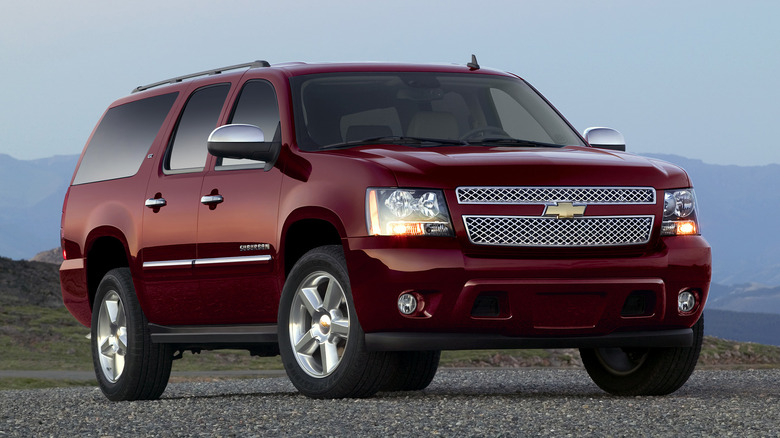
GM's 5.3-Liter Vortec 5300 V8 engine is said to be extremely reliable, and that's due to its inherent balance between efficient operation and performance output, which produces plenty of horsepower and torque. Its engine block was designed using data from GM's racing teams, with deep skirts and six-bolt main bearing caps that make for a strong, substantial platform. Its heavy-duty timing chain should last for 200,000 miles, while it's high-flowing heads and large valves help it to work harder. This outstanding even engine made our list of the most reliable gasoline engines ever built.
In actuality, the 5.3-Liter Vortec 5300 is a family of several different overhead valve (OHV) engines, which include the LM7, L59, LM4, L33, and LMG variants. All are naturally aspirated and were used in GM's trucks and SUVs between the model years of 1999 and 2014. The Vortec 5300 is a member of the Generation III and IV Small Block family, superseded by the EcoTec3 Generation V Small Block used in 2015 and later models of these vehicles. For comparison, improvements added to the EcoTec3 Gen V included even stronger internal parts, direct fuel injection, improved airflow, and outputs up to 355 horsepower.
The most reliable versions of this engine tend to be the LM7 and L59 Gen III versions, the ones with cast iron engine blocks. The least reliable ones are likely to be the Gen IV models that have Active Fuel Management, which can suffer from the collapse of their valve lifters plus using too much oil, particularly at high mileages.
What else should you know about GM's 5.3-Liter Vortec 5300 engine?
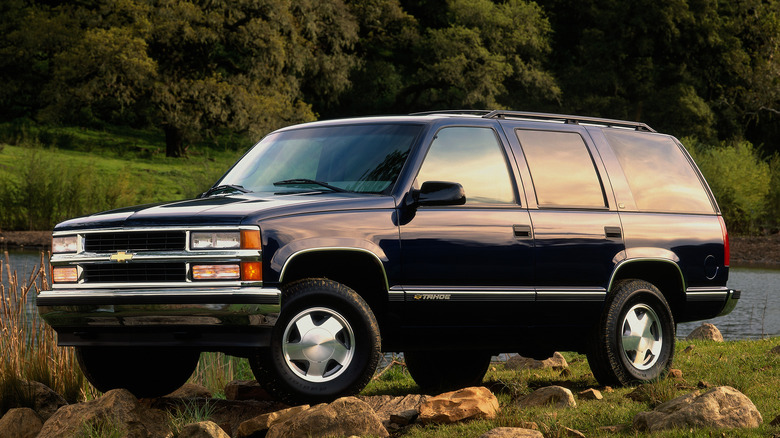
The LM7 version of the Vortec 5300 represented its first generation, called Gen III, which had cast iron block and aluminum heads. It was used between 1999 and 2007 on GM's full-size pickups and SUVs. The LM7 featured two valves per cylinder, with electronically controlled port injection, oval exhaust ports and "cathedral" intake ports. With a bore of 96mm and a stroke of 92mm, its output was rated at between 270 and 320 horsepower, depending on the application.
An aluminum-block version with cast-in liners was named the LM4, which was used on GM's smaller mid-size vehicles like the Chevrolet SSR, Chevrolet TrailBlazer, and the GMC Envoy. The iron-block L59 came along in 2002 and had the ability to run on E85 ethanol. The L33 was a high-output version with an aluminum block, producing 310 horsepower, the most of any Gen III. With all versions, however, you shouldn't confuse the Vortec with LS engines, despite their similarities.
Meanwhile, Gen IV engines like the LMG received Active Fuel Management, and were used from 2006 to 2014 for better overall fuel economy. The AFM could deactivate certain cylinders under light loads, minimizing the amount of fuel consumed by the LMG engine, which was also E85-ready.
The original LM7 version of this engine has become very popular for engine swaps into restomod cars, drift cars, muscle cars, and trucks for off-road use. Its power can be boosted through the use of an upgraded ECU, camshafts, or even a turbocharger installation. These engines are inexpensive, widely available, and make lots of power, making them a favorite of those in search of more of it.