

Which CPUs Offer PlayStation 5 Pro-Level Performance?
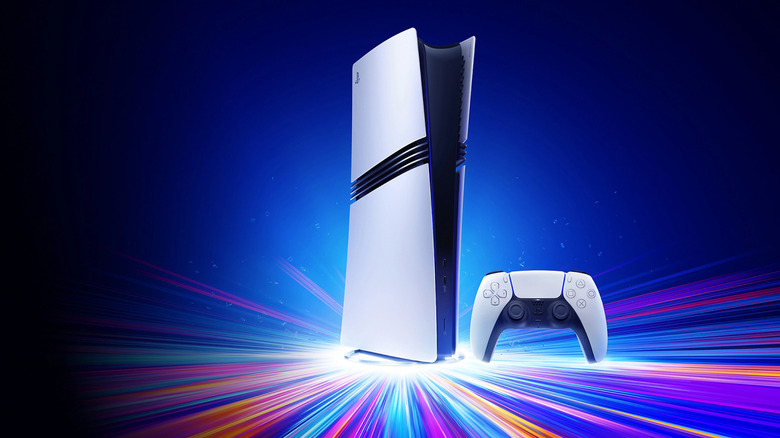
There was a time not so long ago that one could build a mid-range PC that targeted similar performance to the PlayStation 5 Pro, and it could be done at a price fairly close to the original MSRP of the PlayStation 5 Pro when it was revealed. Those halcyon days are long gone, as we continue to endure the global memory shortage that has sent the price of RAM – once a predictable and low cost commodity – spiraling out of control since 2025. These days, the price floor of a mid-range PC has gone up considerably, and building one at anything remotely affordable is an exercise in patience for even the most astute bargain hound.
Consoles have also seen a number of painful and unprecedented price hikes, to the point where it's become laughable – the PlayStation 5 Pro has gone from $699 to $899, making it the priciest console on the market. But if you're looking for a CPU that offers PlayStation 5 Pro-level performance, there are few that fit the bill. When comparing PC parts to console parts, it's never a 1:1 match. Despite similar specs on paper, direct comparisons never tell the whole story because of key differences that mean PC and console hardware don't perfectly translate to one another.
The PlayStation 5 Pro is a mid-generation refresh for the console, which brings a more potent semi-custom SoC courtesy of AMD. The headlining feature is the increased Compute Units (CUs) in the GPU – going from 36 to 60 CUs. The GPU is still based on AMD's RDNA 2 (6000-series) architecture, but does pull some features from the RDNA 3 architecture, such as enhanced ray tracing. The CPU remains largely unchanged, minus a new higher frequency mode capped at 3.85 GHz.
The Intel and AMD desktop counterparts
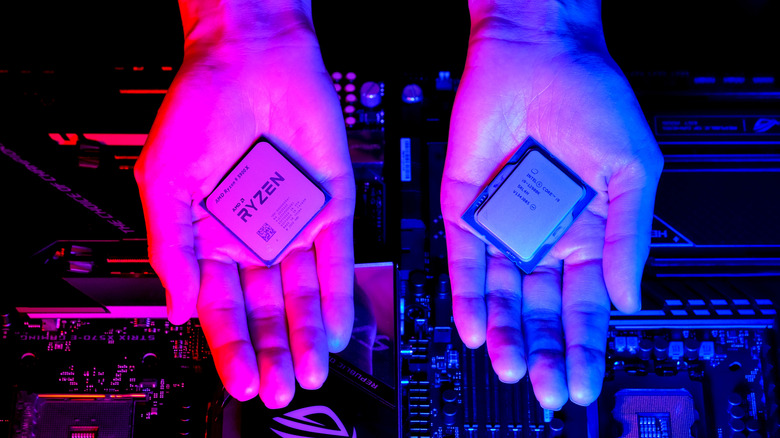
The AMD Ryzen 7 3700X and the Intel Core i7-10700K are both older chips from the same era of CPU silicon that's inside the PS5 Pro. Both CPUs match the eight core, 16-thread count that the PS5 Pro offers, and the Ryzen 3700X and the PS5 Pro SoC share the same Zen 2 lineage. The Intel Core i7-10700K is based on Intel's 10th-gen Core series that uses the Comet Lake architecture, which was the final descendant of Intel's long-lived 14nm Skylake architecture, and competed directly with AMD's Zen 2 chips. Both the Ryzen 7 3700X and Intel i7-10700K are probably the closest PC equivalents to the CPU inside the PS5 Pro, though I use the word equivalent lightly.
While all three bear a lot of resemblance in terms of on-paper specs, age, and hardware generations, the desktop chips offer more CPU horsepower than the PS5 Pro. This is largely due to these desktop CPUs running at significantly higher clock speeds, with boost speeds between 4.4 GHz and 5.10 GHz. Desktop CPUs also have much larger pools of L3 cache – the Ryzen 7 3700X in particular, with 32MB of L3 cache. For comparison, the PS5 Pro CPU has a base clock speed of 3.5 GHz, with a max boost of 3.85 GHz, and 8MB of shared L3 cache.
You could also go with modern desktop CPUs like the Ryzen 5 5600 or the Intel Core i5-12400F. While both of these CPUs are 6C/12T parts, they benefit from newer manufacturing processes and architectures, which make for big generational improvements, especially compared to the older PS5 Pro CPU. Even with fewer cores, newer architecture means those cores are faster, use less power, and require less cooling.
The console advantage and the OS tax

This is where the waters get muddy when comparing console and desktop CPUs, as they operate in very different environments. Desktop CPUs often have the benefit of more raw compute muscle, higher clock speeds, and more last level cache, but modern consoles can punch well above their weight because of their specialized nature. Consoles like the PS5 Pro run lightweight operating systems focused on gaming, and the majority of the CPU is dedicated to game logic. The Xbox Series X, for instance, reserves exactly one core for OS function, and exposes the rest for developers.
Desktop CPUs have to deal with a lot of overhead and abstraction layers, such as hardware drivers, the operating system, and APIs like DirectX 12. And that says nothing of the massive code bloat that plagues Windows in particular. All of this congeals into what we call the "OS tax," because the CPU has to manage it as well as any game that's running, which can lead to a lot of lost performance. Consoles also benefit from a highly unified architecture, where the CPU and GPU are on the same silicon, and share a single pool of memory that both can access instantly. PCs have to copy data to RAM, then the CPU processes it before sending it to the GPU's VRAM via PCIe lanes, which takes a lot longer.
The PS5 Pro is a fixed target that developers can squeeze everything out of, because it doesn't change – this allows consoles with older hardware to still run modern games. Development for PCs have to be a lot more flexible, as they encompass countless different configurations. All of this is also true when comparing a GPU to the PlayStation 5 Pro, as well.