

Why Some Ocean Buoys Float Below The Water Surface Instead Of On It
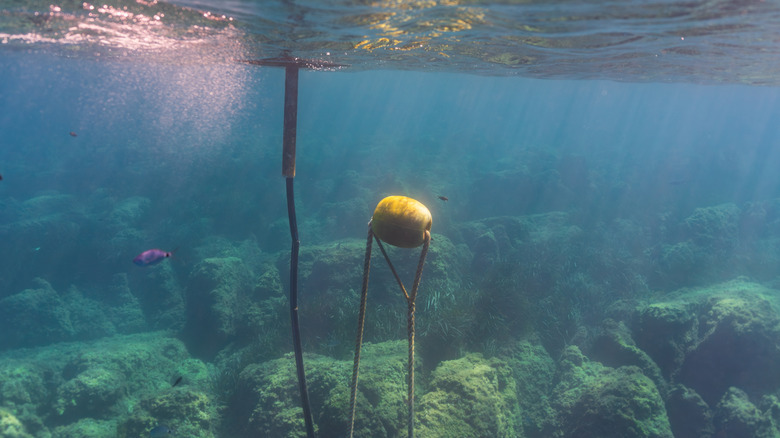
There are a number of ways that information is conveyed on the water, from flashing lights to semaphore. Buoys are also frequently a part of these systems of conveying marine information, like regulatory orange buoys, but some buoys aren't intended as markers or warnings. Instead, they float under the surface of the water, where they serve a variety of functions.
One of these is to anchor instrument systems that need to remain below the surface to function, rather than bobbing. These oceanographic buoys belong to subsurface moorings, where an anchor is responsible for securing the system to the seabed, and buoys lift a line that equipment is attached to that floats at various depths so the equipment can gather relevant data.
Some of these moorings have lines thousands of meters long, not unlike the lengthy moorings that hold ocean buoys in place in deep water, and carry equipment like data recorders, temperature and pressure sensors, or sediment traps to gather material for analysis. And while surface buoys respond to waves and other conditions that can cause excessive movement and spoil readings, submerged equipment are not as reactive.
There are other submerged buoys, however, that serve a similar but distinct purpose. These buoys attach to mooring lines to help reduce the tension on lines attached to ships or floating structures to ensure the lines don't drag or snap.
Buoys supporting mooring lines
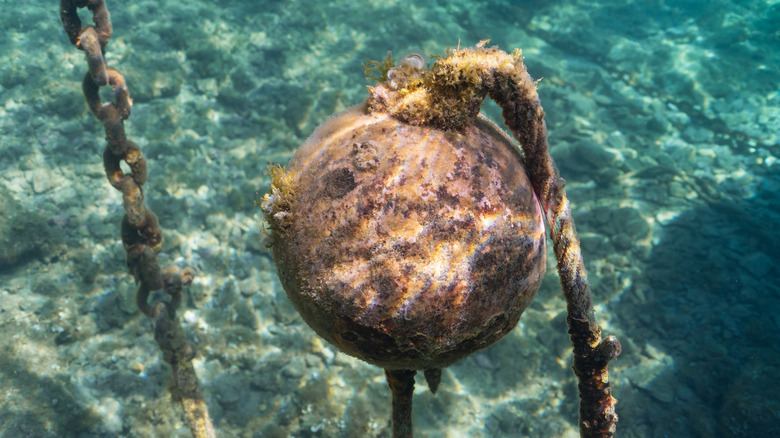
Supporting mooring lines is important, especially when they reach the lengths required to anchor some navy ships. These lines can stretch more than a 1,000 feet and are incredibly heavy, and adding buoyancy is a way to offset some of that submerged weight and reduce the forces that an anchoring system needs to withstand.
Typically, a subsurface buoy of this kind will supply some upward lift at a critical position along the mooring, either to keep sections of chain away from the bottom where they can snag or be damaged by seabed abrasion, or to help manage loads along the line. The sheer weight of some of these mooring and anchoring systems contributes to wear, fatigue, and potentially eventual failure, and counteracting some of that load is essential for long term operation.
Buoyancy is balanced against line length, the depth of the water where a system is deployed, and environmental forces that may strain the system. Ideally, buoyancy will help accommodate a certain amount of movement in a mooring line while avoiding unwanted contact with the bottom or excessive loads.