

4 Disadvantages Of Battery-Powered Lawn Mowers
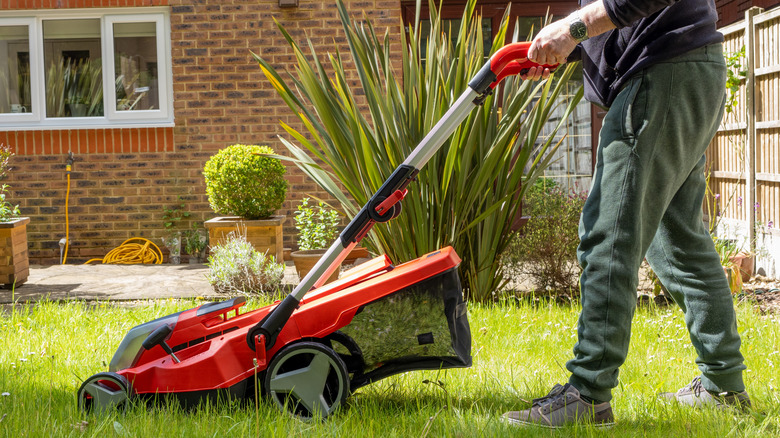
There are so many different factors to choosing a lawn mower. Of course, you've got to consider your budget at first, because a more basic walk-behind model and the latest sophisticated AI-enabled electronic one are sure to be very different prospects when it comes to cost. Even with that in mind, though, there's much more to worry about than just the cost. Each type of lawn mower has its specific qualities, which might make them perfect for one particular user's grass but not for another's. Another crucial factor is the type of power that model uses. Gas and electric lawn tools have their own pros and cons, after all.
Take battery-powered mowers, for instance. They have the wonderful flexibility of being cord-free, for one thing, which means that you can take them further and, potentially, cover more ground than you could if you were tethered to a power socket. On top of that, they don't need hefty gas engines, meaning that they're quieter to operate and don't require gas refuelings. In turn, though, there are some important shortcomings of battery-powered models that you should carefully consider before taking the plunge with one. They might even be dealbreakers for your specific situation.
From limited battery charge to expensive purchase costs, here are some of the possible disadvantages of a battery-powered lawnmower. We've also considered how they might still be the choice for you, and how the advancements in battery technology may continue to mitigate these problems.
The battery must be recharged
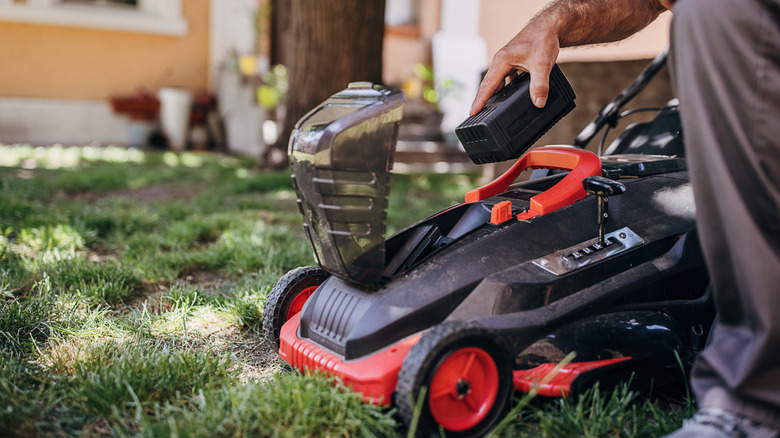
As already noted, a rechargable battery pack lends enormous portability advantages to any gadget. However, their batteries may not have the lifespan we'd like them to. There is a range of different workarounds, like solar power, but it all boils down to the fact that we've got to carefully manage the charge levels of our systems to avoid any potentially costly downtime.
Lawnmower manufacturer Mammotion noted in March 2026 that "on average, a modern cordless mower battery will run for 30 to 60 minutes per charge, while high-end robotic mowers can work for up to 200 minutes." This can depend on factors such as the settings you use, the length of the grass, and the particular type of yard you have, but it's clear that even a fully-charged model may not have the lasting power to tackle all the grass you want to. Sometimes, because of factors like losing daylight or the changeable weather, we have a very limited window on a given day to cut our grass. As such, it's a huge pain to run out of charge partway through.
The organized, of course, will be sure to charge their devices and appliances in preparation for using them, but in these sorts of cases, that won't resolve the issue. It's crucial to understand how long a potential new mower will last, and whether that battery life will get it around your property efficiently. Also worth considering is the cost of a replacement battery for your specific model, and whether it uses batteries that can pull double duty in another of your tools or appliances.
They can be more expensive to buy
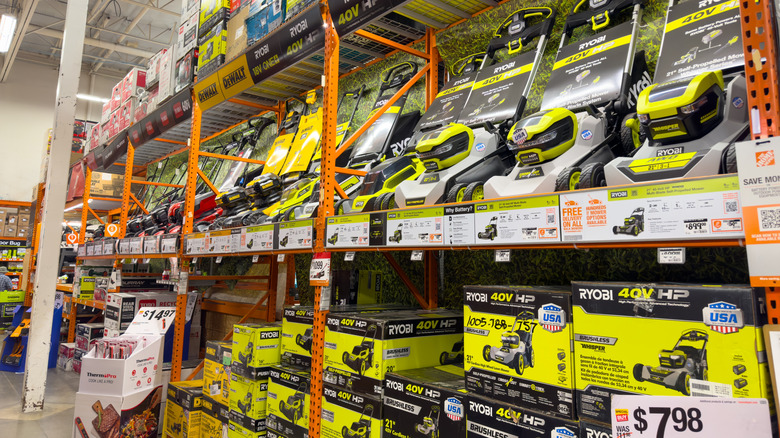
As Stihl product manager Paul Hicks put it to Expert Reviews in February 2025, "A key benefit of battery-powered lawn mowers is lower running costs when compared to a petrol model." This certainly doesn't mean, though, that a battery-powered equivalent will necessarily be cheaper overall. This is because you'll first have to negotiate the hefty initial cost.
According to Dreame, for example, the average market cost of a new gas push mower is between $150 and $350, while a self-propelled battery will run you about $400 to $700. A push-powered battery model, meanwhile, stands somewhere in between, starting at about $300. That's a pretty big difference, but naturally, this doesn't mean that you can't find a great bargain on a battery model if that's what you have your heart set on.
With a potentially huge difference in the cost for battery powered models, is the sophisticated functionality worth it? Let's take the W520i, one of the most expensive models in Husqvarna's Battery and Electric Lawn Mowers category at the time of writing. It boasts a formidable price tag of $1,499, and for that sum, it offers a battery backpack option and two battery slots, so it can be topped up while on the go, combined with the company's savE technology to cut down on the power used and so help to extend the amount of time you can mow for. Its more advanced features require separate purchases to use, though — the plug and kit for the BioClip functionality are not included in the price.
Batteries will degrade as the lawn mower is used
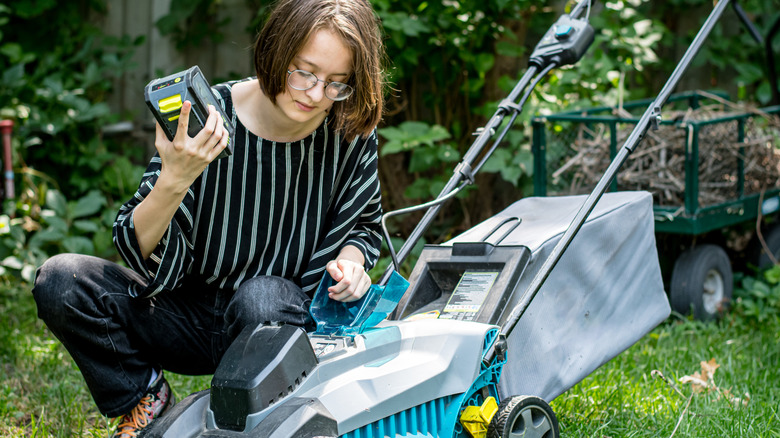
With lithium-ion rechargable batteries, consumers often feel wary about whether they can leave a given device charging all night, whether it's best to charge from empty to full or 'top off' as needed, and so on. Unfortunately, while there are certain usage habits that can reduce the lifespan of a given model, the fact is that they will degrade over time, however well they're treated. It's one of the biggest problems with lithium-ion batteries.
Mower batteries should be treated with care, in order to help maximize their lifespan. With lithium-ion, for instance, the key is not to keep them at a full level of charge for extended periods and to top them off where necessary, rather than consuming a full charge, refilling to 100%, and repeating. With equipment that uses lead acid batteries, meanwhile, remaining at and operating from full charge as often as possible is optimal, which is why trickle chargers can be so effective when paired with them.
According to Mammotion, the expected lifespan of a battery, defined as "how many seasons the battery will remain functional before its capacity degrades significantly," differs a lot depending on the type of battery-powered mower you're using. A standard push mower battery may last for two to four years, while you can expect to get around three to five years from a costlier robotic mower's battery. As we've already seen, the universal issues of keeping a battery topped up but doing so in an effective manner that won't harm them is another that users of these sorts of mowers will need to be mindful of. It's all about making the best use of your systems.
They can sometimes be more easily overwhelmed
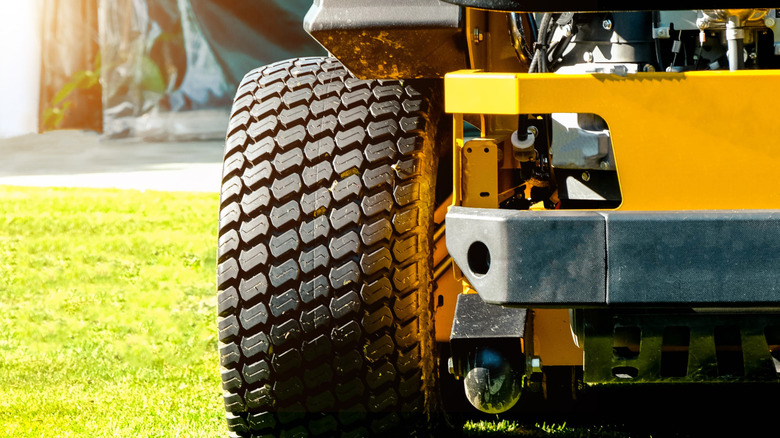
Gas mowers, as we know, can make an awful lot of noise. They can also be quite difficult to get started, as it often takes considerable force. The upshot of this is that, once they get started and that engine roars into life, you're often sitting on an awful lot of power. If your plot is uneven, larger, or you have land that's distinctly hilly or difficult to traverse, a gas model might have the additional grunt that makes the job more manageable.
Of course, it's not always the case that a battery-powered mower will have less power than a gas counterpart, but it frequently is. The differences between the two boil down to the ways that they apply power. A hefty four-stroke engine, for instance, is widely used in gas-powered models, and this broadly translates to more efficient, consistent power for a mower than a two-stroke engine. Four-strokes can hit higher torque levels without pushing RPM, which makes them great for sustained efforts such as cutting heavy or wet grass, or operating on sloped ground.
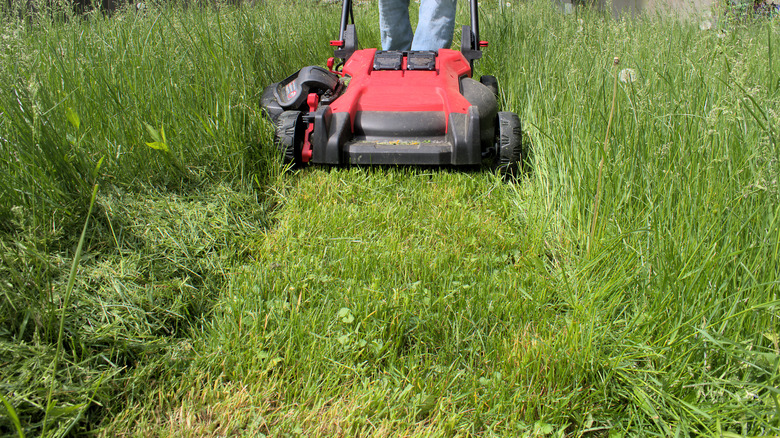
With the onset of improved batteries and increased, more efficient power, the gap may not be so extreme, but it's a possibility that a model with an electric motor may struggle more with longer or damper grass than a gas counterpart. It's something else to bear in mind when considering opting for one type of mower or the other.
How we selected these particular issues with battery-powered models
The lithium-ion format has its issues and limitations, and just like any other, it has the potential to be very dangerous if mistreated. Whether a smartphone, a laptop, or a far larger appliance like a mower, these limitations have historically applied. What we wanted to carefully note, though, is that battery-powered models have their advantages too, and that advancements in battery technology continue to be made. It's not to say that users should be discouraged from chosing a battery model, then, if the option seems right for them.
It was also vital to consider that the most valuable opinions on the potential downsides of a product or type of product can come from those who are most familiar with them, and with the wider market. This is why it was so important to draw on information from manufacturers such as Husqvarna and Mammotion, as well as words directly from industry insiders like Paul Hicks, a product manager at Stihl, as reported by Expert Reviews.
Next, there are often exceptions to the rules, and these certainly bore mentioning too. After all, while all lithium-ion batteries have their capacity issues, they are improving in this regard. With a higher-capacity battery, though, typically comes a heftier price, which is typically exacerbated by the fact that it's usually going to be premium models that are equipped with them. Still, what we wanted to prioritize here was not a general rundown of the issues with lithium ion batteries more broadly, but how they apply to mowers in particular, with insight from manufacturers at every turn.