

Ryobi USB Lithium Vs. Milwaukee USB Redlithium: How Do The Tool Battery Platforms Compare?
We may receive a commission on purchases made from links.
It's no secret that many of the major tool brands are owned by a small handful of parent companies. Milwaukee and Ryobi, for example, are owned by Techtronic Industries (TTI). Both brands also offer multiple cordless tool lines, including USB battery products. Milwaukee launched its USB RedLithium battery line back in 2017, while Ryobi's USB Lithium line arrived in 2022.
Despite the two brands' shared ownership and similar battery technology, the USB RedLithium and USB Lithium tool lines aren't just repackaged versions of the same offerings. They are entirely different product lines, and just like every other Ryobi and Milwaukee battery line, you shouldn't try to use one brand's USB battery with the other brand's tools.
If you're debating which one to invest in, consider exactly what you need these tools for. Milwaukee's USB RedLithium tool line caters primarily to users who will use their tools on the jobsite, while Ryobi's USB Lithium line is geared more towards home users. Ryobi's line is also significantly larger and offers a range of lifestyle products and accessories alongside its selection of USB Lithium power tools.
Both product lines offer multiple lighting options
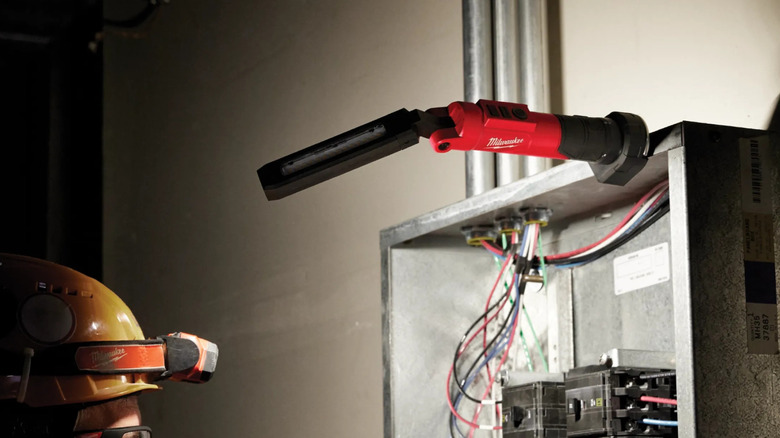
Milwaukee's first USB battery-powered product was the Rover work light, and lighting continues to form the bulk of its USB RedLithium lineup. Among others, the brand offers products like the USB RedLithium 600-lumen hard hat headlamp, which retails for $69.97, and the USB RedLithium 550-lumen stick light, which costs $99. Other offerings in the line include a hard hat-mounted cooling fan and wireless earbuds, but there are very few non-lighting products.
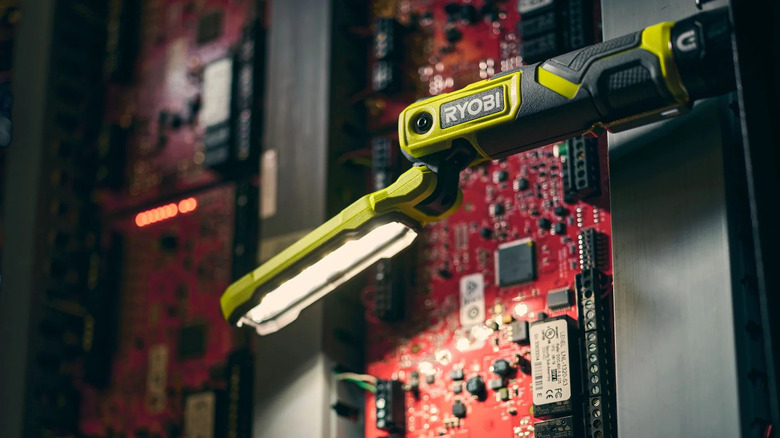
Ryobi's USB Lithium line, meanwhile, includes a far wider range of offerings, with lighting making up only a minority portion of the total range. At the time of writing, the brand offers a dozen lights, including some that look similar to Milwaukee's equivalent tools at a glance. One of its newest launches is the USB Lithium magnetic headlamp, which can either be worn on a hard hat or strapped directly to the user's head.
It's slightly less bright than Milwaukee's equivalent at 575 lumens, but it's cheaper at $49.97. Both brands boast long runtimes with their included batteries, with Ryobi claiming its headlamp can run for over 24 hours and Milwaukee claiming over 28 hours. Headlamps aren't the only products where the two brands' lines overlap, though, since Milwaukee's stick light also has a Ryobi USB Lithium equivalent. It has the same lumen output and a similar magnetic base, but it's notably cheaper, retailing for $43.97.
Ryobi has the clear edge on product diversity
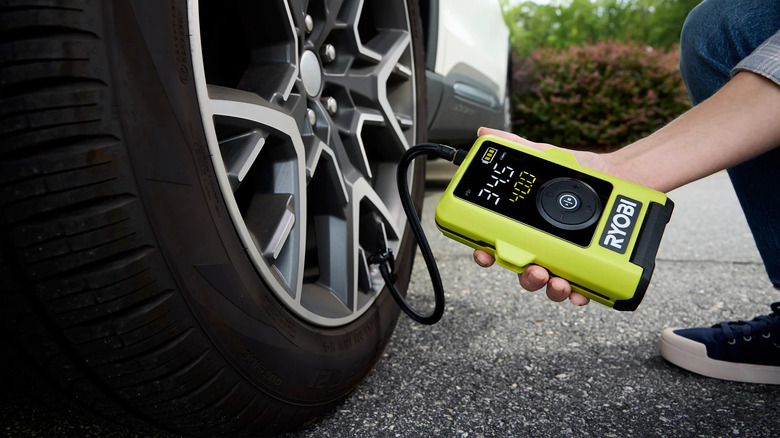
While Milwaukee's USB RedLithium line mostly consists of lights, Ryobi's USB Lithium products include everything from crafting tools to cleaning and home landscaping products. For example, there's the Ryobi USB Lithium smart tire inflator, which can inflate vehicle tires up to 150 PSI, and the USB Lithium portable speaker that's compatible with the brand's Verse multi-speaker technology. Both retail for under $100.
Although most Ryobi USB Lithium products are sold as kits with batteries and a charging cable, some newer products, like its latest portable speaker, are also available in tool-only form. So, if you already have multiple USB Lithium batteries in your tool kit, you won't have to pay extra for batteries you don't need.
While Ryobi may offer more variety, Milwaukee's USB RedLithium lights are still competitive with its cheaper sister brand, with higher price tags balanced out by the limited lifetime warranty that Milwaukee offers on its lighting products as standard. The brand's USB batteries themselves, however, only have two years of coverage. Ryobi USB Lithium tools, in comparison, get two-year warranties for both batteries and tools. Even so, the Ryobi line arguably has the edge in almost every area beyond jobsite lighting, thanks to generally lower prices, a wider selection, and a steady stream of new USB Lithium tools.