

Why Do Some Modern Cars Have Tiny Fins On The Taillight?
If you look back at the cars and trucks made 30 years ago, you'll find a whole lot of things that set them apart from modern vehicles. Many of these differences are obvious, whether it's the huge advancements in technology under the hood, interiors loaded with touch screens and digital displays, or the large wheels and tires common on today's cars.
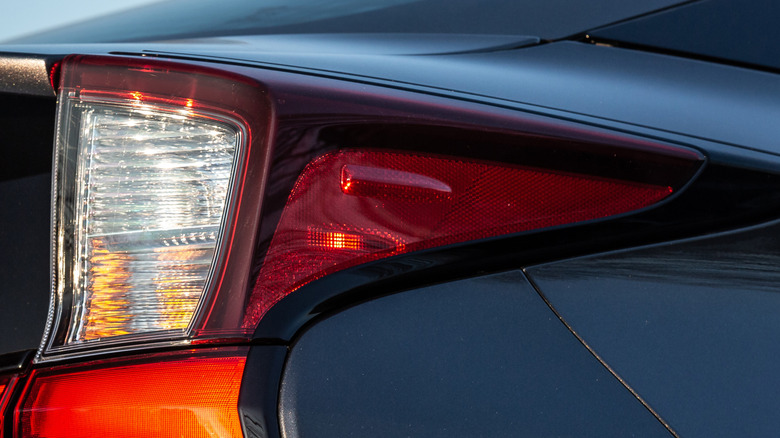
Other differences are much more subtle, sometimes going unnoticed even by those who pay close attention to the way a car looks. One of these details is the small, fin-like shapes you may have spotted on the taillight of some modern vehicles. These aren't the extravagant tail fins or bullet-shaped taillights of the 1950s. The are small bulges, but despite their size, they make a noticeable difference in how a vehicle drives down the highway and cuts through the air.
From some angles, these bulges look a bit like shark fins, similar to the rows of small fins on top of cars. Known as aero-stabilizing fins or ASFs in the auto industry, the bulges actually aid in aerodynamics. Their placement is carefully tested in a wind tunnel, and you may also spot them at the sides of the vehicle's body, just beside the taillights. Hence, this is why some cars have multiple shark fins on the roof.
Aero-stabilizing fins are all about airflow
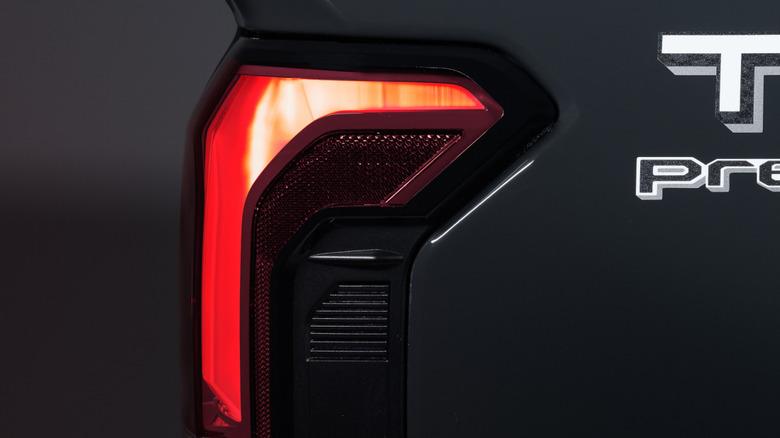
A vehicle's taillights are, of course, an essential, mandated part for road safety, but they can also have a big effect on a car's styling. Some of the coolest taillight designs to ever make production helped define their cars, while some cars were ruined by their ugly tail lights. Aerodynamic experts pay very close attention to these aero-stabilizing fins, and their effectiveness has even surprised seasoned vehicle engineers.
The fins create small vortices at high speed, pushing the overall airflow to the vehicle's body. This improves stability and ride quality, and it gives drivers a more precise feel through the steering. A lot of the testing goes into the placement of the fins, with engineers using wind tunnels and smoke effects to see exactly how the fins impact airflow at speed.
That testing helps engineers decide exactly where the fins will be most effective. At the same time, they have to make sure the fins don't add wind noise or increase the vehicle's overall drag.
Shark Fins are not just for taillights
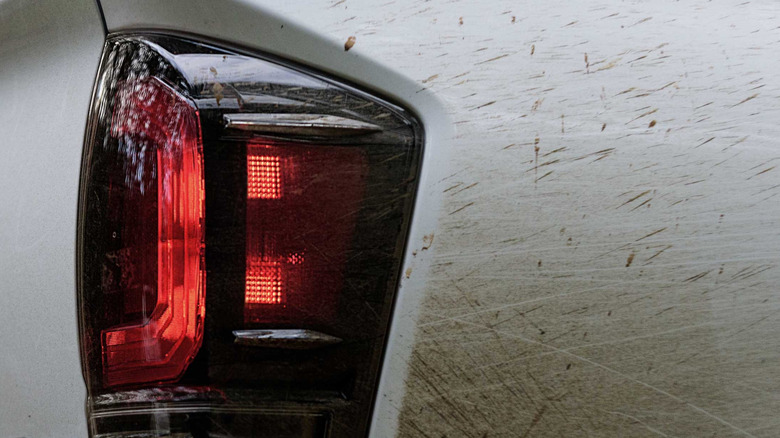
Why are taillights such a common spot for these fins? It's simply because of their location. The rear corners of a vehicle are where airflow tends to break away from the body, which makes them an ideal spot for generating vortices that help keep that airflow attached. Aero-stabilizing fins aren't limited to taillights, though. They can also be found on headlight housings and at the base of the side mirrors.
On a vehicle like the current-generation Toyota Tundra pickup truck, the taillight aero fins are just one small part of the truck's overall aerodynamic design. Along with the ASFs built into the taillight lenses, Toyota's engineers also added them to the truck's headlight housing.
Beyond the body itself, similar fins can also be found on the underside of some modern cars, where they help manage airflow beneath the vehicle. They are also great at managing the car's center of gravity, reduce road noise and better the overall stability. Given how useful they are for controlling airflow, it shouldn't be surprising that similar vortex generators are common in aviation too, which is exactly what those tiny little fins on jet engines are for.