

This Is The Only Time Front And Back Axles Can Be Different Size Tires
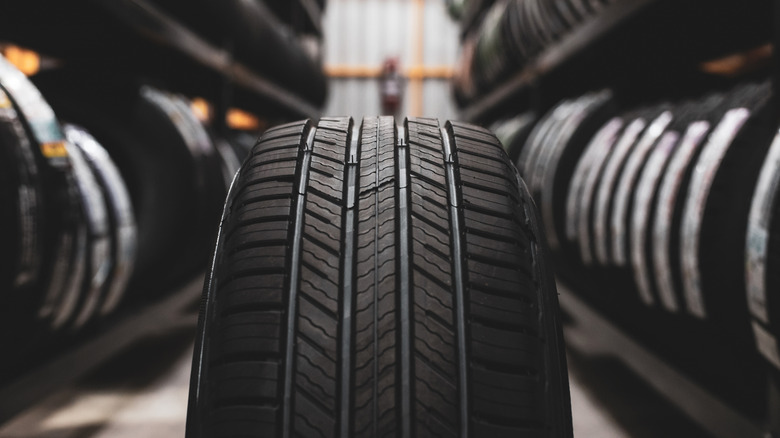
Replacing your vehicle's tires isn't necessarily as simple as just swapping out the old tires for a new set without doing any research. For safety reasons, it's critical to choose tires that match the size and specs recommended by the vehicle's manufacturer, which typically means ensuring the tires are the same size on both the front and rear axles of the vehicle. However, there are rare circumstances when it's appropriate to have different size tires on the different axles, and that's if the manufacturer designed the vehicle accordingly. In other words, different size tires on the rear and front axles are acceptable if the vehicle originally came with different size tires.
Some manufacturers release vehicles with tires on the rear axle that are wider than what's on the front, called a staggered fitment. A motorist might encounter a staggered fitment on a sports car or certain types of rear-wheel drive vehicles. Theoretically, this tire arrangement can allow for improved performance and handling in certain circumstances.
The importance of manufacturer instructions when choosing new tires
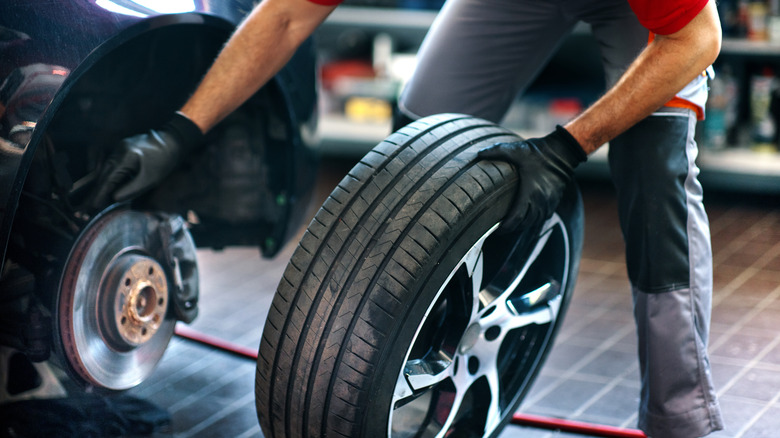
A staggered fitment doesn't just affect a vehicle's performance. It can also naturally influence how a motorist approaches maintenance tasks. For example, when the rear tires are wider than the front, it's impossible to rotate the tires. Consider factors like this when deciding whether to buy a vehicle with this tire arrangement.
When replacing their existing tires, some motorists wonder if they can choose different sizes in order to achieve performance or aesthetic goals. Doing so is only advisable under the supervision of a professional. While it's sometimes safe to adjust the size of tires a vehicle is equipped with, someone without the proper experience and training may struggle to determine when this is and isn't the case.
The most important rule of thumb to remember is that the manufacturer's instructions are the best source of information on this subject. When buying tires, unless a professional says otherwise, you must adhere to the specs your vehicle's manufacturer recommends. In the meantime, if you're preparing to buy new tires, you might also want to research which tire retailers are worth purchasing from. It's also wise to familiarize yourself with the signs that it's time to replace your tires, as it's better to change them before an unfortunate accident occurs.