

What's The Difference Between 2-Stroke And 2-Cylinder Engines?
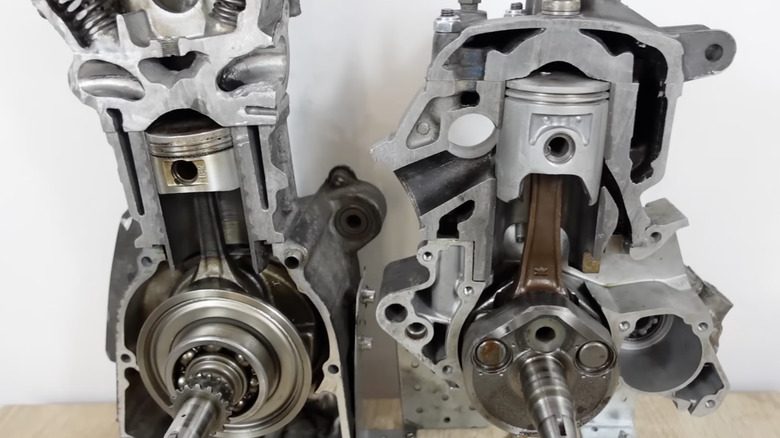
The number two is often thrown around with engine spec sheets, regardless of what the engine drives. Take a chainsaw, for example. These are often labeled "2-cycle," which is simply just another name for a 2-stroke engine. Then there are certain motorcycles, which companies advertise as featuring a "twin" engine – a nod to the two cylinders inside. As a result, you might be forgiven for confusing the two — even if they actually don't mean the same thing. The stroke number explains how an engine goes about making power. That's different from the cylinder count, which simply tells you how many spots inside the engine are doing the work.
So the two labels actually count different things. Specifically, the "2" in 2-stroke counts how many times the piston travels up or down inside the cylinder. A 2-stroke engine needs two of those to complete its whole power cycle, which adds up to one full turn of the crankshaft. That covers pulling in fuel and air, compressing them, igniting, and clearing out the exhaust. 4-strokes, meanwhile, need four strokes and two crankshaft turns for the same job.
Meanwhile, the number in 2-cylinder simply tells you how many tubes the pistons move in. Each cylinder contains one piston, so the number of pistons scales with the number of cylinders. However, more cylinders don't automatically mean more strokes. That's exactly why pitting 2-stroke engines against 2-cylinder engines doesn't really work. In fact, a 2-cylinder can easily be a 2-stroke, too. There are even instances where three cylinders run on a 2-stroke cycle, like in the case of the Kawasaki H1, a 1970 motorcycle.
What stroke count and cylinder count do to performance
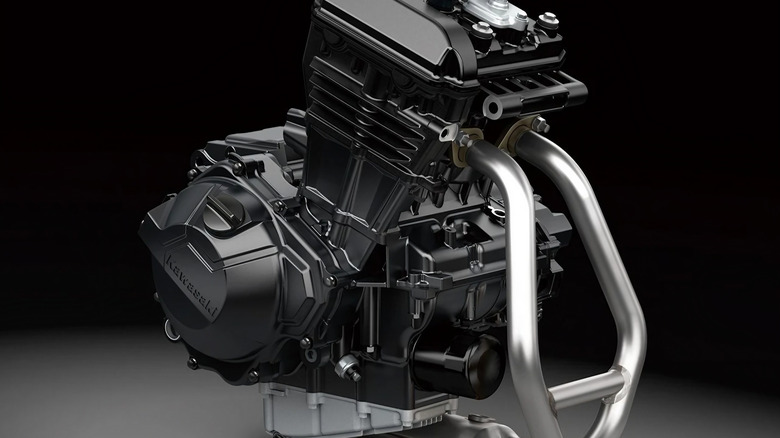
Therefore, a better way to compare the two is to ask what changing each number does to an engine. A 2-stroke engine generally makes more power since it generates it on every crankshaft spin. In some cases, it can make considerably more power than a 4-stroke of the same size. At the same time, it weighs quite a bit less. 2-strokes deliver the power in a narrow band of revs, though, and those revs tend to lie on the higher side. A 4-stroke, on the other hand, spreads its power out more evenly. As a result, it feels smoother. The downside to the higher-revving is that the 2-stroke design ends up wasting a fair amount of fuel. Some fresh fuel slips out the exhaust before it even burns. This also contributes to greater pollution. In fact, when it comes to leaf blowers, U.S. states and cities have even banned certain types because of it.
A cylinder count, meanwhile, describes different bits of the engine altogether than a stroke count. As a result, it hints at different traits, too. Switching from four strokes to two gets you more power for the engine size; adding or removing cylinders doesn't necessarily scale power the same way. That's because in the case of cylinders, the engine's overall size and tuning matter more.
Asking the right questions
The better questions to ask here would be how a 2-stroke compares against a 4-stroke, or perhaps something like how three cylinders compare against four cylinders.
That said, one metric that can truly be compared between the two is popularity. Due to their respective advantages and disadvantages, one is more common than the other — especially in certain types of engines. 2-strokes were popular in motorcycles in the past – especially between the 1970s and 1990s — but that isn't the case today. In the U.S., no mainstream brand sells that config anymore, largely due to its poor efficiency, thanks to greater fuel consumption and higher pollution. Instead, you'd mostly find 2-strokes in chainsaws and outboard boat motors. They are still found in dirt bikes, though.
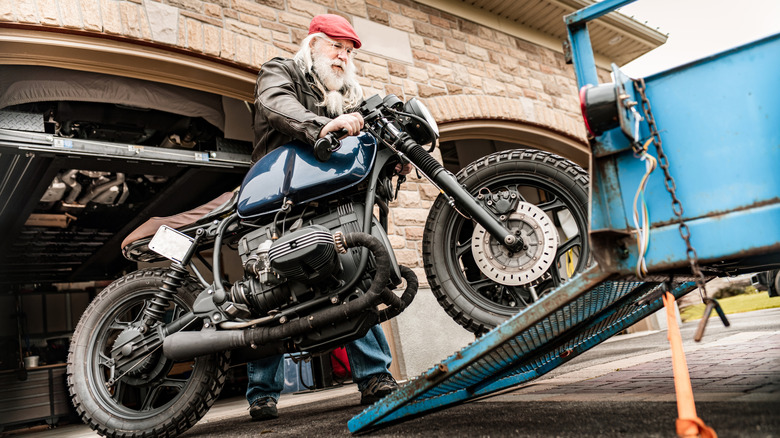
Meanwhile, two cylinders are pretty popular across motorcycles. However, they don't run 2-strokes since they've disappeared from street bikes and rely on 4-stroke cycles instead. So when it comes to vehicles, the cylinder count stuck around, while the 2-stroke mostly didn't.