

Are Ford's 10-Speed Transmissions The Same As GM's?
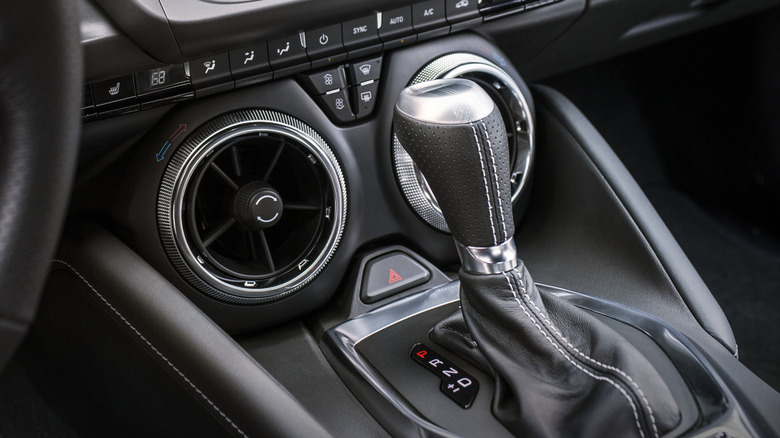
The modern auto industry has seen no shortage of partnerships between car companies, some better known than others. In one colorful example, Mazda, the Japanese carmaker, partnered with Italian automaker Fiat to build the Miata-based Fiat 124 Spider. The fifth generation of the iconic Toyota Supra? It famously shares a platform with the German BMW Z4.
Auto companies don't just collaborate on vehicles, though, but also on major mechanical components. One of the biggest current examples of this is the shared Ford and General Motors 10-speed automatic transmission platform. Historically, some examples of parts-sharing, like those from the old Ford-Mazda partnership, made sense from a global market standpoint, but seeing America's two largest automakers — and two fierce Detroit rivals, at that — working together on a shared transmission is something many old-school brand loyalists may not have expected.
Ford and GM's transmissions aren't the same product, however. While they share the core design and most of their hardware, the Ford and GM versions of the 10-speed differ in several aspects, including their names, some of their parts, and software tuning.
10L80 versus 10R80
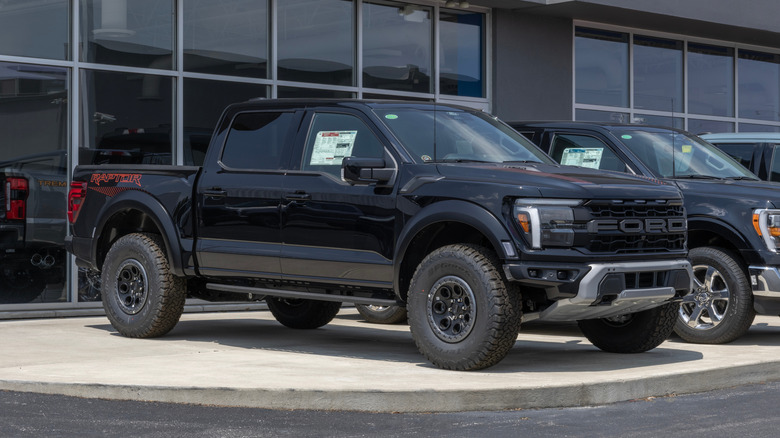
Ford and GM first announced their jointly developed 10-speed automatic in 2013, but that wasn't the first time that these two American rivals teamed up to develop a transmission. In the previous decade, Ford and General Motors had already worked on a six-speed automatic for front-wheel-drive-based vehicles.
The new 10-speed was a big deal, though, because it was designed for rear-wheel-drive applications — including the two companies' bread-and-butter full-size pickup trucks and SUVs. The shared transmission would also feature in GM and Ford's rival pony cars, the sixth-generation Chevy Camaro and the Ford Mustang — making the automatic Mustang substantially quicker than its manual counterpart in the process.
One surface-level distinction between the two transmissions is the name: the Ford version is the 10R80, while GM uses the 10L80 designation. The names are just the start, though, as the two 10-speeds also use some different components and are even programmed differently.
The same, but different
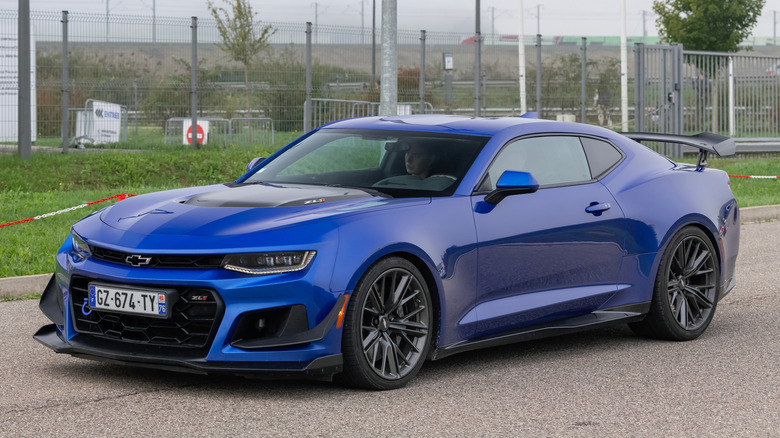
The GM and Ford versions sport different valve body and shifter mechanisms and front pump assemblies. Ford also uses straight-cut gears for its 10-speed, while GM uses helical gears. Another big difference is that each transmission uses different fluid, wth GM using Dexron and Ford using Mercon.
Notably, some differences between the two transmissions were clarified quite publicly during a 2025 recall for some GM versions of the 10-speed transmission. In a statement to The Autopian, Ford pointed out that its 10-speed uses different programming and hydraulic controls and doesn't have the latch ball components that caused issues in the GM gearbox. Ultimately, these two transmissions may share their general design, but they are far from identical, and shouldn't be considered interchangeable by any means. If the 10R80 transmission in your Mustang GT blows up, you can't just grab a used 10L80 out of a Camaro and expect it to work without issues
While the Ford-GM 10-speed is notable for being an important transmission co-developed by two rival American automakers, it's far from the only automatic gearbox multiple automakers share. The best example is likely the widely used ZF 8HP transmission, which has featured in everything from the Dodge Charger to the Toyota Supra to the Rolls-Royce Phantom.