

When Do You Need A USDOT Number For Your Truck?
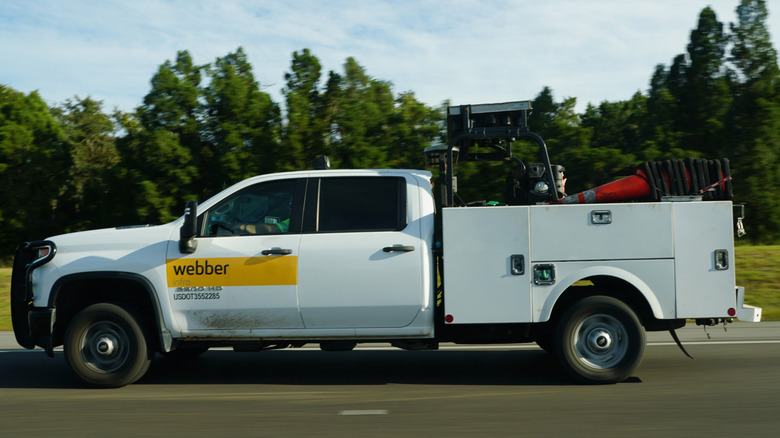
If you're going to drive a truck for work, you might assume that truck always needs a U.S. Department of Transportation (USDOT) number, but as it turns out, that's not necessarily the case. Fact is, it's less about why you're driving the truck and more about a very specific set of parameters instead. Looking at official guidance from the Federal Motor Carrier Safety Administration (FMCSA), it really boils down to the truck's weight, what it carries, how many passengers it transports, and whether its trips cross state lines.
USDOT numbers are a way for the FMCSA to track a vehicle's safety record. That includes the kinds of documents and information semi-truck owners need to have on-hand, like inspections, crash investigations, audits, and compliance reviews, all of which are tied back to that USDOT number. A vehicle doing interstate commerce will typically fall under the federal USDOT number requirement if its gross vehicle weight rating (GVWR), gross combination weight rating (GCWR), actual gross vehicle weight, or actual gross combination weight is at or above 10,001 pounds (whichever measurement is greater).
Despite how it sounds, interstate commerce doesn't literally mean driving directly from one state into another. It can also include transportation between two locations within the same state if the route passes through another state along the way, or if the transportation stays within the same state lines but is one leg of a larger route that begins or ends outside the state or country.
Other types of vehicles that need a USDOT number
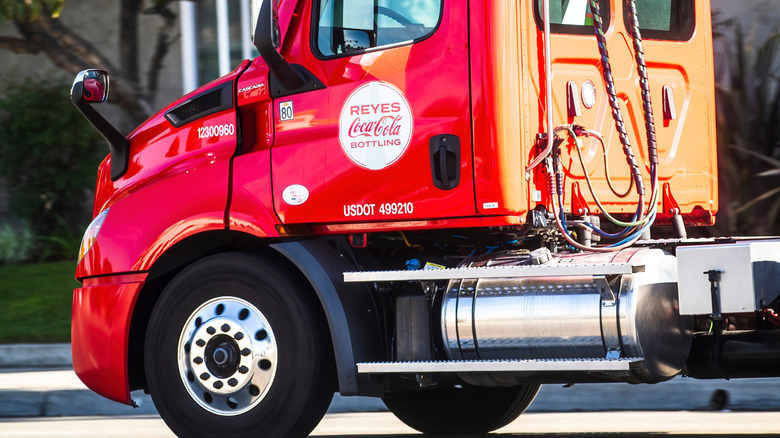
If your commercial transportation involves passengers, that can also trigger the federal registration requirement. That's true even when vehicle weight isn't at or above 10,001 pounds. If the vehicle's used to transport more than eight people (including the driver) and does so for money, that means the vehicle needs a USDOT number.
The same applies even if the truck doesn't ever actually transport that many people. You still have to get a USDOT number because the potential to carry more than eight is still there regardless. The rules also cover vehicles that can carry more than 15 people including the driver, no matter if it's for compensation or not. If you're carrying hazardous materials that require a federal safety permit, then you also need a USDOT number.
It's a business's responsibility to evaluate their operations and see if their truck needs a USDOT number. Rather than assume only semi-trucks or full trucks need to comply, you have to take a close look at your vehicle characteristics and commercial activities to truly determine your obligations. It's not unlike the requirements for a CDL in that way.
As a footnote, most U.S. states have their own registration requirements on intrastate commercial motor carriers that go beyond what the FMCSA has in place. That means it may be in a business's best interest to get its trucks a number, even if they don't meet the federal criteria.