

This B-29 Superfortress Has Spent 78 Years Underwater, Now It's Emerging
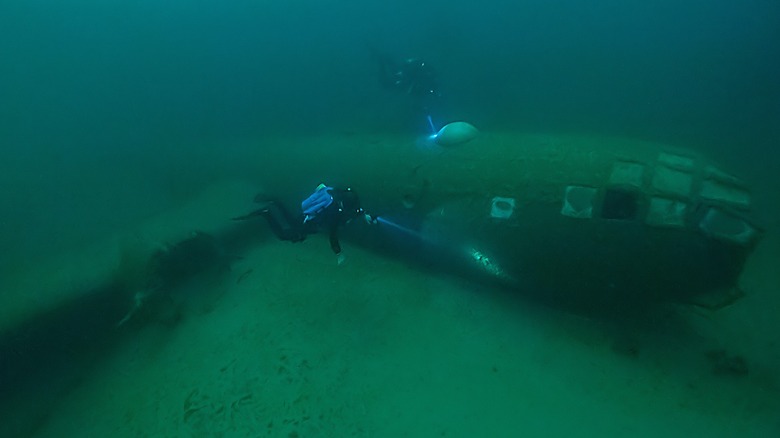
On July 21, 1948, a B-29 Superfortress flew over Lake Mead as it prepared to land. The altimeter informed the pilot and copilot that the aircraft was 400 feet above the lake, but the reading was off. While traveling at around 230 mph, the aircraft struck the surface of the lake and sank to the bottom. Fortunately, everybody onboard survived the accident, but the bomber remains there to this day. For years, the Lake Mead B-29 was the focus of numerous dives after it was discovered in the early 2000s.
The site is managed by the National Park Service (NPS), which regulates access for recreational dives while working to protect the bomber. The NPS is firm in its stance that the B-29 is for looking at while diving, and not touching, as it wants to preserve the site. One factor that might make preservation challenging is depth, as the lake's water level has been dropping over time. In 2003, the B-29 dive site was nearly 300 feet below the lake's surface, and as water levels fluctuate, it's moving closer to the surface.
These days, the B-29's final resting place is only 115 feet below the surface due to continuous water loss at Lake Mead. That puts it considerably closer than it was when the plane's exact location was found in 2000. When it was discovered, the NPS had strict requirements for technical divers only, making recreational dives impossible. That stance has changed now that the water isn't as deep as it once was, and the Lake Mead B-29 Superfortress is now open to anyone qualified to dive and marvel at its mostly intact structure.
The Lake Mead B-29 Superfortress
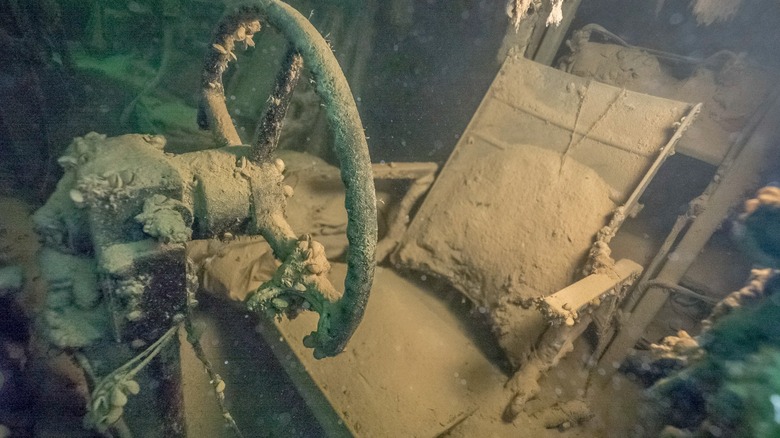
While there are a surprising number of sunken warplanes in Lake Michigan, the Lake Meade B-29 is something special. Despite crashing into the water at high speed, the crew was able to hop into life rafts before it sank. They watched as it slipped beneath the surface and had to wait hours before rescue. The plane sank a few hundred feet to the lake's bottom, where it remains on a rocky area covered in silt.
The water temperature at the crash site sits between the mid-50s and low 60s Fahrenheit, and it's a popular dive spot throughout the year. The plane is remarkably well preserved given that it's been submerged for nearly 80 years. The NPS continues to monitor the B-29 to ensure it's protected and remains undisturbed, and has paused recreational diving on several occasions to ensure its safety. The NPS hopes to keep the site open and operational for the next century so as many people can experience it as possible.
Lake Mead has indeed lost a lot of water over the years, as anyone visiting Hoover Dam can attest. In 1948, when the aircraft crashed and sank to the bottom, Lake Mead's water level was at around 1,180 feet. While the water level fluctuated over the decades, it's been steadily declining since the turn of the century. As of October 12, 2026, the water level sat at 1,037 feet. If conditions don't change, it's possible that the Lake Mead B-29 could move even closer to the surface, which happened to a historic Navy shipwreck after 400 years underwater.