

License Plate Readers Will Soon Be Able To Track Your Phone – Here's How
License plate readers have already proven controversial, with many people concerned with how much of their personal information is being collected. Flock cameras capture a whole lot more than your license plate number, for example, and cops across the U.S. are being fired for misusing Flock camera data. Now, another system designed to work alongside license plate readers is drawing attention, and this one collects electronic signals.
Security company Leonardo says its system, SignalTrace, doesn't decrypt or read the contents of people's devices or their communications. However, the company also describes it as designed to identify suspect people or vehicles. Sensors pick up the signals given off by devices like phone, smartwatches, fitness trackers, and RFID tags, and the system correlates them with license plate data when it's available. Algorithms then use the time stamps and locations to work out which devices consistently travel together. "While 70 cars in 100 may contain iPhones, only one will have an iPhone 13rev2, an Audi radio, a pair of Bose headphones, a Garmin sports watch, and a key finder. The collection of data represented by these specific things is an electronic signature," explains Leonardo.
What is being done with these electronic signatures?
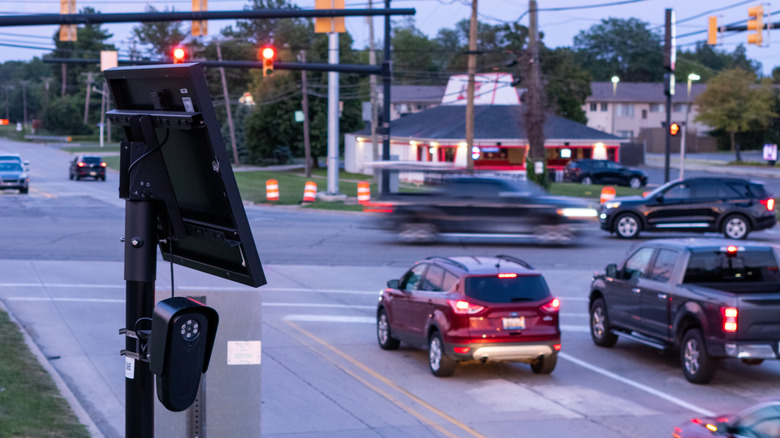
It's no secret that people are very skeptical of their information being collected, whether it's online or through the more than 100,000 Flock cameras estimated to be in use. Although it's hard to say exactly how many Flock cameras are in the U.S., SignalTrace raises even more questions, given what Leonardo says the system is for. The data belongs to the law enforcement agencies that collect it and that the company itself will never access it. It also believes the information will aid investigation. Once an electronic signature has been established by SignalTrace scanners, it will be stored until an investigator makes a specific query, and could become a lead if investigators spot that electronic signature near a crime scene.
A study from Scientific Reports examined 15 months of mobile phone location data covering 1.5 million people and found that just four time-and-place points were enough to uniquely identify 95% of people. That shows how easily movement data can single someone out, but there's another concern: Tying an electronic signature to the wrong person, especially in connection with a crime. What if the device was borrowed or left in someone else's car? What if the device was stolen? None of the gathered information from SignalTrace can confirm who was actually carrying the device while driving the car on any given day. Police will need to figure out how to use electronic signature patterns and associations responsibly when identifying possible leads.