

Makita Is Expanding The Lineup For Its MakTrak Tool Boxes
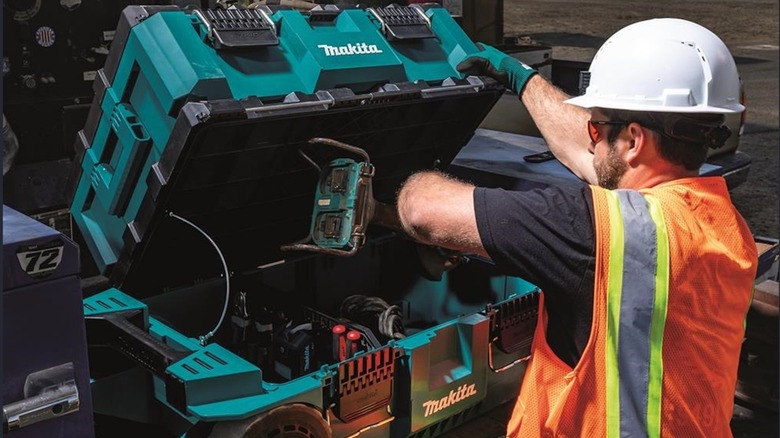
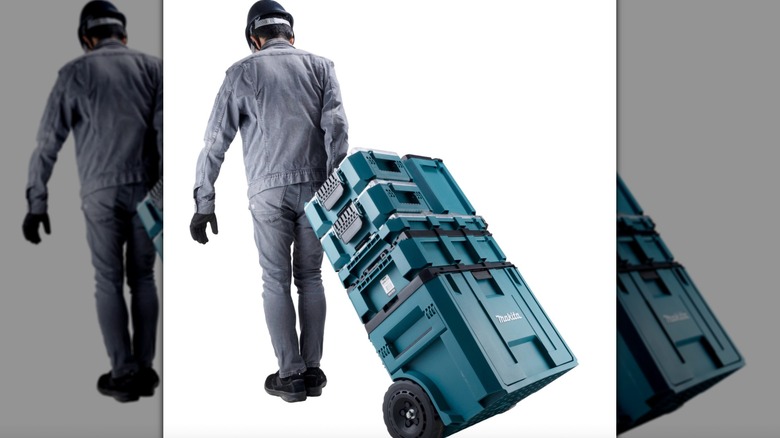
Makita owners looking to expand their MakTrak modular storage setup will soon have a few more options, though there may be a slight catch. The products include two new rolling toolboxes and a compact accessory case, joining several Makita MakTrak attachments introduced earlier this year as the storage lineup grows. Both rolling carts have a telescopic handle, a padlock point, and a hidden GPS tracker slot. Each has a loading capacity of just over 250 pounds (114 kg).
The two toolboxes differ in how you access their contents. One opens from the top, with a removable lid, tray, and divider. The second rolling toolbox opens through the front, not the top, and has a single drawer. The drawer locks, stopping it from sliding open during transport, and its front design lets users access its contents even when other boxes or items are stacked on top. These new cases will very likely be built similarly to Makita's current MakTrak products, designed to withstand dust, water, and being tossed around a pickup bed.
The third new MakTrak product is an accessory case that can hold up to 75 pounds (34 kg). It's large enough to fit up to six Makita batteries and a charger, with internal dividers, a removable tote tray, and a pull-out handle. Obviously, all three are compatible with existing MakTrak products. Prices have not been announced yet, but that's not even the biggest unanswered question about these latest MakTrak products.
It's unknown when — or if — the new products will be available in the U.S.
So far, it's unclear when these products will hit store shelves or whether they'll even reach North America, given that the only official announcement comes from Makita's German website. That said, a European launch suggests they'll likely come to America as well, as there's no reason why these particular MakTrak accessories would be sold overseas but not here.
Makita originally launched MakTrak in the States before expanding to Europe a year later, so it's not a case of one region getting exclusive tools you can't find in the U.S., such as with Makita's 18V 12 Ah battery and some other products. Then again, MakTrak was launched before the current wave of high trade tariffs, which may affect what's available where.
It's not even exactly clear when they'll hit European shelves, as Makita hasn't provided a launch date yet. However, the fact that they're on the German site, with images, suggests they'll be ready sooner rather than later, at least in Europe. MakTrak owners may not have to wait long to expand their setup — especially those unhappy with Makita's current MakTrak offerings.
The new Makita cases are a game changer for MakTrak
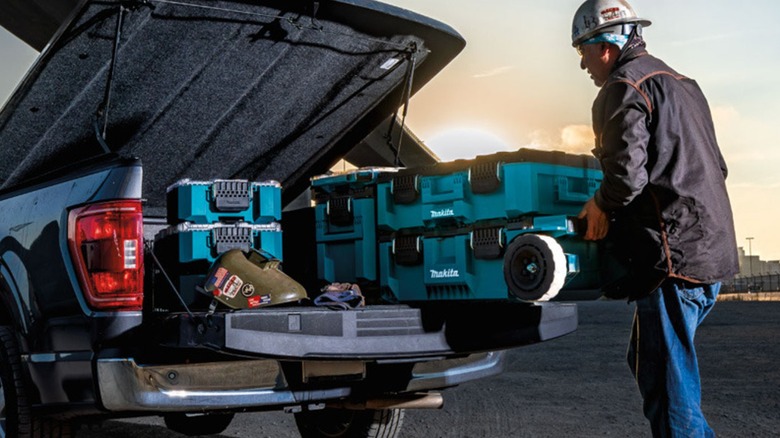
What's interesting is that these newest additions drastically change the way you can run your MakTrak setup. When Makita launched MakTrak in 2024, the modular tool storage system stood out from rivals like Milwaukee's Packout and DeWalt's ToughSystem for its horizontal layout. This differed from other systems' vertical orientation, giving users access to contents from the top of a case, rather than the front or side. It also made MakTrak especially suitable for transporting in the back of pickup trucks.
However, Makita's horizontal MakTrak storage is a bit controversial, as not everyone owns a pickup and many prefer a vertical stack when working with their tools. That's why these newest products are a welcome addition to the MakTrak line. The two rolling toolboxes look a lot like the vertical cases from other brands' modular storage systems and complement the only current wheeled base available, which is for a horizontal setup.
Those who want a vertical MakTrak stack should be able to create one using one of the two new rolling carts as their base. The rolling drawer case doesn't even open from the top — it's designed to have other attachments and boxes stacked on top of it. And while we don't know for sure, observers expect this means we'll get even more MakTrak attachments and accessories catered toward traditional vertical design in the future.