

$17.5K Gas Station Fine Shows Why You Can't Always Trust The Price On The Sign
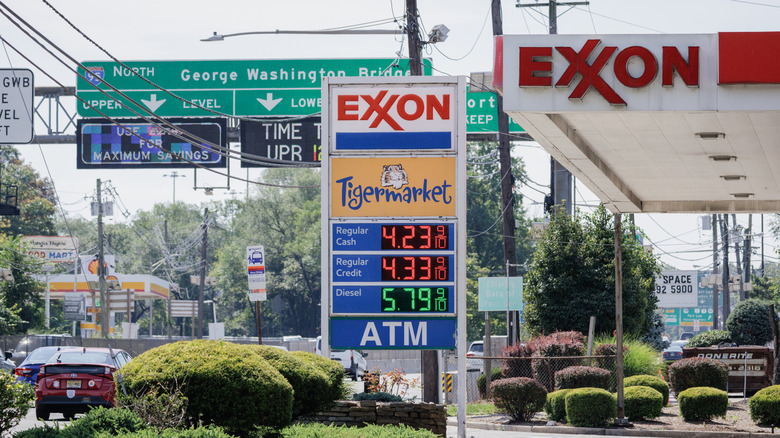
For many drivers, getting the best possible price on fuel means paying attention to gas station signs in their area. Then it's a matter of deciding whether it's worth driving a few miles farther from home than usual just to save five or 10 cents on the gallon. However, a recent incident at a few New Jersey gas stations has shown that the price you see may not be the real price you're going to pay.
Gas station owner Rajinder Chandi was fined $17,500 after an Ocean County investigation found violations at three of his stations. The investigation began after the state Office of Weights & Measures received complaints involving two locations in Toms River, while a third was handled by the Lakehurst Borough Police Department. Chandi was found to have digital displays that did not match the actual per-gallon prices customers were being charged at the pumps. The investigation also uncovered numerous violations of New Jersey's weights and measures laws, along with a wider pattern of deceptive business practices.
The $17,500 penalty was part of a settlement that resolved pending municipal court complaints in Toms River and Lakehurst. Under the agreement, Chandi must make sure the prices shown on his pumps match what customers are charged. He must also use vendors certified by the New Jersey State Office of Weights and Measures for future pump repairs and provide documentation of those repairs to the county within 10 days.
The technology behind gas price displays
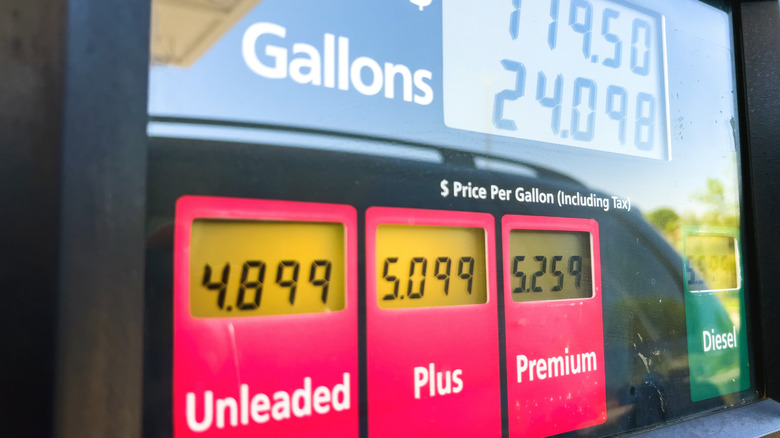
New Jersey has actually been dealing with problems involving gas station price displays for years. In 2010, the state's Office of Weights and Measures (OWM) found that the posted per-gallon prices at a South Orange gas station did not match the prices shown on the pumps. The station owner was handed a $9,800 penalty. In a 2018 statewide inspection, the OWM cited several stations for faulty or illegible LED price-per-gallon displays on fuel dispensers and marquee signs. Additionally, other stations were cited for not displaying the required price on the pump or for using improperly sized numbers.
The technology behind gas station displays can be more complicated than just changing a number on a sign. Many modern fuel-price systems can send pricing information from a point-of-sale system through a forecourt controller and sign controller before it reaches an LED display. Electronic pump-top signs can be controlled remotely by radio and interface with POS systems, allowing an employee to change the price without having to update each sign individually.
These systems, depending on the setup, can also provide feedback about the condition of the signs themselves. In some cases, operators can view the health status of individual signs to see when components are nearing the end of their service life. Additional software can even send email or text alerts when a sign fails. This allows the operator to know when a display needs attention.