

How Does Cold Weather Affect Nitrogen-Filled Tires?
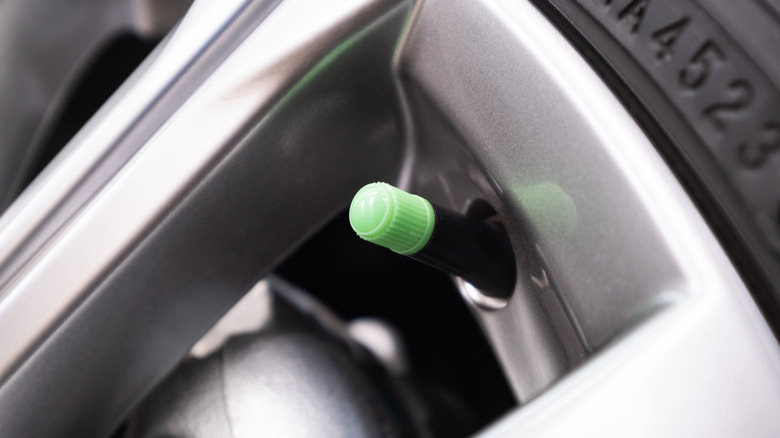
As the seasons change and the weather starts to get colder, there are plenty of things that drivers need to consider. Dead batteries, frozen washer fluid, and the wrong tires can all cause problems on winter drives, and the best way to avoid those common car troubles is to make sure you're prepared ahead of time.
If your vehicle has nitrogen-filled tires, you'll need to make sure you account for ambient temperature changes in order to keep them at the correct pressure. As a general rule of thumb, the pressure in a nitrogen-filled tire will drop by around 1 PSI for every 10°F the ambient temperature drops. The change can be less pronounced than with a standard air-filled tire, which can drop 1-2 PSI with the same temperature change. It's best to regularly check your vehicle's tire pressures over the colder months to make sure they're still optimal, and if they're not, you'll need to inflate them.
Adding regular air to a nitrogen-filled tire is completely safe, but to maximize the benefits of using nitrogen in your tires, you'll ideally want to add more nitrogen. If you don't have access to a nitrogen supplier, don't try to drive around with underinflated tires instead, since that can cause a whole range of issues. As well as affecting things like your vehicle's fuel economy and its handling, an underinflated tire can also increase the chance of a blowout. Instead, you'll need to continue adding regular air until you're able to get back to your usual nitrogen supplier.
Whatever you do, don't skip your tire pressure checks
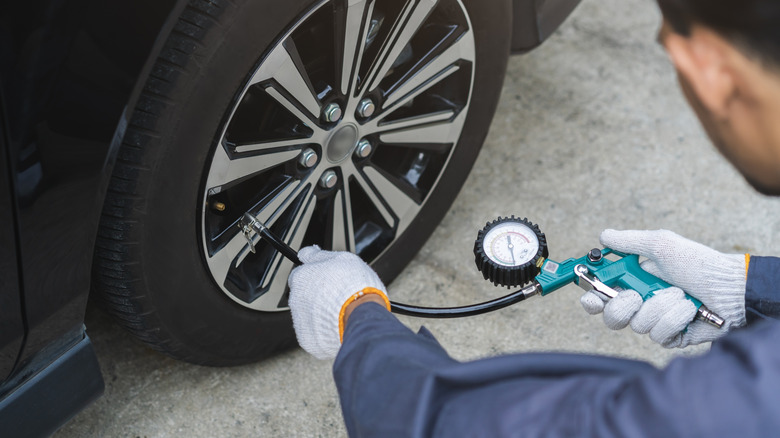
Regardless of how you inflate your tires, the most important thing is to do it in the first place. Some people believe that using nitrogen instead of regular air means you can skip checking tire pressure altogether, but this simply isn't the case. In reality, leaving your tires unchecked might mean you're driving around with the wrong tire pressure all winter, and it might also affect the tires' warranty.
Many tire manufacturers have a clause in their warranty coverage that says they won't cover a tire that has been improperly maintained. If you don't keep your tires properly inflated and they end up with damage or premature wear as a result, you're unlikely to be able to get them replaced under a manufacturer's warranty. During winter, it's also worth noting that damage from snow chains is likely to result in a denied claim. Make sure you're in the know about when to put on tire chains — and when to take them off again — to minimize the chance of the chains causing damage.