

US Army Helicopter Flight Puts Autonomous Barge Tech To The Test
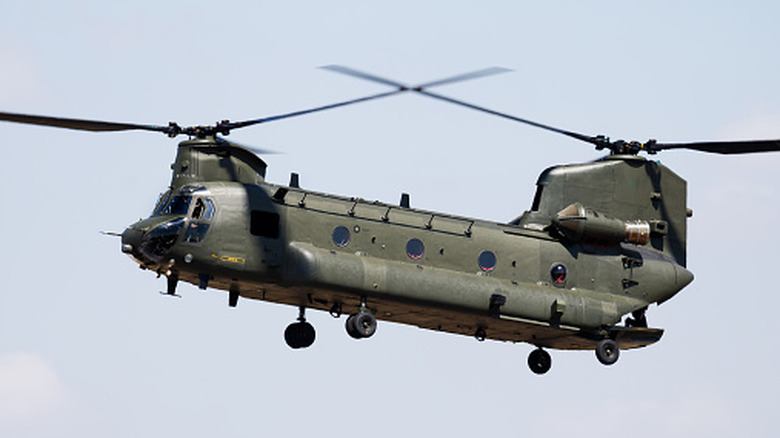
The U.S. military has graduated from conceptual models to actual testing with regard to the use of autonomous barges for resupply. For the first time, an Army MH-47G Chinook landed on an unmanned barge to replenish needed supplies. These crewless vessels equipped with SM300 autonomous technology by Sea Machines, can allow America's armed forces greater operational flexibility. A maritime environment presents challenges in terms of keeping rotorcraft operating far away from shore. Some Chinook variations have the capability to refuel in-air, but athose that do not require a large naval vessel to refuel and resupply.
The military could — theoretically — deploy smaller autonomous barges strategically and quickly, placing much needed fuel and other supplies nearer to the action. So, rotorcraft like the MH-47 aren't as limited in terms of flight range over active operation areas. This is significant particularly for Chinooks, whether you're talking about the MH-47 or the CH-47, as they are critical for tactical operations. Their large capacity is utilized to transport soldiers, among other duties.
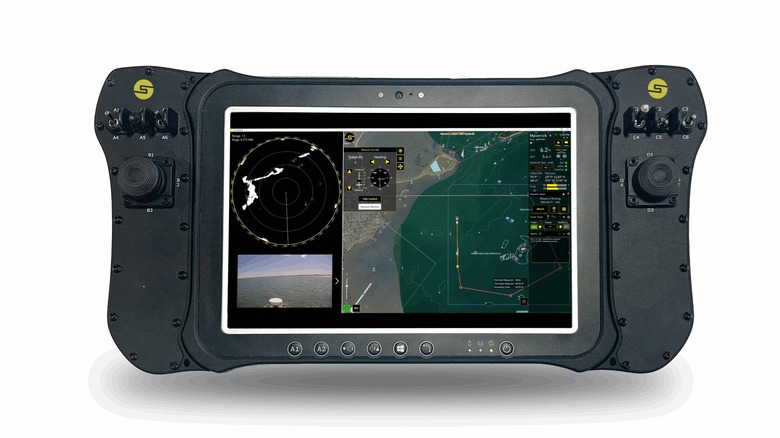
It's unclear what exactly is included in the U.S. military build of the SM300, but the off-the-shelf system offers a modular configuration which can include various software tools and an AI camera system called Computer Vision. The SM300 utilizes an array of sensors like radar, GPS, and automatic identification system (AIS), among others, and leans on AI algorithms and Computer Vision to avoid obstacles.
Despite the successful test, there are still some questions
As AI has become prolific in recent years, it's raised many questions and garnered a fair share of criticism from the public. One of the chief complaints is you can't seem to get away from it, even though there are plenty of things you should never use AI for. Another concern, is the role of this technology in the armed forces. In fact, a proposed bill (the AI Guardrails Act) in 2026 is seeking to clarify the technology's use, as mixing AI and the military can be dangerous if not handled properly.
While these autonomous barges in recent tests are aimed at providing a support role, other autonomous vessels are likely on the way to navel forces across the globe in the near future. These autonomous vessels may be vulnerable to electromagnetic warfare, such as jamming. AI has also had its share of glitches and malfunctions, which casts doubt in terms of an autonomous military vessel carrying supplies.
The implications of these advancements need to be considered carefully, as well as how it will be employed in the future. In 2026, the Army also successfully landed a Chinook without a human behind the controls meaning an autonomous Chinook is potentially on the horizon with Boeing's pilotless software. It would seem to be only a matter of time before an autonomous Chinook autonomously lands on an autonomous sea barge. We live in interesting times.