

What Does Hydrogen Peroxide Do To Stainless Steel Appliances?
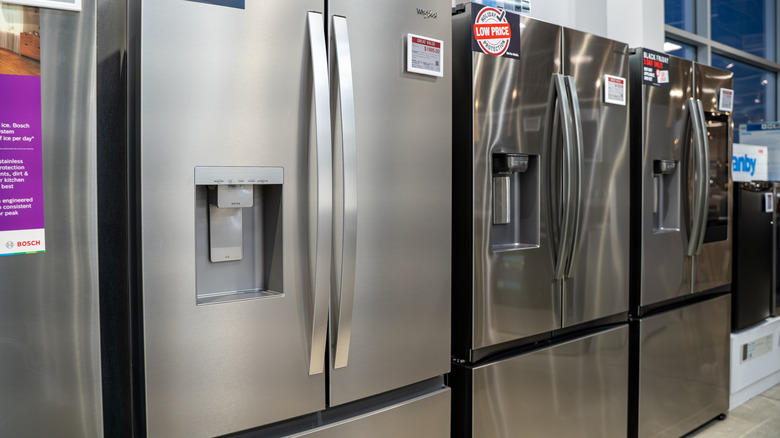
From missing outlets to positioning issues, people often make mistakes when buying and installing home appliances. With stainless steel appliances, a different set of potential mistakes appears. While stainless steel is a go-to material for appliances due to its durability and strong resistance to corrosion, it's not completely safe from chemical damage. That's precisely why you should be careful what cleaner you use, especially with substances like hydrogen peroxide (H₂O₂) that can react with metals.
Hydrogen peroxide works well as a disinfectant, but it's not recommended for use on stainless steel appliances. The problem is that it can eventually cause rust as it eats away at the protective coating on stainless steel. To be more scientific, stainless steel stays rust-free thanks to a protective chromium oxide layer, but because hydrogen peroxide is a strong oxidizer, under the right conditions, it can break that layer down.
As such, if hydrogen peroxide sits on the stainless steel surface too long at high concentrations, your appliance will get corroded and stained. You can normally tell this is the case if you notice little brown or orange spots showing up on the surface, or if spots that used to feel smooth now feel rough or gritty. This doesn't mean a small amount of household hydrogen peroxide will immediately ruin your stainless steel appliances; an accidental splash is completely different from constant use and exposure, but you should still avoid using this substance on stainless steel appliances.
What cleaner is safe to use on stainless steel appliances?
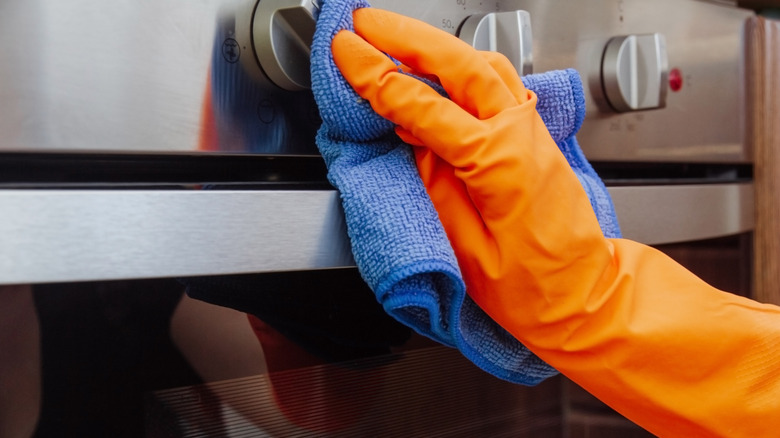
Similar to hydrogen peroxide, you should also avoid using vinegar on stainless steel appliances, as this is another common household item that can strip the protective layer with overexposure. Although a mix of white vinegar and water can take care of light grease and fingerprints, make sure to rinse it off quickly. That said, your best bet is to use a formulated stainless steel cleaner, while a microfiber cloth and some pH-neutral dish soap will do the trick as well. The good thing here about microfiber cloths is that they are less likely to cause tiny scratches compared to other cleaning tools.
Another alternative is to mix a solution of rubbing alcohol and water. Alcohol also acts as a good disinfectant, and it dries off quickly. A mix of dish soap and baby oil can be effective too, where you clean with dish soap and polish with baby oil. Additionally, you can always turn to the good ol' classic of mild dish soap and warm water, as that is still one of the safest everyday ways to clean appliances when you're not sure what to use. In the end, even if you have an appliance with the best warranty, you should take proper care with what you use for cleaning, since owner-inflicted damage almost always voids warranties.