

Are Manual Transmissions Still More Reliable Than Automatics?
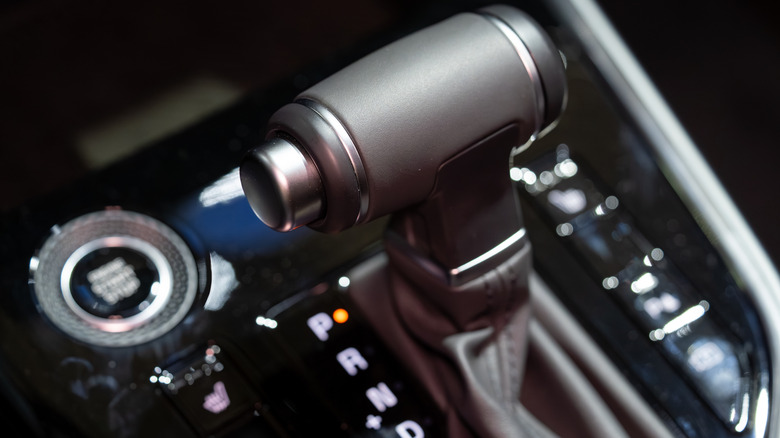
Reliability is often one of the top selling points when looking at a new car — at the end of the day, it's not exactly good for you if the thing breaks down halfway to your job. But what does it mean to be reliable, from a mechanical standpoint? It depends on how you look at it — sometimes you can overbuild something to the point where it just never breaks. Other stuff is so simple, hardly anything can go wrong. That'll be important here, because your transmission is one of the most hideously complicated parts you've likely ever interacted with.
To the uninitiated, an automatic transmission might as well be powered by eldritch magic. Breaking one down reveals a bevy of gears in a bizarre configuration, typically a planetary arrangement. There's a lot of metal-on-metal contact, a lot of parts between the flex plate — not to be confused with the flywheel – and driveshaft, and a lot of fluid to worry about. In other words, a lot that can go wrong.
Manual transmissions, on the other hand, are far simpler in construction. You have two shafts, one on top of the other, with a series of gears and clutches between them, all connected to your main clutch plate and flywheel. In theory, that's the more reliable setup — less stuff to mess up. The problem is that it relies on your proficiency with the transmission. Automatics are consistent, manuals are simple. The winner in the reliability race, then, depends on skill and construction methods. Modern cars certainly have a case to prove here, considering the design is a mature science by this point. It's a complicated answer, so let's explore.
Where automatics win out
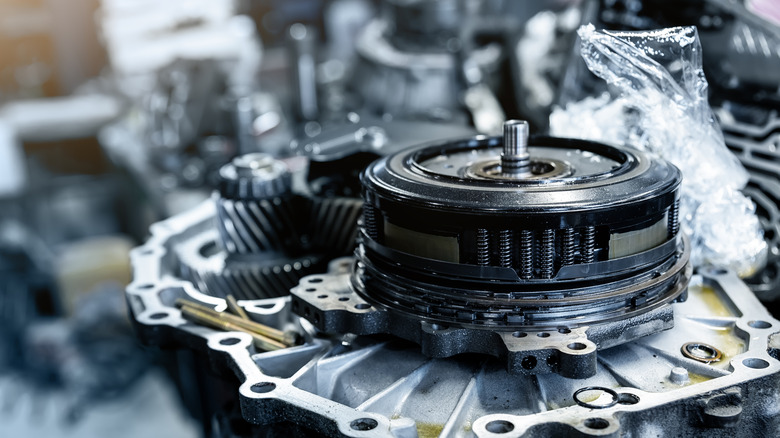
Most modern automatic transmissions are very complex, with many featuring eight or more gears. But don't let that fool you — some of the most reliable transmissions have eight speeds, like the ZF 8HP used in modern BMWs. Like any part of a car, it's mainly about how well-engineered and robust of a design it is. Something with better tolerances built to a higher standard will likely be more reliable, and with all the automatics on the road today, we're not short of production numbers.
True, most automatic transmissions used to be finicky in comparison to manuals, just because they were complicated, and the metallurgy wasn't as good when cars were first maturing. But today's transmissions are every bit as reliable, if not more so, than manuals. The key here is consistency — an automatic transmission will shift the same way every single time. A driver won't fumble the gears, get tired and slip off the clutch poorly, or overstress certain components by doing stuff like slam-shifting. Sure, you can put a lot of torque through it, like towing heavy cargo up hills, but all that does in the long-term is shorten your transmission fluid service interval.
In other words, for the average everyday driver, an automatic transmission's behavior means it's unlikely to ever do something that'll hurt itself. The trade-off is that, because of their complexity, they tend to be more expensive to service if something does happen.
Where manuals can work despite being less reliable
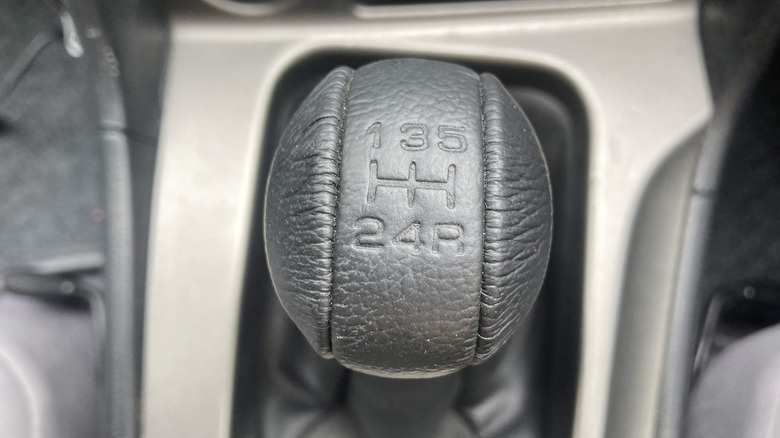
A manual transmission's simplicity works in its favor only when the driver is actually good at it. You can burn up a clutch to a mirror sheen in less than a minute if you really want to screw it up, or you can run your car hundreds of thousands of miles on the original clutch depending on your driving habits. That level of variance means that it's truly difficult to measure certain transmissions.
Take the Muncie M-22 "Rock Crusher" for example, which is absolutely a robust transmission — it's designed for muscle cars with massive torque, after all. However, its nearly straight-cut gears mean it's noisy and difficult to drive for novice manual drivers. Being unforgiving is part of the reward of driving these transmissions, granted, but it does mean that it takes trial and error, and those errors can be pricey.
Ultimately, a manual transmission can certainly meet the same standard of reliability and economy as a modern automatic in the right hands, provided the driver doesn't overstress anything. This goes with anything mechanical, granted, but if you operate the device within the manufacturer's intended specifications, it'll likely last as long as they claim, if not longer. That mechanical sympathy benefits manuals disproportionately higher than automatics, more so because the few new cars still around in the United States with a stick tend to be cars that like to be driven hard.