

Do Aluminum Heads Really Increase Horsepower?
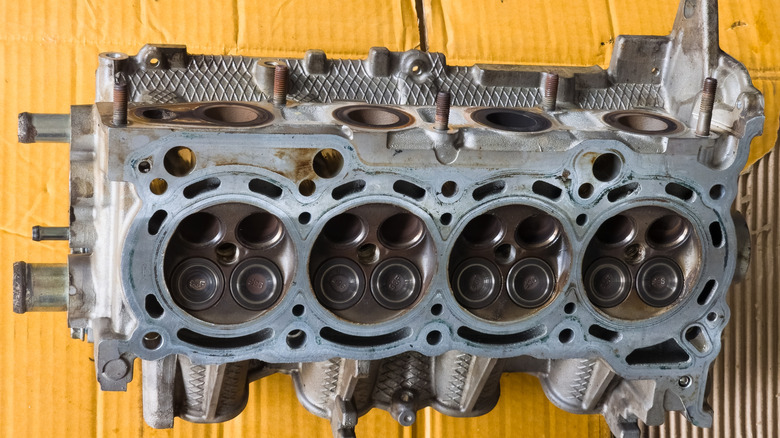
Aluminum cylinder heads show up a lot on performance engines (such as the 5.7L Hemi engines), and they're usually associated with generating more horsepower. Additionally, aluminum heads are highly versatile, which makes them a good fit for everything from regular daily drivers to full-on race engines. Interestingly, you can also put aluminum heads on a cast iron engine block. That being said, while the belief that they increase horsepower is technically true in a way, it's a bit more complicated than that.
For instance, while aluminum has several advantages over cast iron, like reduced weight and better heat transfer, the material doesn't inherently make an engine more powerful. The cylinder head generally controls how air and fuel get into the engine and how exhaust gets out, so its design plays a big role in how much power an engine can make. Today's aluminum heads typically produce more horsepower because they're designed for performance, meaning better port shapes, bigger valves, and more efficient combustion chambers than old-school iron heads. Because of that, they boost airflow and help fuel burn cleaner and faster, which translates to quicker throttle response and more horsepower.
As mentioned, aluminum heads manage heat well, which helps the engine run cooler and minimizes the chance of detonation under hard driving conditions. The material's lighter characteristic can also reduce your car's weight by about 20 pounds per aluminum head; by some rough estimates, switching to aluminum heads can add up to 50 horsepower, depending on your engine and its other components.
Are aluminum heads better than cast iron?
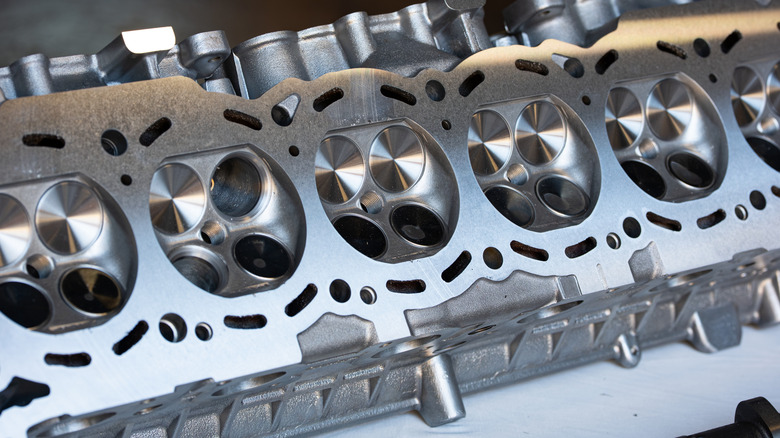
When it comes to aluminum and cast iron heads, neither material is universally better. The best material for your cylinder head comes down to what you're trying to achieve. Aluminum heads are a clear winner if you want less weight, more performance, and modern technology, especially for performance builds and racing.
On the other hand, cast iron heads are more rugged and durable, so they're much less prone to thread stripping and warping if mishandled. This is one of the reasons cast iron is a popular choice for restoration builds, plus it's a more budget-friendly option. Also, due to their toughness and durability, cast iron heads are a go-to for more heavy-duty uses, like in trucks and commercial vehicles.
What these two have in common, however, is cracking. Both aluminum and cast iron heads can crack if they're put under extreme heat or stress. Due to their characteristics, both materials handle cracking differently, but what's notable is that when aluminum cracks, it's normally easier and cheaper to repair. In conclusion, picking the right cylinder head also means looking at things like port size, valve size, combustion chamber volume, and whether it'll work with your camshaft and intake manifold. Whatever you do, just make sure you know the difference between an engine block and cylinder head first.