

Can You Put Aluminum Heads On A Cast Iron Engine Block?
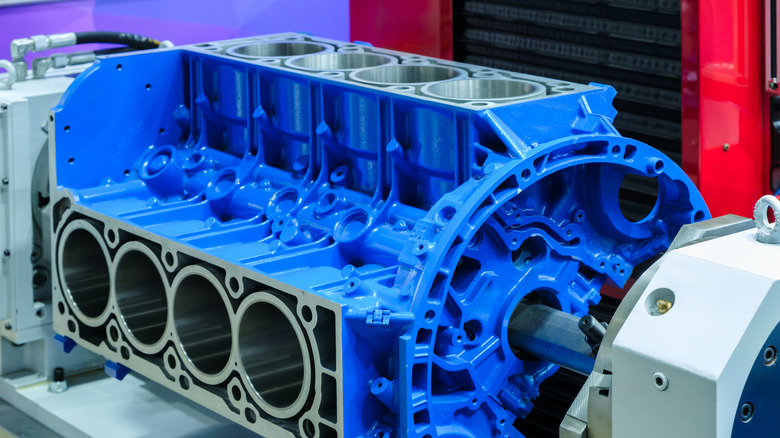
If you've recently started exploring the vast world of cars and engines, you probably have some questions about engine blocks, like why people fill them with concrete, or what the difference is between an engine block and a cylinder head. You may even be curious about more practical possibilities, such as whether you can put aluminum heads on a cast iron block.
You can install aluminum cylinder heads on a cast iron engine block, and many factory engines have used precisely that combination. The materials themselves are not the problem. What matters is whether the heads were designed for that engine family and whether the entire valvetrain, cooling system, gasket set, and fasteners are compatible.
An aluminum head must match the block's bore spacing, head-bolt pattern, oil and coolant passages, combustion-chamber layout, intake and exhaust port arrangement, and piston-to-valve clearances. Even heads marketed for a particular platform, such as the Small-Block Chevy, may not work with every displacement, year, or compression combination. Camshaft lift, valve size, deck height, pushrod length, and intake-manifold fitment can all turn a seemingly straightforward swap into a costly parts-matching exercise. It's worth noting that aluminum also costs more and can be more susceptible to damage from severe overheating, though it is also easier to weld and machine in many repair situations.
Gaskets, fasteners, and cooling are crucial
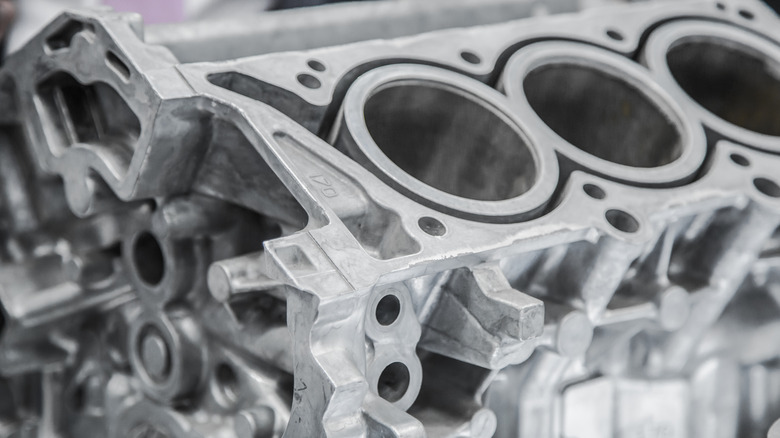
The main challenge of fitting aluminum heads to a cast iron block is thermal expansion, regardless of whether you're using a closed-deck or open-deck block, even though open-deck designs tend to run cooler. Aluminum expands and contracts more than iron as engine temperature changes, placing extra stress on the head gasket and fasteners. Use a gasket specifically recommended for using aluminum heads on iron blocks; multi-layer steel designs are a common choice to account for these different expansion rates.
Regardless, you'll also want to follow the cylinder-head manufacturer's installation instructions exactly. That means using the specified bolt lubricant or thread sealant, the correct tightening sequence, and the required torque-and-angle procedure. Don't automatically reuse original bolts. Many engines use torque-to-yield hardware that stretches during installation and must be replaced, while high-compression, supercharged, turbocharged, or racing builds may require upgraded head studs. Surface preparation matters just as much. The block and head decks must be clean, flat, and finished to the gasket maker's specifications.
The condition of the cooling system is also particularly important with mixed metals. Aluminum and iron can contribute to galvanic corrosion if the coolant is neglected or uses the wrong chemistry. Maintain the recommended coolant mixture, avoid leaving untreated tap water in the system, and replace coolant at the specified intervals. Finally, confirm the volume of the head's combustion chamber and calculate the resulting compression ratio before assembly. A smaller chamber may require higher-octane fuel, changes to the ignition timing, or a different camshaft to avoid detonation. Check valve-to-piston clearance during the build, too.