

What Will Happen To The US Marines' Retired AAV Fleet?
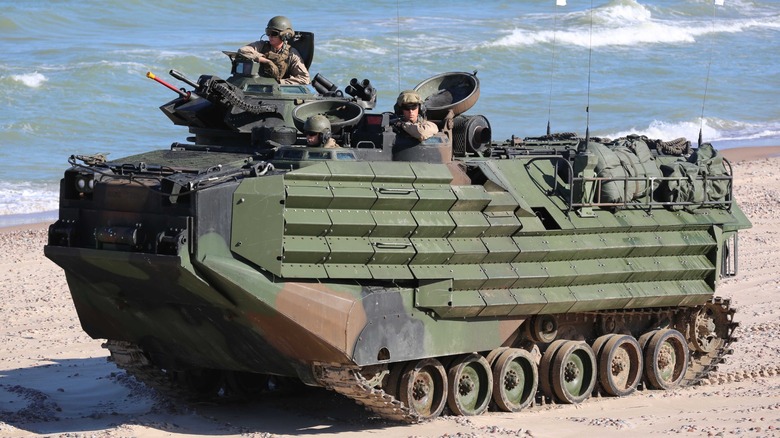
While tanks get a lot of attention, and the United States Marine Corps does operate them, the branch's primary mission tends to keep it close to the water. Because of this, the USMC has been using the AAV7 Amphibious Assault Vehicle (AAV), affectionately known as "Trax" to Marines, since its introduction in 1972. The tracked, armored vehicle was the USMC's primary troop transport for over 50 years, but its service is finally at an end, and the USMC's AAV fleet is being transferred to allied nations.
While you might think that the USMC would put them into storage somewhere in the United States, the Corps' retired AAVs are being transferred to allies defending the Black Sea region, likely bolstering defenses against potential Russian aggression. This is a particularly economical decision, as many AAVs are already in the European theater, making the transfer logistically easier than it would be if they were all located in the U.S.
When the AAVs make their way to allied hands, experienced instructors will go along to train receiving units on their operation, which is often the case when the U.S. sells or transfers equipment to other countries. As of this writing, the AAV is already used by several nations around the world, including Indonesia, Japan, and several others. Romania received its first delivery of nine AAVs in September 2026, when USMC instructors began training Romanian military personnel in their use. This came after a 2023 sale authorized by the Pentagon for 16 AAVs and related equipment worth $120.5 million.
The USMC's AAVs will find new homes abroad
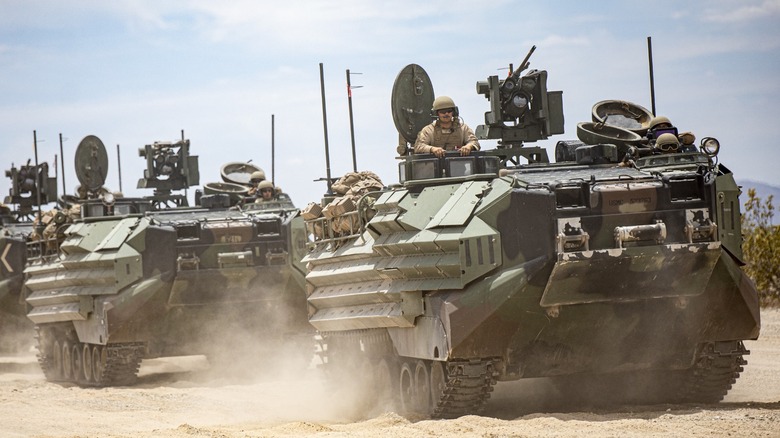
The AAV is one of the world's most impressive amphibious military vehicles, but its service finally came to an end when the AAV was retired in June 2025 following its last exercise in Romania. While the AAV is no longer being used by the Marines, the service didn't retire it without a replacement. The newly developed Amphibious Combat Vehicle (ACV) entered service in 2020, as it began replacing the older AAVs still in service. Unlike its predecessor, the ACV isn't tracked and instead relies on an 8x8 wheeled design, similar to the M1126 Stryker, to carry Marines into and out of combat zones.
Before the USMC retired the classic vehicle, it held around 1,311 AAVs in its inventory, which encompassed all variants of the base model. Because the Corps began phasing out the older platforms as the ACV began taking its place, it's unclear how many were allocated to U.S. allies from that total number. Before the USMC retired the AAV, some vehicles suffered terrible accidents, including sinkings and deadly fires, so the number of AAVs being transferred is undoubtedly lower than the total previously held by the Corps.
It's unclear when all of the Corps' AAVs will be transferred to other nations, but one thing is certain: The USMC will no longer operate the storied vehicle. In addition to replacing its fleet of AAVs with ACVs, the USMC is also utilizing the Multi-Mission Reconnaissance Craft (MMRC), also known by Marines as "Whiskey Bravo" boats, for littoral operations close to shore. It and the ACV will fill the gap left by the retired AAV and keep the Corps operationally ready for all environments in the foreseeable future.