

Why Is GM's 6.6-Liter L8T Engine So Reliable?
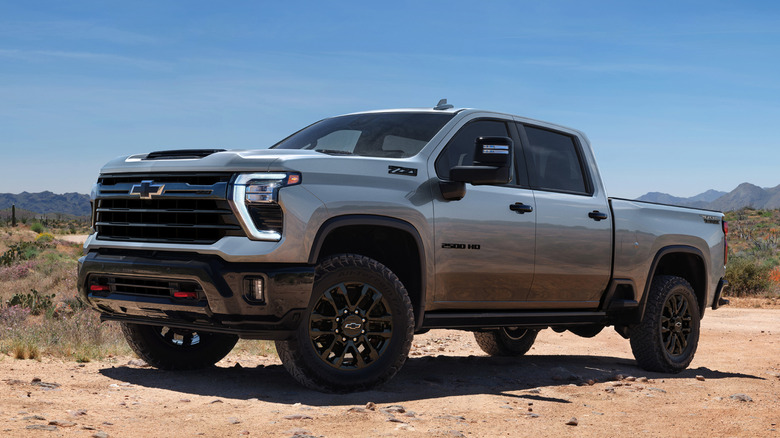
The General Motors L8T engine has been in use since the 2020 model year. It debuted in the General's heavy duty pickups, the Chevrolet Silverado HD, shown above, and the GMC Sierra HD. Since then, its use has expanded to the Chevrolet Express and GMC Savana vans. This engine has become known for its utmost reliability, and has been included in our list of the most reliable engines built in the past decade. For example, the 2021 Chevy Silverado HD 2500 has had only two engine-related recalls, one for transmission valves and one for brake sensors.
The L8T is a small-block engine with a 6.6-liter displacement and output of 401 horsepower. In GM's words, "The L8T is meant for grunt work", with 464 lb-ft of torque that peaks at just 4,000 rpm. The L8T uses a cast-iron block incorporating nodular iron main caps. Additional reliability is provided by the use of cast aluminum pistons, forged connecting rods, and a forged-steel crankshaft. Aluminum cylinder heads sit atop the engine, with its two valves per cylinder using an overhead valve layout. The L8T also features hydraulic roller lifters, eliminating manual valve adjustment.
Another reason this engine is so reliable is down to what it doesn't have. There aren't technologies that deactivate individual cylinders, like Dynamic Fuel Management or Active Fuel Management. It also doesn't have Auto Stop-Start, which can contribute to the overall reliability of the drivetrain. As a member of GM's small-block V8 engine family, the L8T has made our list of the 10 most reliable General Motors engines ever made.
What else should you know about the 6.6-liter L8T engine?
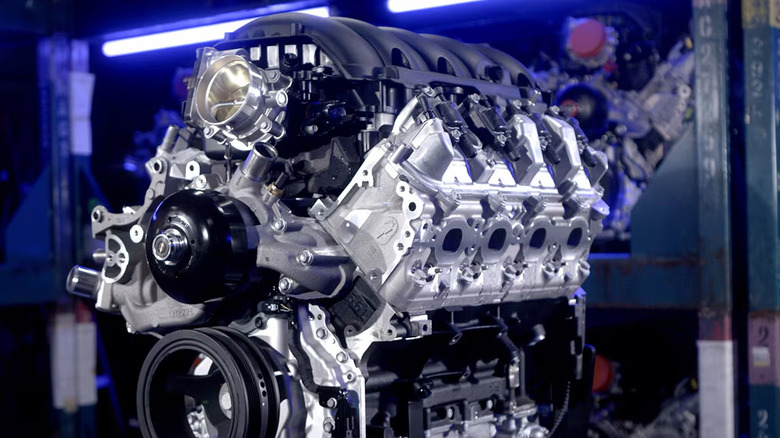
The L8T is a gasoline direct injection (GDI) engine with a 10.8:1 compression ratio. Its fuel is sprayed at high pressure right into the cylinders. The L8T weighs 475 pounds and holds eight quarts of oil, with 87 octane regular gasoline specified as the recommended fuel type. Its intake manifold is made of composite materials, while its exhaust manifolds are of stainless steel. The L8T is produced at GM's Tonawanda, New York, engine plant.
As reliable as the L8T engine is, there have been some reported problem areas. One is the buildup of carbon deposits on the engine's intake valves. This can be a common problem with many GDI engines, particularly at higher mileages. Solutions include using Top Tier gas and the best-quality motor oil, and changing it more often. Another issue is excessive oil dilution. Changing the oil more frequently than recommended should also resolve this particular problem.
Overall, the GM L8T has been a very reliable engine. It has been designed and built to be a strong, powerful mill that does its heavy-duty job well. But as with all engines, factors like the quality of the fuel and oil you use, as well as how well you maintain and drive it, will also affect how long it lasts.
Is there a crate engine version of the 6.6-liter L8T engine?
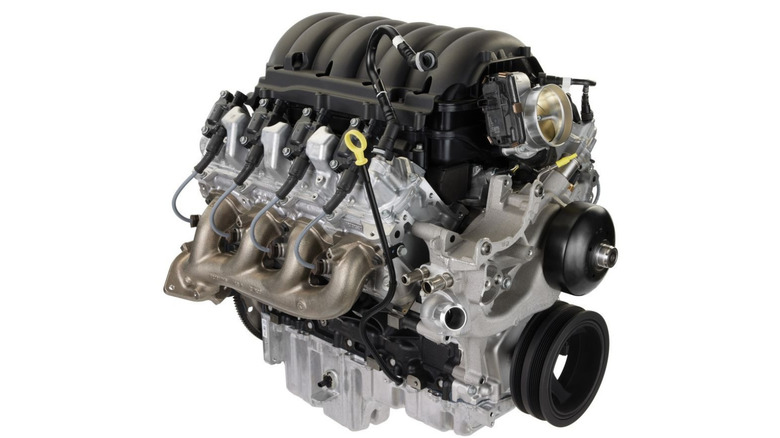
There is a crate engine version of the L8T called the L8P — but the "P" stands for performance. While the L8T and the L8P share the strength of its cast-iron block and its 6.6-liter displacement, the rest of the L8P is built to perform. Proof of this is its 523 horsepower, combined with 543 lb-ft of torque. The L8P gets a camshaft based on the one from the LT2 engine, which is the 6.2-liter engine in the mid-engine Corvette C8 Stingray from 2020 through 2026. Our review of the Stingray appreciated its Z51 agility and its great exhaust note.
The other parts of the L8P that receive an upgrade are the heads, which flow more air, and the pistons. The valves and valve springs are also upgraded for higher performance – the intake valves are hollow, while the exhaust valves are sodium-filled, which helps reduce pre-ignition and knocking in high-performance engines. When all is said and done, these changes in the L8P help it produce an additional 122 horsepower, compared to the standard L8T engine that comes in those heavy-duty trucks made by GMC and Chevrolet. The fuel required for the L8P is upgraded as well — it must be unleaded premium of at least 91 octane.
Over the past seven years that it has been available, the 401-horsepower L8T has proven to be a solid and reliable engine. And in view of its rebirth as a performance engine, the L8P with 523 horsepower, it appears that both engines should have a long and successful life.