

Ryobi USB Lithium Vs. 18V Stapler: What's The Difference & What Are They Good For?
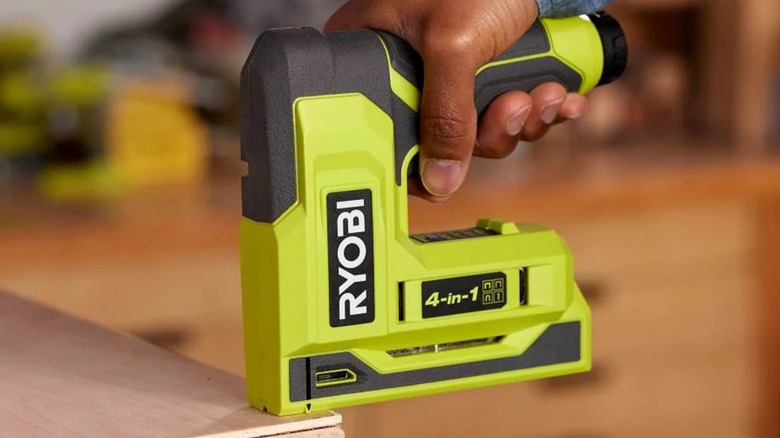
When shopping for new tools, one tricky scenario you may encounter is finding multiple versions of seemingly similar implements. For example, if you were looking for a powered stapler and/or nailer, Ryobi sells a few different versions, including the USB Lithium Craft 4-in-1 Stapler/Nailer and the 18V ONE+ 3/8" Crown Stapler. Since they're both called "staplers" and have a similar size and shape at a glance, it'd be fair to assume these devices are effectively interchangeable, but that's not quite the case.
While there is some crossover in what these two staplers are precisely capable of, there are some clear differences in their operational capabilities. The USB Lithium Stapler is meant for quick, light-duty work, while the 18V Stapler is a heavy-duty workhorse intended for longer, more complicated jobs. If you know what kind of job you're doing ahead of time, whether it's upholstering furniture or building a fence, it's best to choose the stapler that fits your needs.
The USB Lithium Stapler is for lighter-duty work
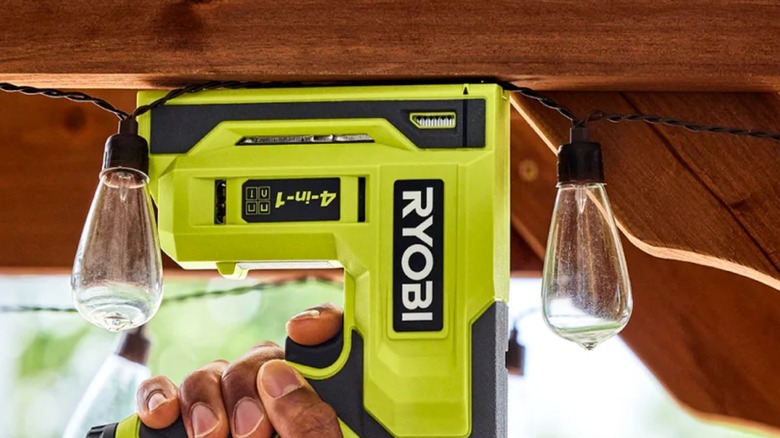
The Ryobi USB Lithium Craft 4-in-1 Stapler/Nailer says a lot from its name alone. Unlike the tools in the primary ONE+ system, this stapler doesn't use Ryobi's usual blocky battery packs. Instead, it uses a smaller cylindrical battery, inserted into an opening at the bottom of the handle, though these batteries are also rechargeable via a standard USB-C cable.
Speaking of which, another major difference between this stapler and other models is that it can fire both staples and nails. Specifically, it can fire round crown, light-duty, and heavy-duty staples, as well as 18-gauge brad nails. This setup makes this stapler ideal for various light-duty and hobbyist work, including assembling birdhouses and picture frames, installing low-voltage hanging lights and low-gauge chicken wire, and setting up small quantities of insulation and screening. Just remember: because the battery is smaller, it can't hold as much charge as a beefier tool; it's rated for 600 staples or nails before needing a recharge. It's optimal for a few quick fastenings or small projects, but on large-scale DIY projects, it'd run out of steam well before you were finished.
The 18V Stapler is a heavy-duty workhorse
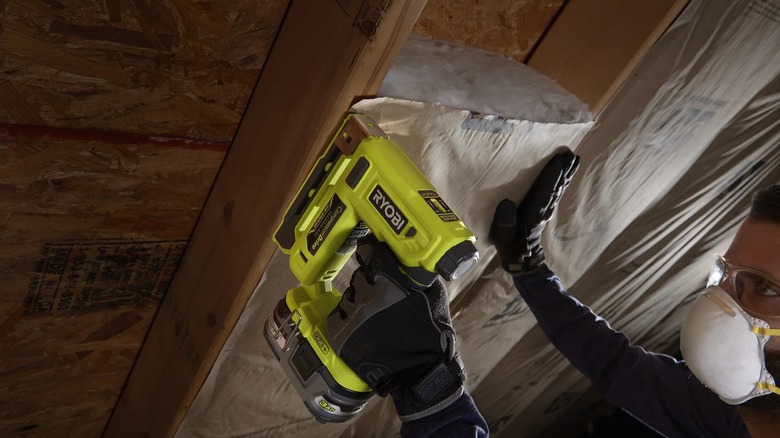
The Ryobi 18V ONE+ 3/8 inch Crown Stapler may seem similar in size and shape to the USB stapler, but it's a comparatively more muscular tool. Unlike the USB model, it can't fire brad nails, but it is rated for crown staples ranging from 1/4 to 9/16 inches in length, as well as Arrow T50 staples. It can handle many of the same jobs as the USB stapler, including upholstery, installing insulation and chicken wire, and assembling porch screening, though it's also able to handle installing floor underlayment.
The two biggest differences between this model and the USB one are strength and power capacity. The 18V stapler is equipped with an adjustable knob for controlling your depth of drive, allowing you to tailor the stapler's output for working with different types and sizes of materials. Its power source is one of Ryobi's ONE+ 18V battery packs, mounted at the bottom of the handle, a much larger power source than the USB model's.
According to Ryobi's estimates, when this stapler is equipped with a ONE+ High Capacity Lithium+ battery pack, it's capable of firing approximately 5,500 staples on a single charge, nearly ten-times more than the USB model can fire before needing a recharge. These features make this stapler a better choice for longer, more complicated jobs and handiwork that require a lot more staples.