

What's The Easiest Type Of Car Paint For DIYers To Use?
We may receive a commission on purchases made from links.
It gets pretty tempting to do the job at home once you see what body shops charge, which can easily run around $5,000. Meanwhile, if you buy supplies and do it at home, the job can cost anywhere between $100 and $1,500, depending on the type of paint you pick. However, some paints are a lot easier to work with, especially if you're a beginner. It all comes down to factors like the mixing, the number of coats, and the spraying gear each paint calls for. For most small jobs — like removing car scratches or small rust repairs – the easiest pick is typically factory-matched spray cans. These are ordinary aerosol cans filled with paint that matches your car's original color code. They don't need an air compressor, a spray gun, or any mixing.
The catch is that these spray cans are more of a touch-up tool. For a whole car, you'd be better off with single-stage urethane, a type of car paint that's easier for DIYers to work with. It combines the color and the glossy protective finish in a single product, which is why it's called single-stage. You spray it on, and there's no need for a separate clear coat afterward.
Within this category, JD Power names acrylic urethane as the easiest DIY paints to use. This is basically urethane with acrylic, a synthetic resin, blended into its base. The site says even first-timers shouldn't run into many problems applying it, making it a solid pick if you're new to painting.
The catch with urethane
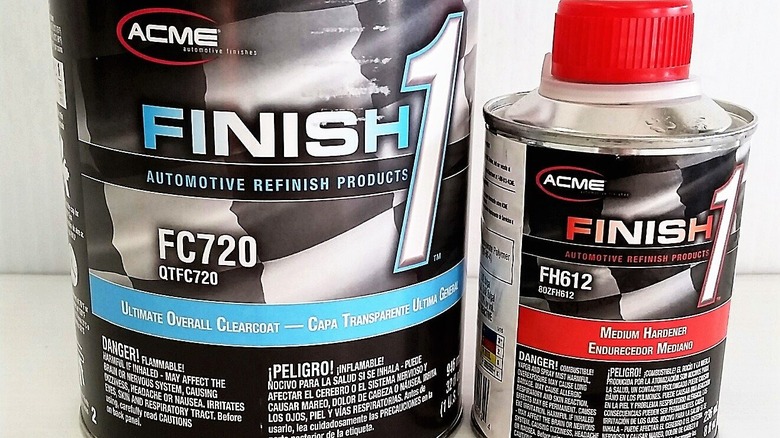
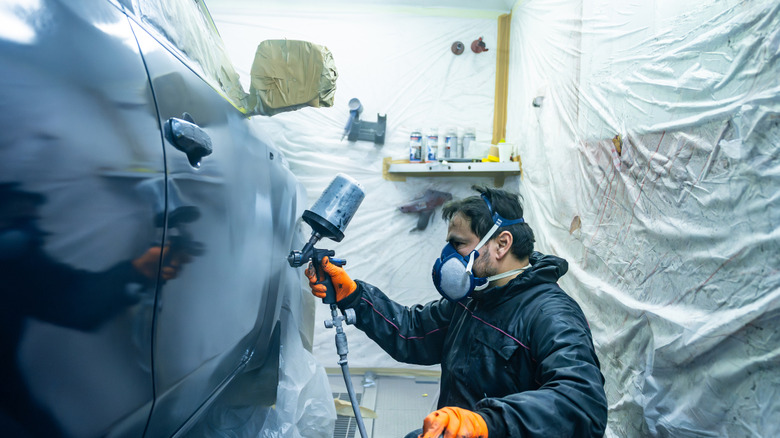
Just keep in mind that unlike those basic cans, this kind of paint is sprayed through a spray gun. Urethane also needs a catalyst, also called a hardener, mixed in before it's sprayed. The hardener helps the paint cure fast while also giving urethane its toughness. Urethane also comes in spray cans called 2K aerosols, where 2K stands for the two parts, paint and hardener. This simplifies the process further, making painting less time consuming. However, the use of hardener also makes urethane riskier to spray at home.
That's because the hardener contains isocyanates, which is a family of chemicals that can cause asthma and long-term lung disease with repeated exposure. Wearing a mask helps, though the Environmental Protection Agency says that masks that rely on replaceable filter cartridges often fall short. Instead, the agency recommends a supplied-air respirator, which feeds the painter clean air from a separate source.
Mixing urethane can also be tricky. When a writer at The Drive painted his own project car, it took him several tries to get the hardener and thinner mix right. Along the way, he had to fight solvent pop, which leaves tiny bubbles in the paint, and fish eye, which leaves small crater-like spots. That said, choosing the right brand can make things easier. A ranking of every major automotive paint brand by user reviews found first-timers preferred single-stage paints from Eastwood. The color you pick also affects the learning curve. With metallic paints, for example, your spraying technique can make the finish look lighter or darker. All in all, factory-matched spray cans are the best pick for minor touch-ups. However, if the whole car needs a repaint, urethane is worth the extra effort.