

Should You Set Your Lawn Mower Higher Or Lower In The Fall?
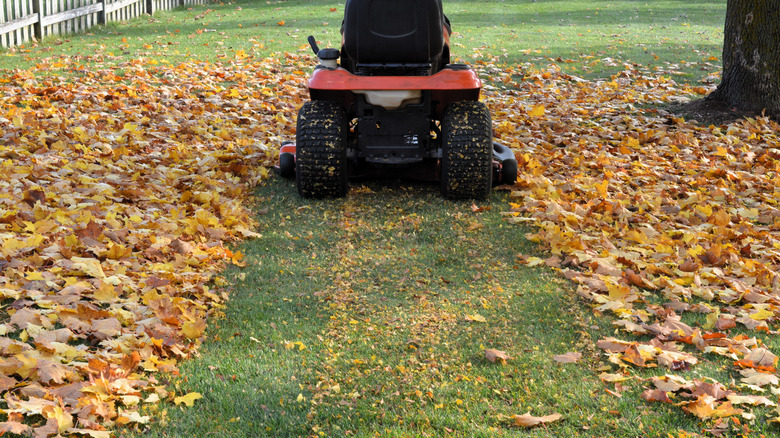
As cooler temperatures begin to set into some areas around the country, many people are likely changing their outdoor activities to accommodate fall lawn care. But while the lawn mower can be used to take care of leaves, what about adjusting the deck up or down for the grass itself? For many lawns, it's a good idea to lower your mower's height slightly, but don't cut the grass shorter than two inches.
Keeping the grass a little shorter makes sense, especially since it may not grow as much as it does during the summer months. It can also be easier to collect fallen leaves while you're cutting the grass, and perhaps more importantly, it can help reduce the risk of snow mold in the winter. Shorter grass can also help minimize the likelihood of damage from rodents like mice that burrow into the ground during the colder months. But cutting the grass below two inches can result in a mower either scalping or scraping the ground, potentially damaging the lawn.
However, as you get closer to winter, warm-season grasses like Bermuda, centipede and zoysia may even call for the opposite adjustment. If you've been keeping these grasses below two inches or at the shorter end of their normal mowing height, raise the mower blade instead of lowering it. Allowing the grass to grow a little taller can help the soil retain moisture. It can also help block sunlight from reaching winter weed seedlings that may be just under the surface. Overall, regardless of the type of grass, two inches seems to be the sweet spot.
Tips for mowing in the fall
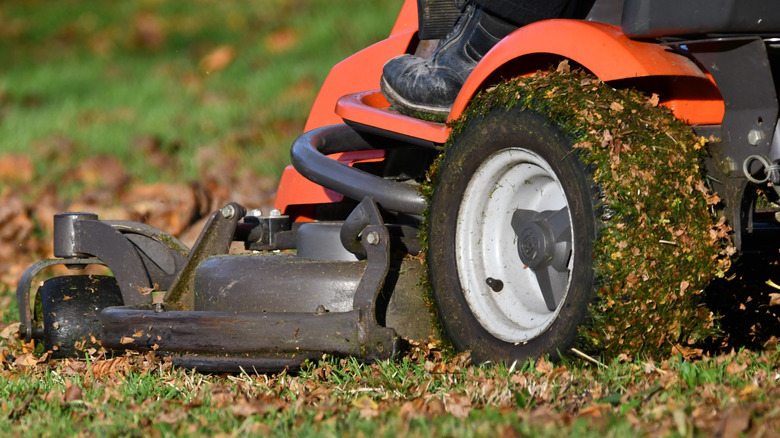
Many people keep mowing into the cold months because new growth can continue well into the season. This is especially true of cool-season grass, which should be mowed whenever it becomes tall enough to need it. The key is to maintain the yard and not try to take off too much at one time because you could put unnecessary stress on the grass. But once growth has stopped for the season, you can finally put the mower away.
Even if your grass is still growing, there may be times when you should leave the lawn mower in the garage. For example, if frost has settled on the lawn, you should wait for it to melt before you mow. Research from Oregon State University has found that repeated traffic on frozen turf can negatively affect the health of the grass. Additionally, morning traffic typically has a greater impact on the lawn than it does later in the day.
However, you should also take care when trying to mow wet grass. If the lawn is wet when you need to cut it, the grass clippings can stick together instead of spreading across the yard. Those clumps can block sunlight from reaching the grass underneath and potentially damage it. Because of this, it might be better to wait until the lawn has dried before mowing.