

Are Ryobi 40V And 36V Batteries Interchangeable?
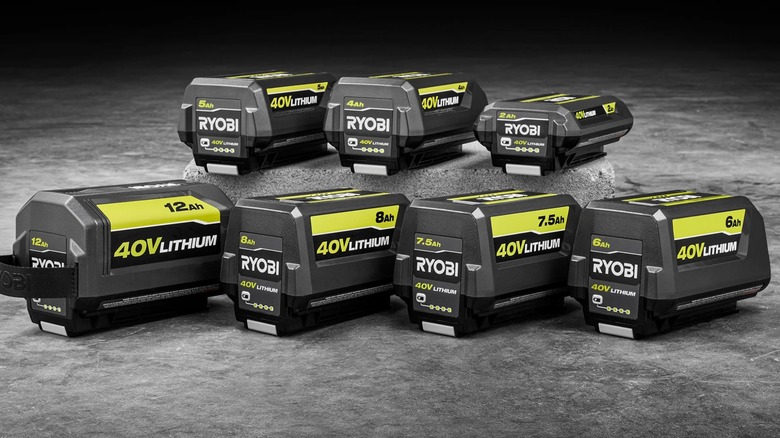
In the United States, the Ryobi power tool battery platform is pretty straightforward as far as voltage categorization goes. As of publication, the tool brand sells 4-volt, 18-volt — a favorite among many power tool brands — 40-volt, and 80-volt batteries to power its various tools and appliances. However, outside of the U.S., the Ryobi battery catalog expands its reach, at least at first glance. In Australia, for instance, Ryobi sells 36-volt batteries, but these aren't a new or different variety at all. These batteries are just what Americans recognize as 40V batteries, making them completely interchangeable voltage-wise when put to use in 40V and 36V-labeled tools alike.
These same power level batteries are identified by different voltage classifications. In Australia, as well as other regions outside of the U.S., Ryobi markets its batteries using the 36V nominal voltage, or the average working voltage it delivers while the battery is used in a tool. They do reach 40V at their peak, contrary to what this naming might seem to suggest. Meanwhile, in the U.S., Ryobi opts for advertising the 40V peak voltage, which is the highest voltage the battery reaches once it's fully recharged and removed from the charger. These generally operate at around 36V on average, but for the sake of marketing, the higher, more "impressive" 40V number takes precedent. It's no different than how 20V and 18V batteries are basically the same, too.
Despite their different voltage labels, 36V and 40V tools from Ryobi should have no trouble powering the same set of tools. For those curious, even their physical design allows for swappability as necessary — as long as their physical rail mounting hardware and housing shapes match.
Their shape helps keep 36V and 40V batteries largely interchangeable
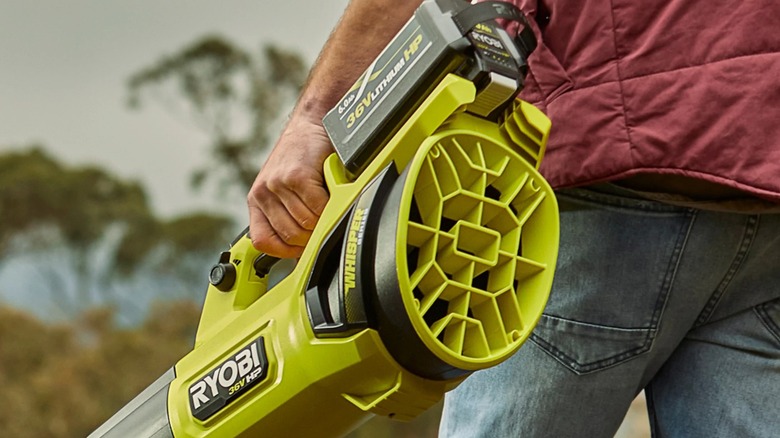
While their labels are different, 36V and 40V tools deliver the same amount of power while in use, so there should be no issue swapping tools and batteries around. This fact is compounded by the matter of their physical design, which, aside from their label and minor aesthetic differences, is generally exactly the same. Many 36V and 40V batteries feature the same horizontal connection rails that allow them to slide and click into Ryobi tools as long as those connector rails match the plastic housing on the tool you're using. Theoretically, this means they can utilize the same chargers, too, further adding to their interchangeability.
If you live somewhere that uses one type over the other and want to try the opposite voltage label, you should exercise caution. All of this interchangeability applies strictly to official, authentic batteries directly from Ryobi itself. It's not a joy to pay full price for these, but as tempting as they are, unofficial Ryobi 36V or 40V batteries aren't the way to go. Knockoff power tool batteries can be incredibly dangerous, seeing as they're often cheaply-made with subpar elements prone to breakage, leakage, or worse. Not to mention, Ryobi warranties don't cover damage from third-party items or anything attributed to misuse, abuse, or neglect, so a cheap, fake battery could ruin your tool and leave you no choice but to buy a replacement with your own money.
All of this is to say that if you end up with 36V and 40V Ryobi batteries, you should have no problem using them in the same ways, as they are identical electrically even if their housings may be different. Just make sure they're the real deal, or the consequences could be serious.