

How Maryland License Plate Laws Are Changing In October 2026
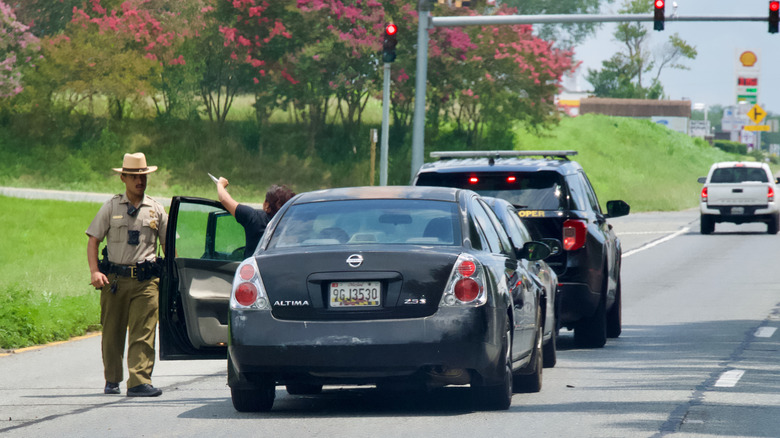
Maryland residents driving vehicles with out-of-state plates will need to be aware of a new state law starting October 1, 2026. Going forward, Maryland residents with vehicles registered in another state will have 60 days to register their vehicles in Maryland. Noncompliance entails financial penalties, possibly escalating to more severe enforcement action.
To clarify, existing state law already gives new Maryland residents 60 days to register their vehicles after moving to the state, but these October 2026 changes add more significant consequences for failing to meet that requirement. Under the new law, a resident's vehicle with an out-of-state plate will first receive a written notice to register the vehicle or get an exemption within 60 days.
If the driver doesn't act on the notice, the vehicle will be subject to a $7-per-day fine for up to 60 additional days. That adds up to a potential $420 fine by the end of the period. If the vehicle still isn't properly registered after 120 days, local jurisdictions are free to pursue civil action against the driver. That might mean towing the vehicle, impounding it, or slapping a boot on the vehicle.
Why Maryland is tightening enforcement

According to the state's Department of Transportation, this tighter enforcement is about safety, with the department finding that 98% of vehicles with illegal out-of-state tags didn't meet the state's safety inspection requirements. MDOT apparently believes stricter registration enforcement will tackle the supposed dangers of cars on Maryland roads that don't meet the state's inspection rules. Baltimore was ranked the third riskiest U.S. city for drivers in 2025, so every little bit may help.
Another explanation, this one a little more complex: Tens of thousands of Maryland residents have actually been registering their vehicles in Virginia. The neighboring state has significantly lower registration fees and also doesn't require residency in order to register in the state. It's the difference between paying Virginia $30 and some change or paying Maryland nearly $200. By enforcing the 60-day requirement a little stronger, the Old Line State hopes to bring those 70,000+ vehicles registered in Virginia but residing in Maryland back under the latter's control.
Proper titling and registration also directs funding to the Maryland Motor Vehicle Administration. MDOT claims the funds support state infrastructure and emergency resources, including medevac helicopters, ambulances, fire equipment, rescue squads, and trauma units. By adding these noncompliance fines, the state likely nets more funding for those services. The same goes for Maryland's other vehicle-related fines, like the state's registered‐owner speeding tickets. Florida has also updated its own license plates laws for financial reasons, though that's specifically targeting organizations that make money from specialty license plates, not everyday people.