

Not One Turbo, Not Two, This BMW Engine Was Triple-Turbocharged
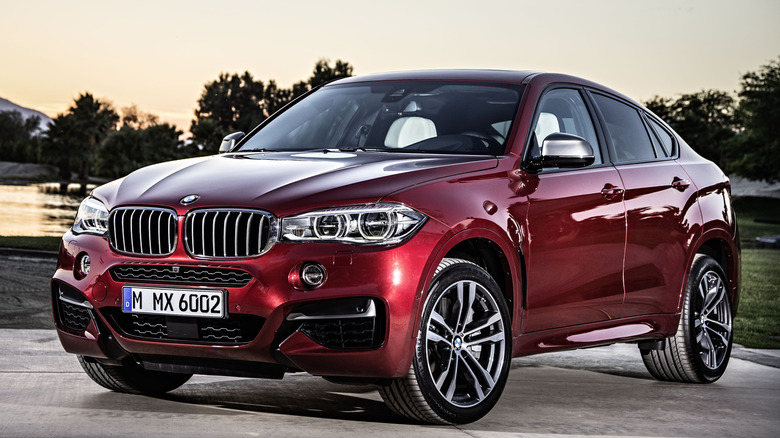
BMW once built an engine with three turbochargers. It was called the N57S, and if you are hoping to find one, be aware that it never came to the U.S. While it's far from the worst BMW engine ever made, there were some good reasons it never reached our shores.
The N57S was a 3.0-liter inline-six diesel engine that debuted in 2012. Its three turbochargers helped it produce 375 hp, making it the world's most powerful inline-six diesel at launch. Impressive as that was, its torque figure stole the show. The N57S made a massive 546 lb.-ft, beating the 500 lb.-ft of the twin turbo V8 in BMW's F10 M5.
The N57S was a high output version of BMW's existing N57 diesel, built to launch the new M performance line, which slots between BMW's regular models and its full-blown M cars. It powered the M550d xDrive sedan and Touring (F10 and F11), and the X5 M50d and X6 M50d (E70, E71, F15, and F16). BMW also used it in the 750d xDrive and 750Ld xDrive (F01 and F02 7 series). None of these models were sold in the U.S.
The high-powered N57S diesel engine was built for a specific set of conditions in Europe at this time. Diesel was the preferred fuel, thanks to a favorable tax regime. Many countries' displacement-based tax policies also favored 3.0-liter engines over bigger V8s, and drivers wanted plenty of ranges for long trips. BMW's tri-turbo diesel engine ticked every box.
The U.S. was a different story. Diesels were a small niche there, and emission rules were tougher, so American buyers got the milder 265-hp X5 xDrive35d instead.
What else should you know about BMW's Triple-Turbocharged engine?
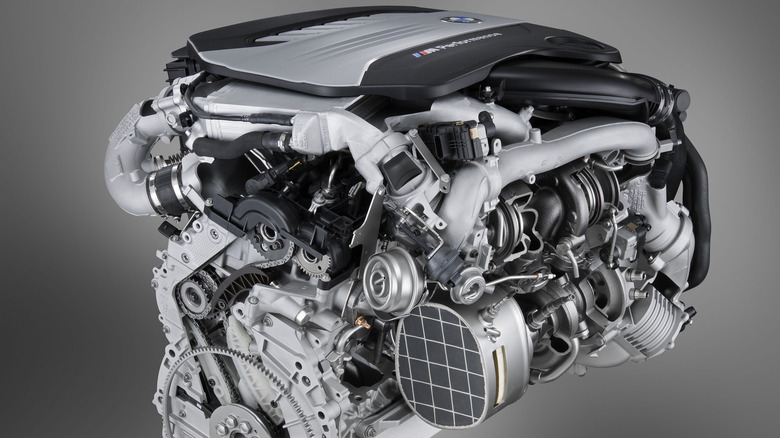
The N57S was an engine of its time. It arrived before electrification went mainstream in performance cars, and before electric motors became the go-to way to add low-end punch. The market has shifted fast since then. In the first half of 2026, plug-in hybrids made up 9.8% of new car registrations in the EU, while diesels accounted for just 7.5%.
Complexity was another issue with the N57S. Getting three turbos to work together took a mind-boggling amount of plumbing. One turbo was a large, low-pressure unit, while the other two were smaller, with variable-geometry turbines. One small turbo handled boost just above idle, and the large one joined in at around 1,500 rpm. Above roughly 2,700 rpm, the second small turbo kicked in to deliver peak performance. In the M550d xDrive sedan, an eight-speed automatic and all-wheel drive put that power down, taking the car from 0 to 60 mph in 4.7 seconds.
Today, automakers have a more effective answer to turbo lag. Instead of stacking extra turbochargers, engineers can add one or more electric motors to the drivetrain. Electric motors deliver peak torque from a standstill, filling the low-rpm gap that the N57S needed a third turbo to cover. Hybrids aren't perfect, and there are drawbacks of hybrid cars you should consider. However, there are also downsides of turbochargers you should know about.