

What Is A Tire Ply Rating And What Minimum Should Your Daily Driver Have?
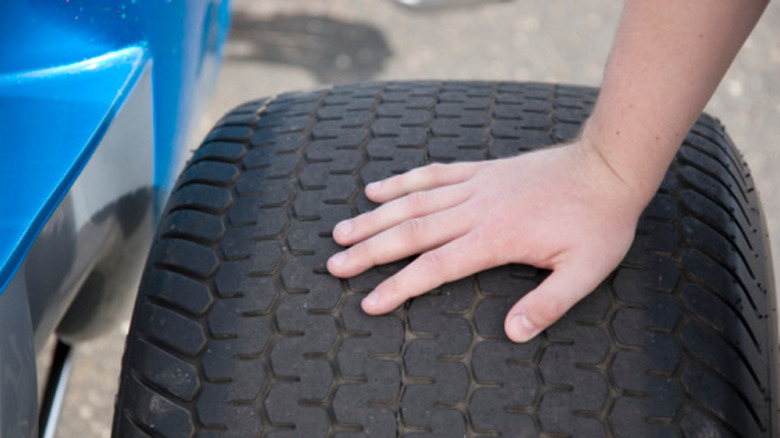
Given how rugged car tires are, it can be very easy to forget that, in addition to rubbers and metals, they're also composed of softer materials like fabric. In fact, tires have had fabric in their constitution as far back as the early 1900s, and it's that fabric constitution that gave rise to a particular part of the tire measurement process: the ply rating.
While tire manufacturing has changed drastically in 100 years, certain concepts from that age like the ply rating still endure in one form or another. You may know it by another term, tow capacity, with which it is frequently used interchangeably. In a nutshell, your tires' ply rating is a simplified abstraction of how big of a load they can realistically carry under a certain degree of pressure. Different vehicles require tires with different ply ratings, especially larger vehicles like trucks that need to tow heavy loads. If you're shopping for new tires, a tip that can make a difference is knowing what kind of ply rating your car needs. That is for both safety's sake, and so you don't accidentally buy more muscular tires than necessary.
The concept is rooted in early tire design
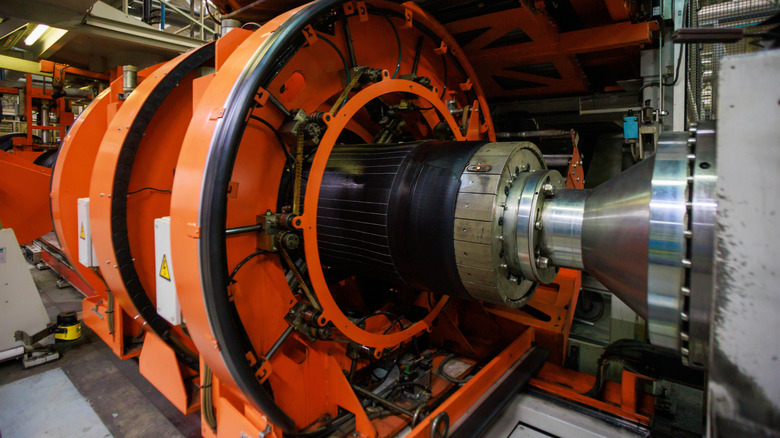
The earliest tires consisted of a single layer of rubber placed over a carriage's wheels. This was a step up from the solid strips of metal that were being used before, but a single layer of raw rubber still didn't make for a very good ride, especially once motorized vehicles started to take off. Around the 1910s, automotive engineers started getting a little more creative with their tire designs, chiefly by adding a layer of corded cotton under the rubber surface for flexibility and stability. These first layered tires were called bias tires, and they'd serve as a baseline for future tires that were developed with additional layers of piled fabric and metal.
Tire ply ratings are similar to the ply ratings you'd see on a package of toilet paper, which indicate how many layers of material the paper utilizes. While modern tires use much more elaborate materials than simply cotton, the ply rating remains as a convenient marker of how robust its collective layers make it. A higher rating doesn't necessarily mean the tire has more layers, but rather how much physical punishment its particular makeup could handle.
A passenger car should have a ply rating of at least 4
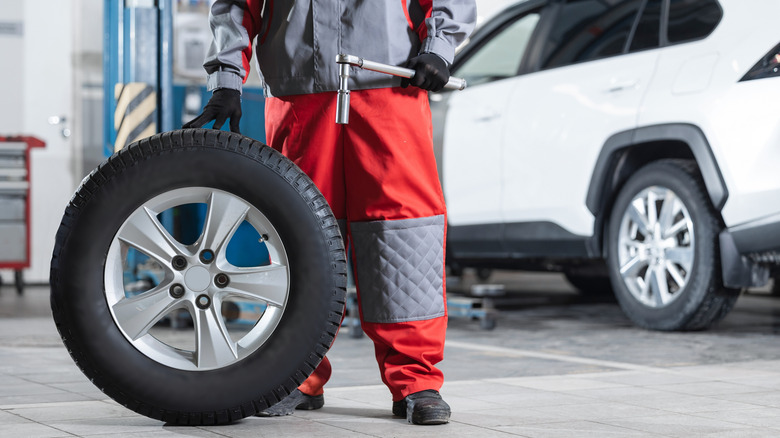
Generally speaking, tires of a lower ply rating are intended for more casual usage, while higher-rated tires are intended for off-roading vehicles and commercial purposes. If you're just driving a regular passenger car on your daily commute to work, a set of tires with a ply rating of 4 will typically do the job just fine. These tires can carry the weight of the car and whatever's inside of it, but they wouldn't be ideal for something like carrying a pickup truck or hauling a trailer.
If you're driving a larger vehicle, you need to gradually size up the ply rating in order to compensate. A light-duty truck needs tires with a ply rating of at least 6, or possibly 8 for more muscular trucks. Meanwhile, a heavy-duty truck towing equally heavy-duty loads needs to go all the way up to tires with a ply rating of 10.
Tires in the European Union stick to this system more-or-less exclusively, while those in the United States and Canada use load ratings in addition to ply ratings. Load ratings are an alphanumerical organization system that determine how much weight a tire can safely pull and haul. Lower-ply tires may have higher load ratings and vice versa, but generally, tires with a ply rating of 4 will have a B load rating, while 6 will have a C, 8 will have a D, and so on.