

Here's How Long You Should Be Idling Your Turbocharged Engine
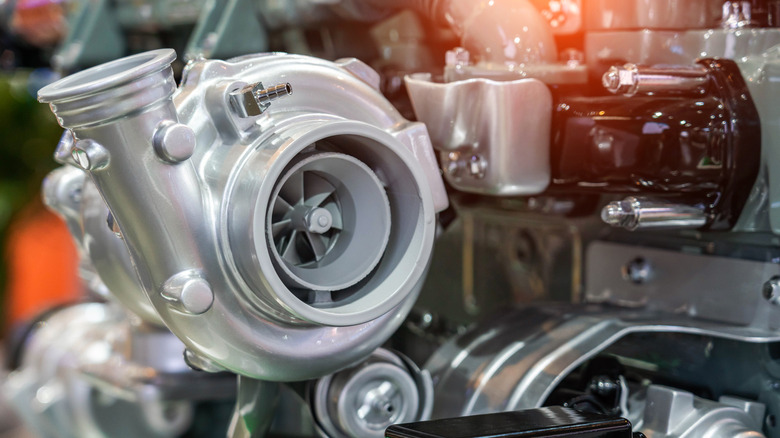
Turbochargers are a popular addition in a wide range of vehicles since they can increase horsepower without needing a bigger, heavier engine. They do this by compressing and re-directing air into the engine's cylinder. This process causes the turbocharger to run extremely fast and hot, which is why you need to let the engine idle to cool the components down. If you immediately shut off the engine, heat can get trapped inside the turbo, eventually leading to damage.
But how long should you let the engine idle? Not long. All it takes is a couple minutes to let the turbocharger cool off. One to two minutes could be the difference between letting oil circulate inside the turbocharger and letting the oil "cook" inside of it. When this happens, various components may clog, the bearings could become damaged from heat, and the turbocharger can even die. Turbos already add quite a bit to your car's maintenance costs, so taking proper care of this added component is quite important.
How to properly care for a turbocharger
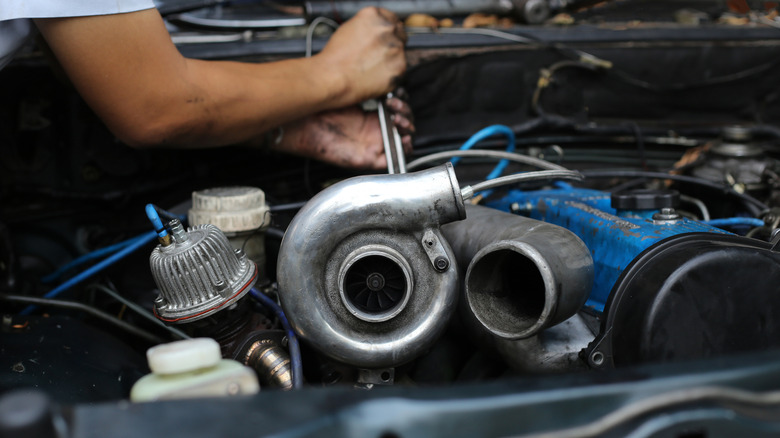
If you want to keep your turbocharger healthy and avoid extra maintenance costs, you may need to add a few extra steps to your usual maintenance routine. Since turbochargers run at high temperatures, you should be using oils that can withstand extreme heat to make sure the turbo is getting properly lubricated and the components are protected. You should follow your usual oil change schedule, but inspect the turbo in between for damage. This includes cracks and corrosion in the compressor housing, any bending fans, leaking seals, and squeaking bearings. There are even certain engine components that need proper maintenance to avoid damaging your turbocharger.
Additionally, when you start the car, don't rev the engine immediately — you want to wait for the turbo to warm up. You also don't want to push the turbocharger to its limits too often or damage can happen a lot earlier. Excessive boost pressure can also cause the fans to overspin. And when driving, as you approach your destination, start slowing down to reduce the turbo's temperature before parking; then, let the engine idle for a few minutes. You may even want to install a turbo timer if your vehicle doesn't already have one, which allows the engine to run for a pre-set time period after the car is turned off.