

How Turbocharged Engines Have Changed From The '80s To Today
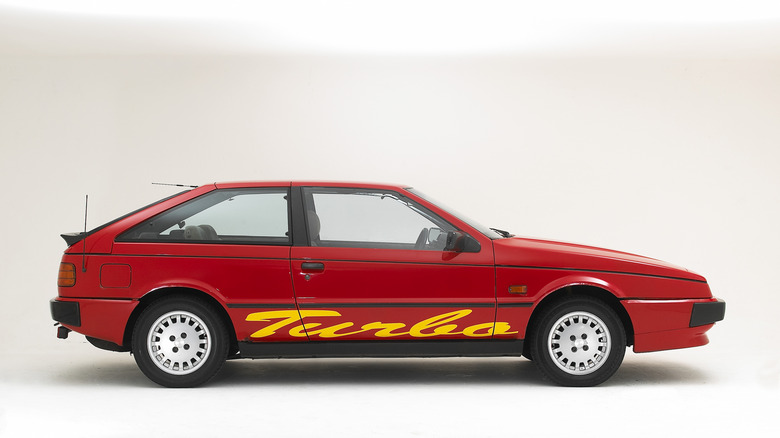
Alongside electrification, the widespread adoption of turbocharged engines has been one of the auto industry's largest shifts over the last 10 to 20 years. In fact, turbochargers have become so common that many casual drivers may not even realize their cars have one. This stands in stark contrast to the 1980s, when lots of cars proudly advertised their forced induction with loud graphics and distinct badging. You would also notice behind the wheel, as those '80s-era turbo cars drove a lot differently than the average turbo today.
The turbocharger, as we know it, has been around for a long time. In fact, the history of turbocharged car engines stretches back more than a hundred years, with the earliest examples debuting in the early 1900s. The first factory-produced turbocharged automobiles rolled off assembly lines in the early 1960s, but the auto industry only started using turbos more widely in the 1980s.
Those 1980s turbo vehicles were very different from their modern descendants. Broadly speaking, in the '80s, turbocharging was limited to sports cars and high-performance applications — and that's partly why automakers leaned so heavily into the "turbo" branding. Today, many high-performance cars still use turbochargers, but mainstream vehicles have fueled most of the growth, as automakers use turbos to maintain power output while downsizing engines to meet emissions and fuel economy targets.
From performance to efficiency
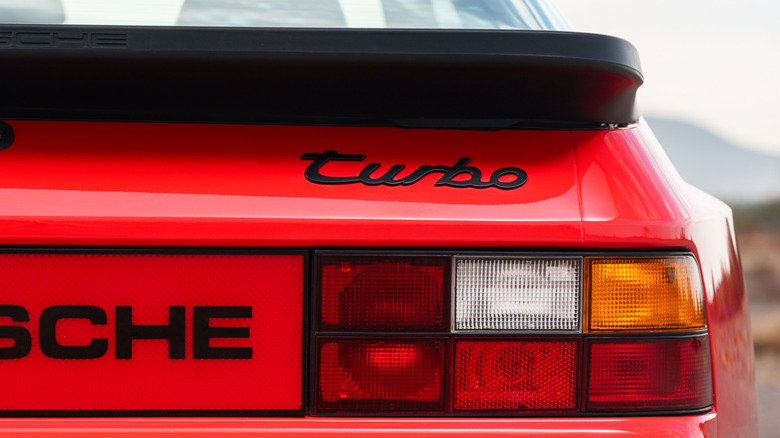
Turbocharged engines powered a variety of vehicles in the 1980s, from high-end supercars to 4x4 pickup trucks. Generally speaking, though, turbos were used to boost power on speciality vehicles or dedicated performance trims. This, more or less, is how manufacturers continued to use them through the 1990s and 2000s, with turbos mainly found on cars that aimed for peak performance instead of fuel efficiency.
Things started to change in the 2010s, when companies like Ford, Volkswagen, and Honda started rolling out smaller-displacement turbocharged engines. This wasn't so much about chasing horsepower, though, but about meeting tightening emissions and fuel efficiency standards without sacrificing power and torque. Soon, automakers were using turbo engines in everything from tiny, fuel-sipping economy cars to full-size pickup trucks — usually to replace larger, naturally aspirated engines.
Of course, engine downsizing doesn't have to mean less performance, and there are many flagship performance cars powered by high-tech, smaller-displacement engines that make huge power. Still, it's all part of the same industry-wide embrace of turbocharging. And it really is industry-wide: According to The New York Times, 45% of new passenger vehicles sold in 2025 had turbocharged engines.
A different kind of turbo experience
The evolution of the Ford Mustang is a good example of how turbocharging has changed. Back in the 1980s, Ford released a special, high-performance Mustang model called the SVO, which used a 2.3-liter turbocharged four-cylinder engine instead of the V8 powering the contemporary Mustang GT. The SVO was more expensive than the GT and was positioned as a sophisticated alternative with GT-level performance.
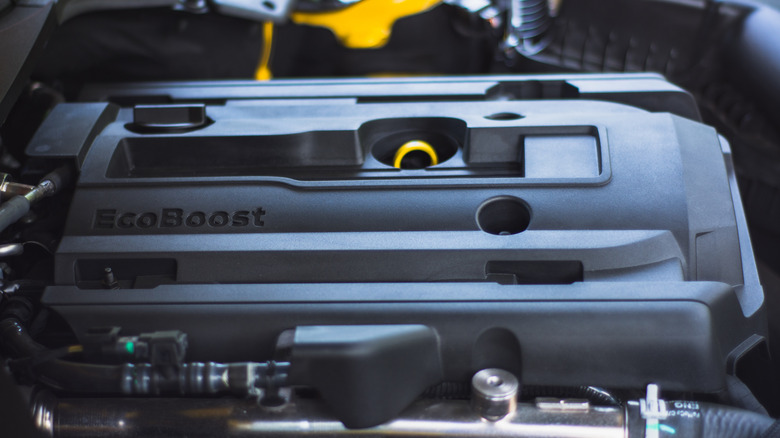
Fast forward to today, and an EcoBoost turbo four-cylinder is now the base engine in every Mustang that Ford sells, replacing the old naturally aspirated V6 it used to come with. Sure, some purists might debate the legitimacy of a four-cylinder performance Mustang, but they can't deny that the current, base-model EcoBoost Mustang is faster and more powerful than many V8-powered Mustang GTs from not too long ago.
Finally, it's not just that turbo engines are much more common now than in the '80s; the average turbo engine also drives much differently. Turbo lag was common in the old days, with drivers having to wait for the turbo to spool up when they put their foot down. Today, most turbo engines have smaller turbos that spool quickly and offer an initial rush of low-end torque. That effortless torque, combined with improved efficiency, is a big reason why turbos have become so prevalent — even if drivers don't always notice them.