

Why Does The Last 'Minute' Of A Washing Machine Cycle Take So Long?
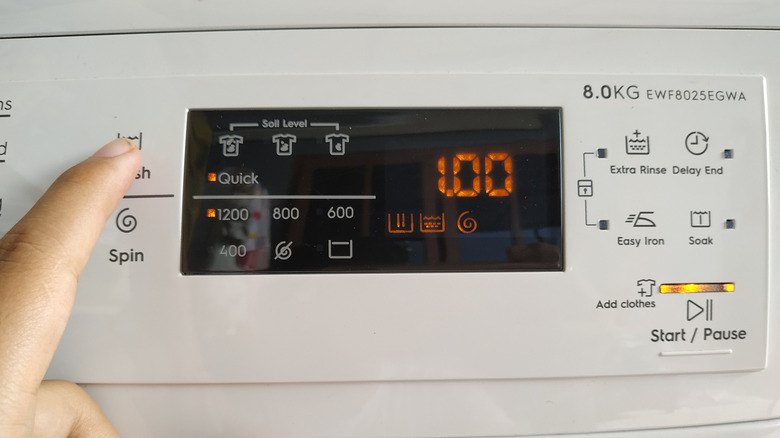
You're in a hurry to leave the house and the only thing stopping you is the load of clothes in the washing machine. Once those clothes are done, you can throw them in the dryer, turn it on, and head out. But the longer you watch that last minute, the longer it seems to take. It's not your imagination, as that remaining amount of time on some models often isn't a precise countdown: it's more of an estimate.
For example, when a Whirlpool front-load washing machine displays the final minute, it's estimating the time based on several factors. That includes the size and type of the load, the selected cycle and options, household water temperature and pressure, and whether it detects an unbalanced load. The remaining time might also be affected if the unit senses excessive suds, which can cause the time to be automatically adjusted. As a result, the one-minute display can remain on the screen for an extended period.
The reason an unbalanced load can stretch the time is because it affects the washer's operation. Even one large item can cause this to happen and when it does, the washer can actually stop and work to redistribute what's inside before continuing. The best way to avoid this with a bulky item is to combine it with several smaller items when washing. This can help the washer keep the load more evenly distributed.
Understanding a washing machine's time display
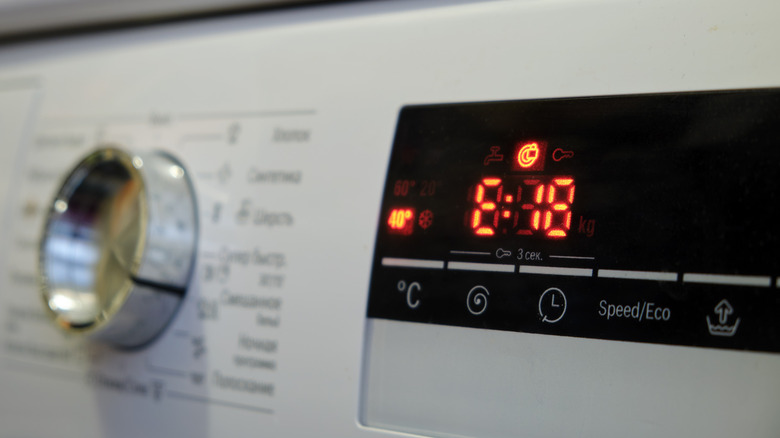
The final minute delay displayed on a washing machine is actually part of a larger issue with how some models predict their overall cycle times. For example, Maytag notes that cycles designed to use heated water can take longer depending on how warm the water actually is. The amount of laundry being washed and the type of load can also affect how long the machine needs to reach the required temperature, which can also impact the time.
But if the display seems to be stuck and not moving at all, even with the delays that may happen, it's possible that something has gone wrong. Washers with unresponsive controls may be malfunctioning due to electronic issues that could sometimes be fixed with a reset. For LG washing machines, the company recommends disconnecting the washer from power, then holding the Start/Pause button for five seconds before plugging the unit back in. However, the exact method for resetting other non-LG models may vary.
The important thing to remember is that the washer's display and controls should typically function correctly despite any quirks the unit may have. So when a washer isn't behaving as it normally does, the best move is to consult the owner's manual for troubleshooting tips. If, after taking those steps, the washer still doesn't operate as it should, a professional should be called to check the model to determine what the underlying issue is.