

6 Reasons Why Buying Samsung Galaxy Z Fold 8 Over iPhone Duo Makes Sense
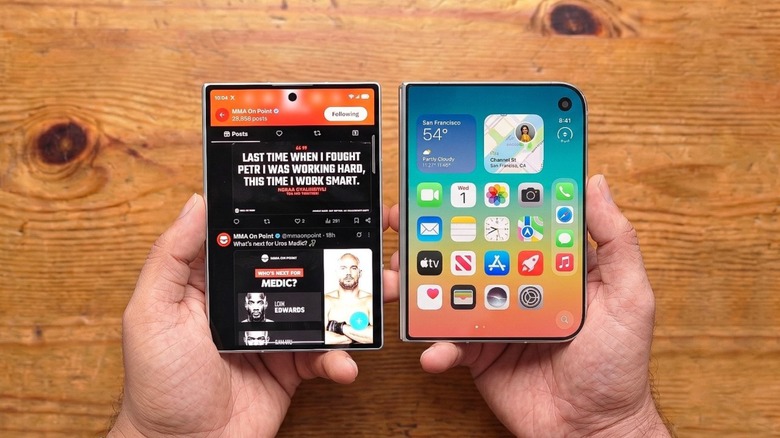
Apple finally unveiled its first foldable, and it is called the iPhone Duo. After years of leaks and rumors, the Cupertino-based company joined the bandwagon, which was (and probably is) led by Samsung and other Chinese brands. The iPhone Duo starts at $1,999 and goes all the way up to $2,599 for the top-of-the-line model. Apple will start shipping the iPhone Duo in October. While this is a big moment for Apple, being "first" and "best" are two different things. Samsung has spent eight years and eight phones learning what a folding phone should actually do.
The Galaxy Z Fold 8 just landed too, and when put side by side with Apple's Duo, the Fold 8 wins more arguments than it loses. However, that doesn't mean the Duo is "bad." This is not a knock on Apple for trying something new. It is just a gentle reminder that experience counts, especially on a phone this expensive. SlashGear named the Galaxy Z Fold 8 one of the best foldables of the year, and that call gets easier once you line up the spec sheet against Apple's first-timer, which is the priciest iPhone model.
Missing Face ID, a smaller camera setup, a closed app world, and AI that is still finding its feet all play a part in that gap.
Here are six reasons why I believe the Galaxy Z Fold 8 makes more sense than getting the iPhone Duo right now, and why your money might be better spent on a foldable that has some experience.
Eight generations deep vs. Apple's first try
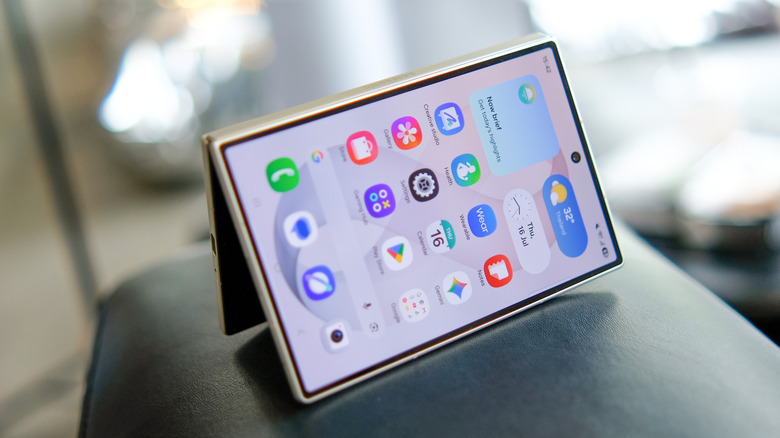
Samsung did not wake up one day and build a good foldable. The Galaxy Z Fold 8 is the eighth-generation phone in a line that started with the original Galaxy Fold, launched back in 2019, 7 years ago. With every generation, they fixed something that was criticized about the last one. Thinner and more durable hinges, more screen real estate, a lighter body, a better display, fewer software bugs, etc. With the launch of the Galaxy Z Fold 8, Samsung has already fixed most of the mistakes a company makes on a first attempt.
Apple, on the other hand, is starting from zero. The iPhone Duo is a genuinely new product category for the company, its first-ever foldable. Though the company has been working on it for years and has a good amount of data available to make their product, if not perfect, comparable to its competitors, first tries always tend to carry first-try problems no matter how much money and R&D go into them.
The gap in maturity shows in the final product. The Galaxy Z Fold 8 folds flat; its hinge has years of refinement, and Samsung already knows how to make a big folding screen convenient for day-to-day usage. Getting a foldable that is eight generations deep over one is not really a gamble. You're picking the version already tested by millions of real owners, instead of one that hasn't made its way into people's hands yet.
No Face ID, no telephoto on the Duo
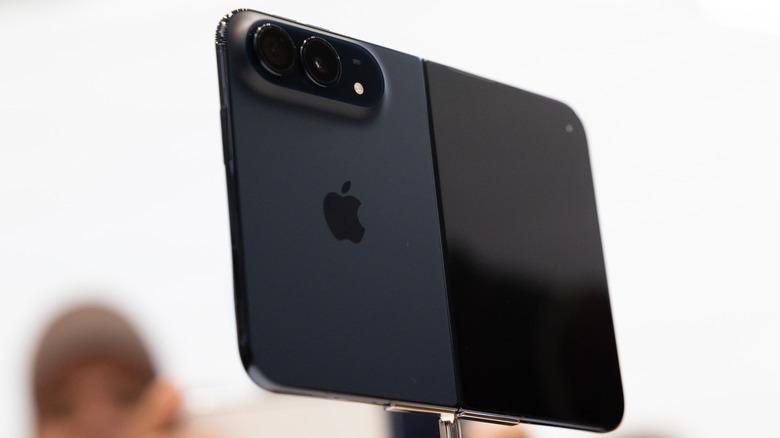
Expecting everything from a phone that costs $2,000 is both right and wrong. Apple cut two things most buyers actually have started caring about for the foldable form factor. The Duo doesn't get Face ID anywhere on the phone. Instead, Touch ID makes a comeback and is built right into the side button. A strange step backward for a company that has used face unlock on its main phones since 2017. No problem with that, but it is something people might have to remember when using iPhone Duo.
Then there is the camera. The iPhone Duo packs just two rear lenses, a main and an ultrawide. There is no telephoto at all, so you will miss out on the real optical zoom capabilities. Compared with the Samsung Galaxy Z Fold 8 Ultra (yes, you get the long foldable as well), which is in its eighth generation, it has a dedicated 10x telephoto camera with up to 30x zoom.
Yes, the passport-shaped Galaxy Z Fold 8 also missed out on the telephoto lens, but you have the Ultra as an alternative if you want a foldable with a zoom lens. It looks like Apple skipped straight to cutting corners on its first attempt. If megapixel count matters to you, then the Galaxy Z Fold 8 comes with two 50MP shooters, whereas the Duo comes with dual 48MP cameras. And you can still unlock your Galaxy Z Fold 8 by scanning your face if that is what you are looking for.
One UI is built for multitasking
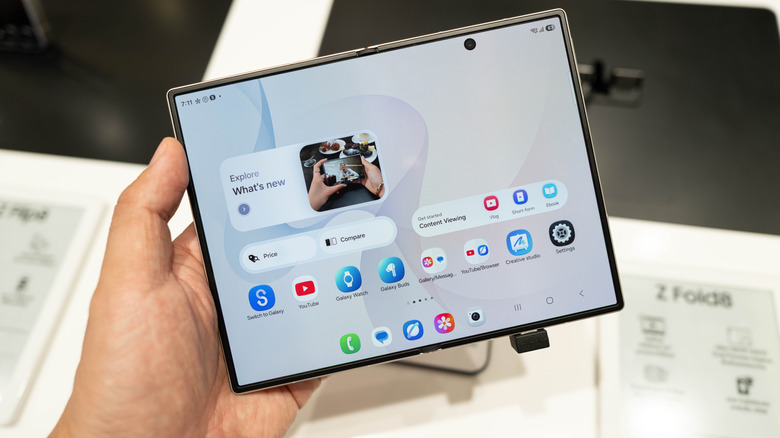
Another advantage of Samsung's years of foldable experience shows up on the software side. Before you even get to the refined Duo animation when opening and closing, Android devs have already replicated it. One UI complements the Galaxy Z Fold 8's big inner screen and turns it into a productivity tool, not just a bigger canvas for scrolling social media. It has a bottom taskbar for jumping between apps, resizable split-screen views, and pop-up windows that float over whatever else is running.
Everything feels refined and not forced upon you because Samsung has been working on it since the very first Fold, year after year. With Goodlock app, customization and multitasking are a different ballgame altogether. Apple's iOS 27 brings split-screen to the Duo, which is a genuine first for the company. But it is also Apple's first attempt at bringing multitasking to its phone, and first attempts rarely provide you with a fluid experience.
On the Galaxy Z Fold 8, you can drag and drop a file from one app into another, keep three app windows open at once, and even save your exact layout for next time you open the phone; it is super convenient. It takes years of perfecting things to get that level of fluidity, and Samsung already has it. Apple is just getting started, and it was pretty evident that the software is still a bit glitchy during the launch event.
Samsung is giving you more options
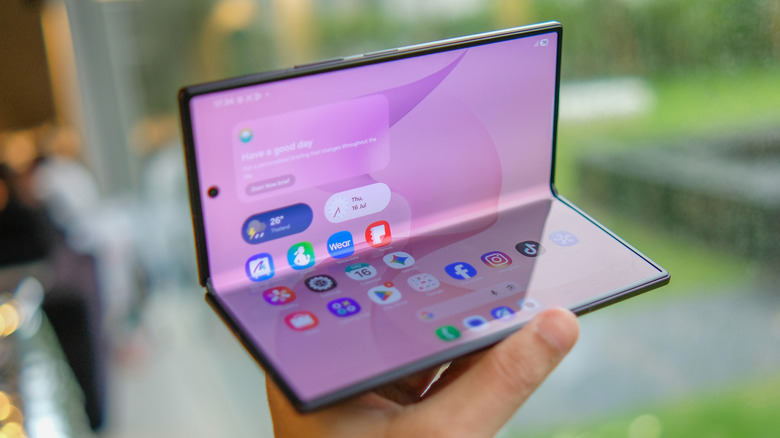
Apple sells only one version of its foldable: the Duo. One shape, one size, one set of trade-offs. You have the option to either purchase this form factor or go back to buying their standard slab-like iPhones. This is fine if the Duo happens to fit how you use a phone, but some may not love the wide, passport-design Apple settled on for its very first attempt.
Samsung worked a bit differently. It has been making the taller foldable for years, and this is the first time they have launched a wide-design foldable. Samsung also sells the Galaxy Z Fold 8 Ultra, which features a taller design, adds an extra camera (with a bigger sensor), has a larger screen, and longer battery life; basically, a lot different from the wide-design Galaxy Z Fold 8.
Meaning you have the option to go for a different foldable if you want more features and a different form factor. In fact, they even have a clamshell foldable (Galaxy Z Flip 8) as well. Samsung is giving people the option to choose what they like. Apple's first foldable, the iPhone Duo, asks you to take it exactly as built — no alternative, no nothing.
Galaxy Z Fold 8 plays nicely with Google and Microsoft
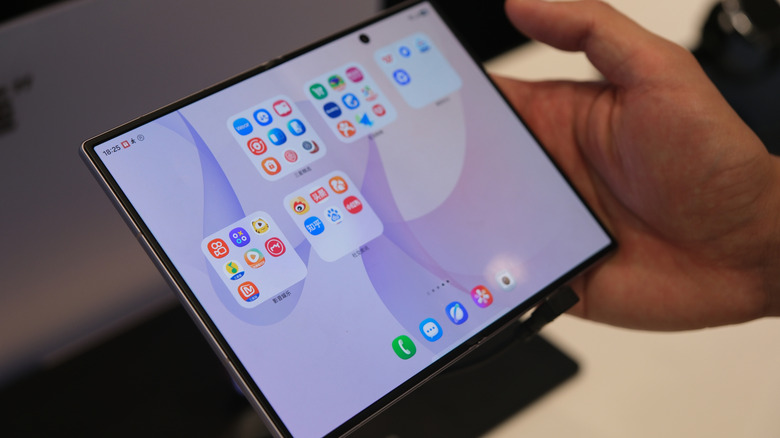
The Galaxy Z Fold 8 runs Android, so you get Google apps, Microsoft Office, and pretty much everything. On top of that, Samsung DeX turns the phone into a genuine desktop-style interface once you plug your foldable into a monitor or connect wirelessly. The best part is that it is included within the phone for free, with no extra hardware required.
The iPhone Duo, on the other hand, keeps you inside Apple's walled ecosystem. It runs eSIM only, ties you tightly to iCloud for your storage needs, and Apple's own app world. It offers nothing like DeX, where you get a real desktop experience. Samsung describes DeX as a way to avoid taking your laptop everywhere, something the Duo simply has no answer for right now. If your work life involves Windows laptops and Google apps, the Duo makes you take Apple's workarounds instead of your habits.
A lot of people (including me) switch back and forth between Android, Windows, and Google accounts across their day, and the Galaxy Z Fold 8 gels perfectly into that mix without asking you to change a single habit. The iPhone Duo, on the other hand, works best only when you live inside Apple's ecosystem. That's not currently available on the Apple side, and they'd need to build something around it to make the Duo a workhorse.
Apple's AI still is not close to Galaxy AI
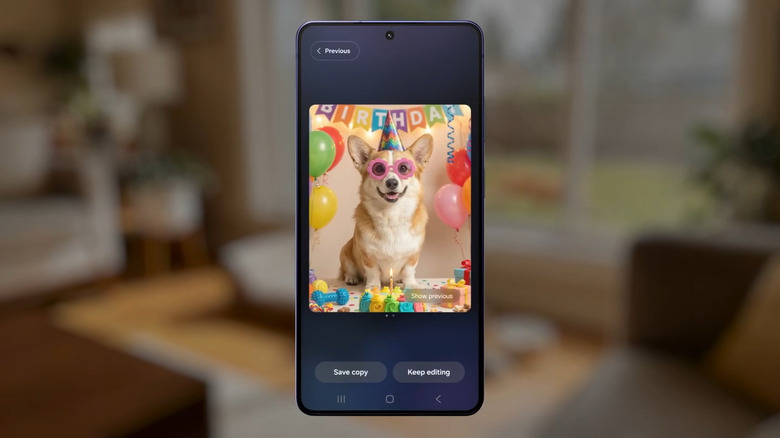
Since Samsung started shipping Galaxy AI features to its phones in early 2024, its AI has only grown. It is arguably the best AI on any smartphone brand, covering everything from live call translation to photo editing tools with privacy controls. Users can tweak the AI settings and adjust it accordingly as well. Most of it even works on a two-year-old Galaxy phone alongside a brand-new Galaxy Z Fold 8. This is quite crucial for those who don't upgrade every single year.
Apple Intelligence, by comparison, is still catching up (and honestly is way behind). Apple is slowly rolling out all the promised updates, but they are delayed well past the original timeline the company promised buyers. Notably, this delay stretched on for more than a year before it finally started to land on phones.
That doesn't mean Apple Intelligence is bad. But when you put it side by side with Galaxy AI, you will see the obvious difference. And with the Galaxy Z Fold 8, you get an almost mature AI system that Samsung is only building on. If AI features are even part of why you are considering a folding phone, the Galaxy Z Fold 8 is straight up the best choice right now. On Apple's side, you just have to wait and watch when Apple starts rolling out the promised AI features.