

4 iPhone 18 Pro Upgrades That Are Bigger Than You Might Realize
The iPhone X was the company's most expensive smartphone ever when it launched in 2017, and arguably helped normalize the idea of spending more than $1,000 on a flagship smartphone. The iPhone 18 Pro is the latest of its (non-folding) flagships and pushes the pricing boat out even further, starting at $1,200 for the 256GB iPhone 18 Pro and $1,300 for the iPhone 18 Pro Max. That's only the start, too: storage upgrades are still very expensive, with the 2TB iPhone 18 Pro Max costing a whopping $2,400 — that's MacBook Pro money.
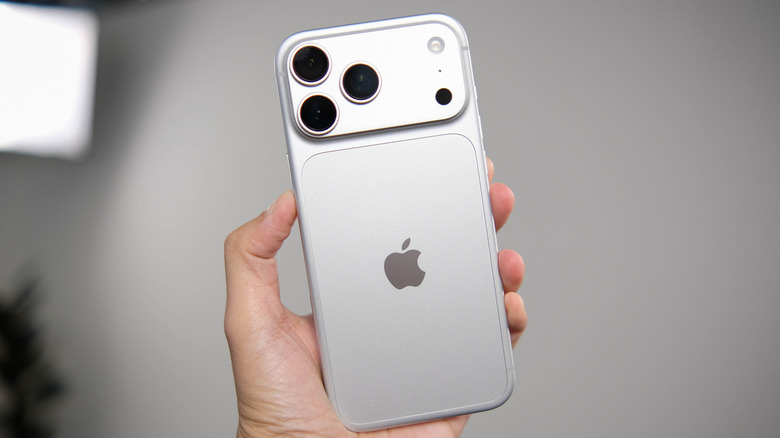
Apple likes to play it rather safe with its designs, which is why the new iPhones look nearly identical to their immediate predecessors. There are a few improvements, though, like the rear glass portion now being color-matched to the aluminum chassis for a more uniform look. The Dynamic Island has also shrunk quite a bit, allowing the iPhone to display up to three Live Activities at once. Welcome upgrades, sure, but hardly game-changers, and you'd be forgiven for thinking the iPhone 18 Pro doesn't bring much new to the table.
Look deeper, though, and you'll realize the iPhone 18 Pro may be a bigger upgrade than its familiar design suggests. From the considerably more powerful A20 Pro chip to a substantially better battery experience, here are four ways the iPhone 18 Pro takes a meaningful step forward this year.
The A20 Pro brings major performance gains
Apple's iPhones have been some of the most powerful smartphones for a while now, and the A20 Pro further cements that status. While we've come to expect minor performance gains with each generation, the iPhone 18 Pro's processor offers a noticeably bigger leap this time. It's built on Apple's new 2nm process, and Apple claims it features 50% more memory bandwidth than the A19 Pro. The GPU is up to 40% faster as well. What's most interesting about the A20 Pro, however, is its dual 16-core Neural Engine, which doubles the A19 Pro's AI grunt.
With AI being every company's favorite new buzzword, we're seeing it sprinkled in nearly every aspect of the smartphone experience. Apple struggled with the suboptimal rollout of Apple Intelligence, but we finally have the supercharged Siri Apple promised at WWDC 2024. Although support for Apple Intelligence features goes back a few generations, the iPhone 18 Pro's A20 Pro chip has considerably more processing power to handle demanding AI tasks.
The iPhone 15 Pro Max runs Siri AI as well, but its three-generations-old SoC has considerably less headroom for on-device AI operations. In our testing, the phone gets quite hot even during relatively simple Siri AI requests. The iPhone 18 Pro should therefore be better equipped to match Apple's original vision of a supercharged Siri.
A pro camera experience
For years, two features have separated base-model iPhones from their Pro counterparts: the ProMotion display and the camera system. With the iPhone 17 finally getting a 120Hz display, the iPhone Pro's cameras need to shine a little brighter to justify the premium, and the iPhone 18 Pro makes some major strides in that direction.
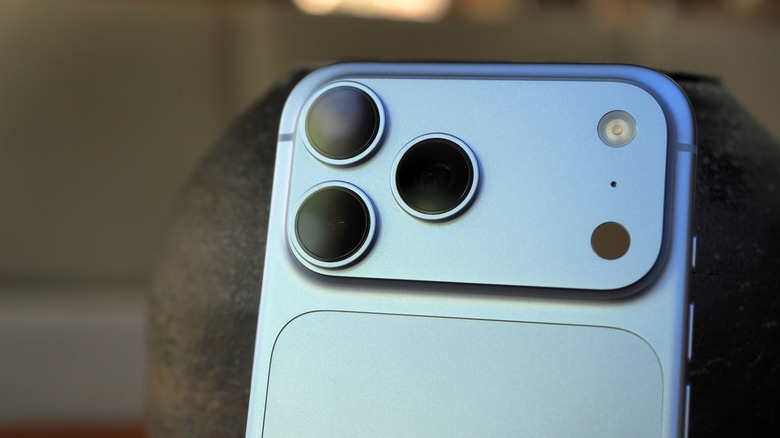
For starters, Apple says it's using a new sensor for the 48-megapixel Fusion Main camera on both the iPhone 18 Pro models. The ultrawide and telephoto sensors appear unchanged from last year, with both retaining their 48-megapixel resolution. The main sensor, however, has an exciting new hardware addition: a variable aperture that physically controls how much light hits the sensor. We've seen this before in the Samsung Galaxy S9, which did it over eight years ago, but Apple's implementation is far more flexible.
It's a six-blade aperture system, letting you stop down from f/1.48 to f/1.8, f/2.8, or f/4.0. The camera app can adjust the aperture automatically based on the lighting conditions, but Apple has also unveiled "Pro controls" for those who want more manual control over their iPhone's camera. These controls let you adjust the aperture, white balance, and shutter speed, though we're still missing manual ISO adjustment. Cinematic Mode is also improved on the 18 Pro, as it now lets you shoot in 4K up to 60fps.
Bigger battery and faster charging
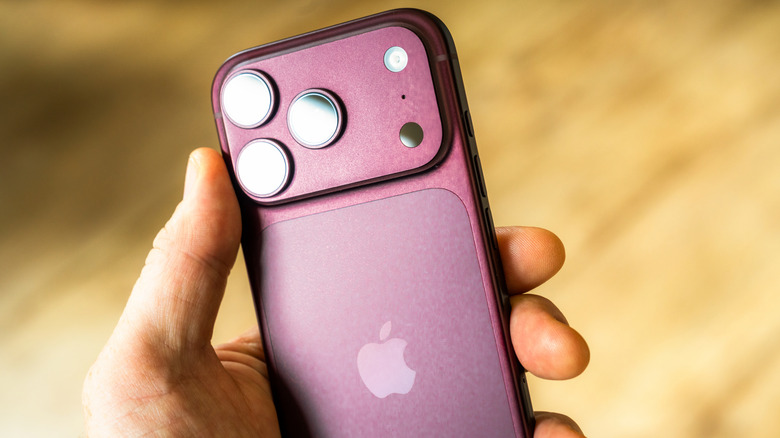
While international manufacturers are unveiling phones with silicon-carbon batteries that combine impressive battery life with sleek form factors, mainstream U.S. brands are sticking with tried-and-true lithium-ion cells. But that doesn't mean Apple hasn't improved the iPhone's battery experience. The iPhone 18 Pro packs a 4,288 mAh battery, while the iPhone 18 Pro Max has a 5,567 mAh unit — the biggest an iPhone has ever shipped with.
Apple claims the iPhone 18 Pro Max can handle up to 43 hours of video playback, which should translate to a day of solid endurance, and possibly more. In a battery drain test conducted by PhoneArena, the iPhone 18 Pro Max comfortably beat its predecessor as well as flagships from Samsung and Google. Android smartphones have generally had an advantage over the iPhone in terms of raw battery capacity, but that's changed this time. The iPhone 18 Pro finally has a physically larger battery than both the Samsung Galaxy S26 Ultra (5,000 mAh) and the Google Pixel 11 Pro XL (5,115 mAh).
What's an even more exciting upgrade is how fast the iPhone 18 Pro models can now charge. Apple claims both phones only need 15 minutes to charge to 50%. This is thanks to the iPhone 18 Pro supporting significantly faster charging speeds of up to 60W. However, you will need a USB PD 3.2 charger with AVS support to hit these speeds.
A smaller Dynamic Island
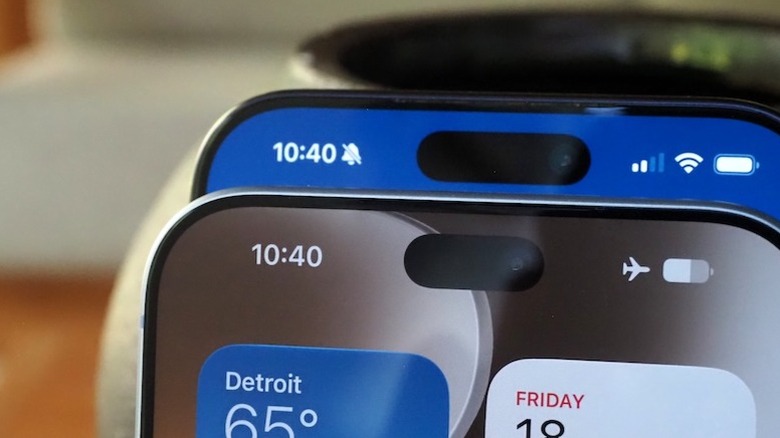
The iPhone X was mocked for its awkward notch-style cutout, at a time when most Android manufacturers had smaller teardrop notches or hole-punch cameras. The iPhone 14 Pro introduced the Dynamic Island, a feature that would eventually become one of the iPhone's most beloved features. The iPhone 18 Pro models feature a noticeably smaller cutout, without compromising functionality.
Visually, this makes for a cleaner and less intrusive look, especially when watching fullscreen content. The Dynamic Island can now display up to three Live Activities as well, so Apple is making good use of the extra real estate up top. What some may not realize is that Apple actually moved part of the Face ID hardware underneath the display. IFixit's teardown shows how Apple moved the infrared camera behind the display, making the cutout for the front-facing camera and the dot projector much smaller.
Some brands, including Samsung, have experimented with under-display cameras before, but this tech comes with a significant compromise in image quality, since light must pass through the display to reach the sensor. The iPhone's infrared camera, however, is only used for authentication, so a less detailed image doesn't really matter. Don't worry about the sensor being noticeable, either; the way Apple arranged the pixels above the infrared camera masks its presence quite well from most angles.