

Every Refrigerator Type Ranked Worst To Best In Terms Of Efficiency
We may receive a commission on purchases made from links.
Back in the old days, kitchens had "ice boxes," cabinets kept cool by a literal block of ice that had to be replaced daily as it melted. If you've ever seen the classic sitcom "The Honeymooners," the working-class Kramdens couldn't afford a refrigerator, so they still used an icebox in their Brooklyn apartment. If there was one advantage to having an icebox, it's that it didn't consume any electricity, which was great for saving money on one's electric bill.
Fast-forward to the present day, however, and pretty much every household in America has a refrigerator. Alas, not all refrigerators are created equal in terms of design and power consumption. All told, there are no fewer than six types of refrigerators one can purchase, not including portable versions like electric coolers and minifridges you'd see in college dorms or bachelor pads.
For this story, we're going to look at the general utility and efficiency of each refrigerator type. We're not going to look at specific brands and units, since certain versions of each type can be tailored to get an Energy Star Certification. It's also worth noting that newer units tend to be more energy-efficient than older models, so if you're still rockin' grandma's fridge, maybe it's time for an upgrade. Thus, we'll look broadly at the different refrigerator types and rank them based on their generally understood efficiency.
Side by Side
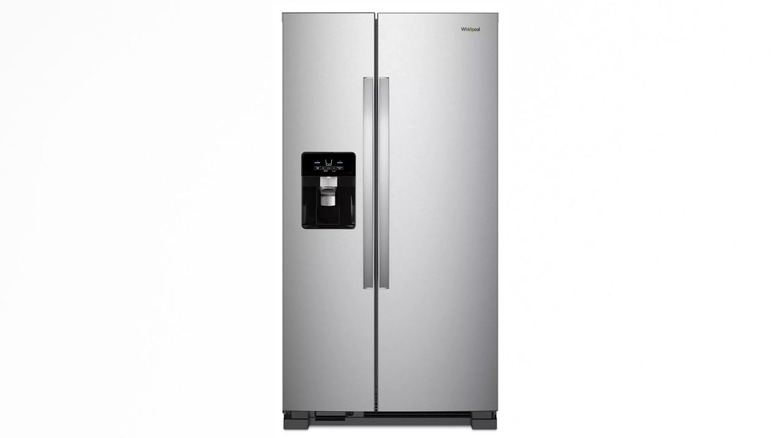
Side-by-side refrigerators are popular, but they're also the least efficient type of fridge. In a fridge of this type, the left side is the freezer and the right side is the refrigerator. The two compartments stretch from the top of the unit to the bottom, and fridges of this type are often at least 6 feet tall.
There's a lot of vertical space on a side-by-side refrigerator, but unless you have a particularly large unit, not a whole lot of horizontal space. Not to mention, the center of the unit between the fridge and freezer is basically a big chunk of dead space. As a result, side-by-side units aren't as spacious as they seem from the outside.
It's also worth noting that cold air naturally sinks, which means vertical refrigerator units like this require more energy to circulate the air and keep the entire interior cool. With more vertical space to cool, more energy is required. It's also worth noting that side-by-side units often include integrated ice makers and cold-water dispensers, which can make the overall unit even more energy-inefficient.
Bottom Freezer
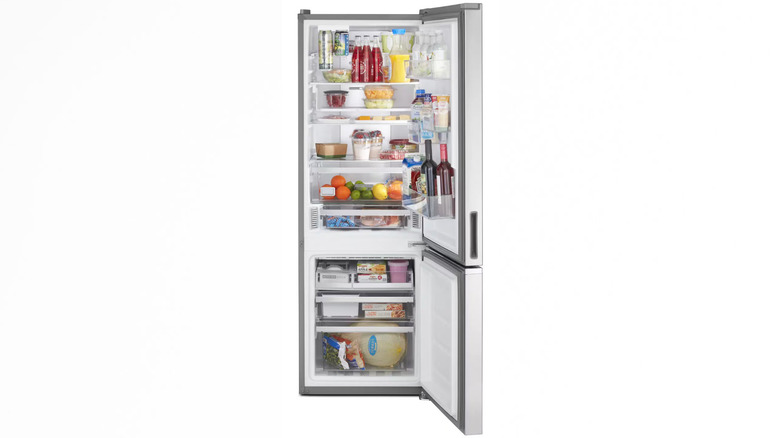
As the name suggests, bottom freezer units contain two compartments: the top part, which comprises two-thirds or even three-quarters of the whole unit, is the refrigerator, and the bottom part is the freezer. As mentioned before, cool air sinks, and hot air rises. On top of all that, the compressor, the internal component that circulates cold air throughout the interior, is typically located near the bottom of the refrigerator.
As a result, from an energy-efficiency standpoint, the bottom of the unit is generally the last place you want to put a freezer. But your electric bill is not the only reason you don't want a bottom freezer. Think about your medical bills!
Where do you put a 30-pound frozen turkey? In the freezer. If you've got a bottom-freezer refrigerator, you'd better make sure you lift with your knees, not your back, since you have to reach all the way down, practically to the floor, to take anything from the freezer. If you have a bad back, you probably don't want a bottom freezer unit. If you have one, maybe just buy a new one of a different type; it's probably cheaper than repairing your old refrigerator.
Undercounter
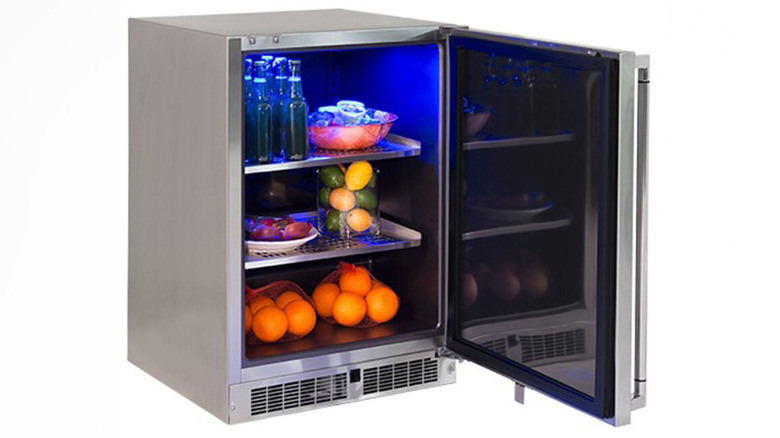
If you have a family to feed, you'll probably need a large refrigerator to store enough for the spouse and the kids. But if you're a single person who lives alone, do you really need a big refrigerator? Maybe an undercounter unit is more your style. As the name suggests, it's installed under the counter.
You'll probably need to hire a professional to install it, but if you live in a small apartment in a big city, the extra square footage you gain by not having a full-sized refrigerator can make a big difference. In terms of space and energy, undercounter refrigerators are quite efficient, no matter which major refrigerator brand you choose.
On the other hand, they're small. They're basically miniature refrigerators. They're most commonly used as luxury items for rich people to store their wine collection. Unless you're rarely home and don't need much space for milk and other refrigerator perishables, an undercounter unit probably just isn't enough to handle all of your refrigeration needs.
French Door
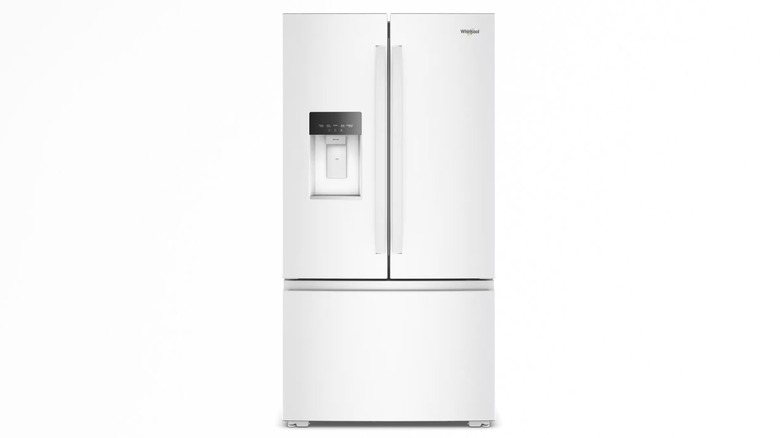
At a glance, a French Door refrigerator looks like a combination of a side-by-side and a bottom-freezer unit, but that's not entirely true. While it does have a slide-out bottom freezer and all the headaches (and backaches!) that come with it, instead of a single door to open the main refrigerator, it has two doors that both open to the same main compartment.
This design allows you to open just one door instead of both, slowing the flow of cool air out of the refrigerator. If you didn't know, an open refrigerator warms up quickly, so when you close it, it uses more power to return to its previously cool state. That's why some smart refrigerators have internal cameras that point at the contents of the fridge, allowing you to keep the unit closed as much as possible and save energy.
French Door refrigerators are convenient and reasonably efficient, even though they have a freezer on the bottom. If a French Door refrigerator had its freezer on the top instead, it might be enough to take the top spot on this list. Alas, it'll have to settle for the bronze medal.
Quad Door
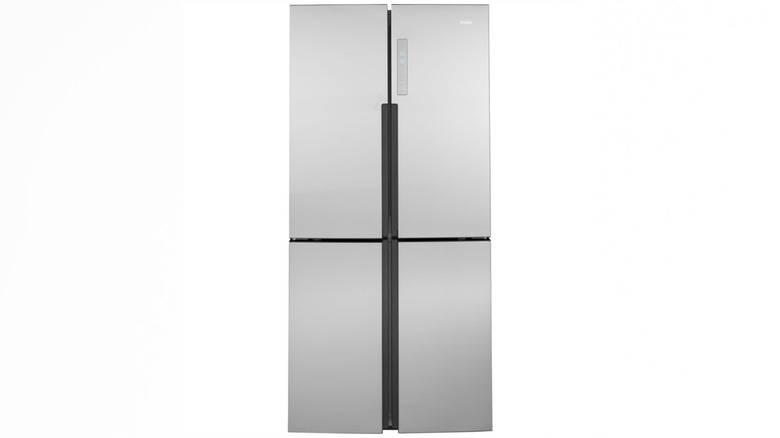
A quad-door refrigerator is like an evolved form of the French Door variant. As the name suggests, it has four doors. The top two open like a French Door fridge, but instead of a pull-out freezer on the bottom, there are two more doors (for a total of four, get it?) that open to reveal a bottom freezer, which usually has two distinct compartments.
Thus, the quad door is like a combination of the French Door and bottom freezer with a touch of side-by-side, but with the freezer benefiting from a multi-door design. In addition to the boon to energy efficiency this design provides, you also have extra space because the compartments aren't split as in the cramped side-by-side style.
Of course, there's still the issue of the freezer being at the bottom, and if it's split into two compartments instead of a single large one, that leaves less space for your frozen goods.
Top Freezer
If cool air sinks, warm air rises, and the heat-generating compressor that cools the whole unit is generally located at the bottom of the refrigerator, then simple logic dictates that the best place to put a freezer is on the top of the unit, right?
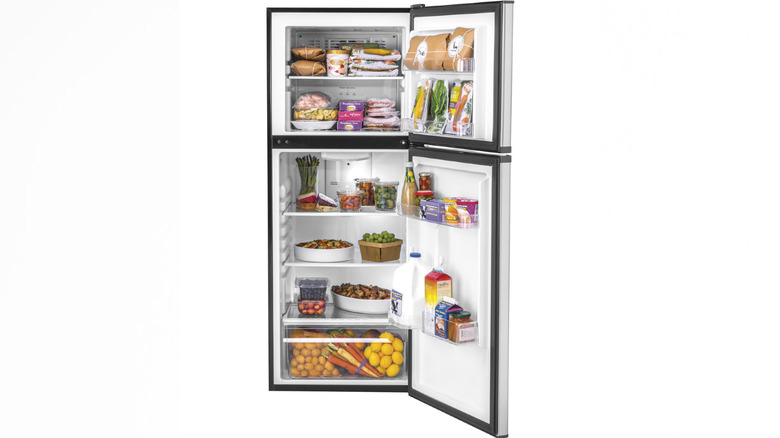
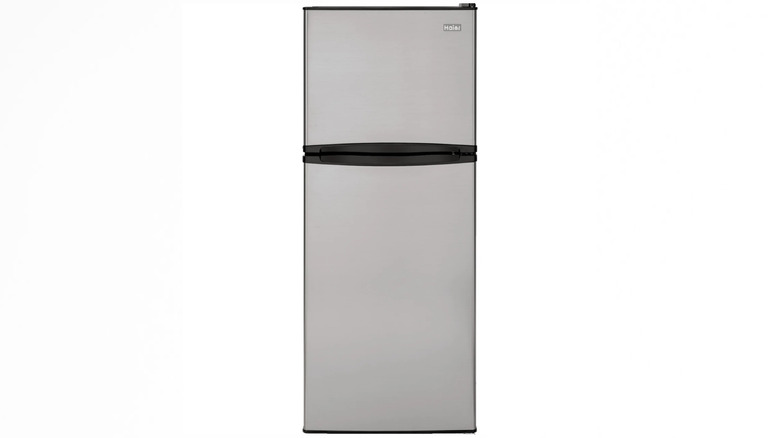
That brings us to the top freezer, a refrigerator with the freezer located at the top of the unit. In terms of energy efficiency and comfort, that's the best place to put the freezer. Not only does the freezer's placement help keep the whole unit cooler, but it also makes it easy to unload heavy frozen turkeys, since you don't have to bend over or squat to pick them up. It might not seem like a huge deal, but if you have a top freezer, your back will thank you come Thanksgiving dinner.
Top-freezer units generally have one door for the freezer and another for the main refrigerator. This means you'll probably need a lot of space in order to fully open the unit, so unit placement is key. You don't want to be stuck with the freezer in the corner, where every time you open the door you have to be careful not to slam it into the wall. Regardless, top-freezers are overall the most efficient from both an energy-conservation and personal-comfort standpoint. If you don't want to worry about Energy Star ratings, a top-freezer unit is generally a safe purchase.