

5 Major Tech Brands That Are Owned By South Korean Companies
We may receive a commission on purchases made from links.
Japan is often the first place that comes to mind when Americans think of countries with prominent tech brands in East Asia, but South Korea is also an important player in the industry. Several major tech companies underwent rapid expansion in the years following the devastation of the Korean War. Many of them started out small, but decades of government-backed economic development and investment in industries such as semiconductor manufacturing helped nurture their growth. This brought the country to the forefront of tech development, leading it to expand its reach and transform itself into a full-blown global tech powerhouse over the last few decades. South Korea is now home to a handful of the world's largest tech corporations, including big names with broad interests like Samsung and LG.
American consumers might already know some of the bigger South Korean companies that have their headquarters on the other side of the globe, but many would be surprised to learn about a few of the more Western-presenting brands that these companies own. Many of them are household names with logos emblazoned on boxes that you pass on the shelves every time you go shopping. Some of them have long histories as independent businesses that were established decades before they were purchased. In fact, it's fairly likely that you already have several tech gadgets and appliances from South Korean company-owned brands in your home without even realizing it.
Harman Kardon
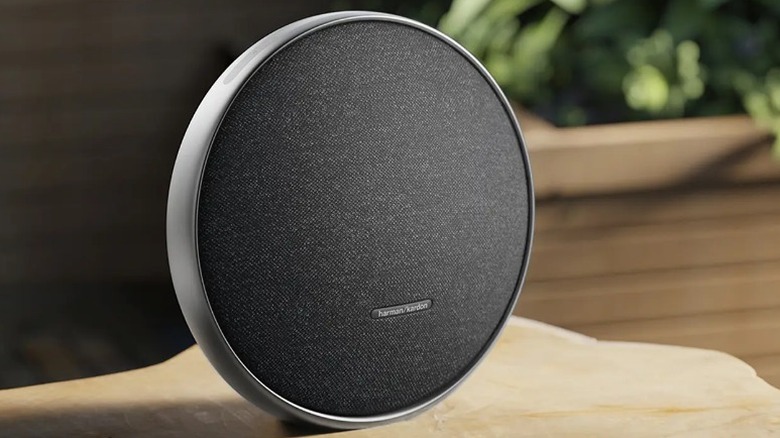
Anyone who has spent any amount of time in the tech sphere will know that the South Korean company Samsung is one of the biggest names on the market. The company makes smartphones, tablets, TVs, media players, computer hardware, home appliances, and more. But you might not know that there are several audio brands under the corporation's umbrella that don't use the Samsung name. Harman Kardon is a Samsung-owned American audio brand that is widely known for manufacturing premium home, vehicle, and Bluetooth speakers.
The company was founded in 1953 by Dr. Sidney Harman and Bernard Kardon. It immediately made its mark with its first product, the Harman Kardon Festival D1000, which was the world's first AM/FM compact Hi-Fi receiver. This brand has continued to evolve and innovate in the years since and remains a prominent name across the audio industry. In fact, it is frequently ranked as one of the best major Bluetooth brands on the market. Speakers like the Harman Kardon Onyx Studio 9, Aura Studio 5, and SoundSticks 5 are among the more highly rated devices in their respective classes.
Harman Kardon's parent company, Harman International, was purchased by Samsung in 2017 in a massive $8 billion acquisition. According to Oh-Hyun Kwon, vice chairman and chief executive officer of Samsung Electronics, this was largely done so that Samsung could gain a bigger foothold in the automotive industry. It is now a fully owned subsidiary of the South Korean company. This has had a major impact on Harman Kardon, as the company now has access to a much wider scope of resources. Samsung and Harman International now benefit from shared resources and technology across their numerous brands.
JBL
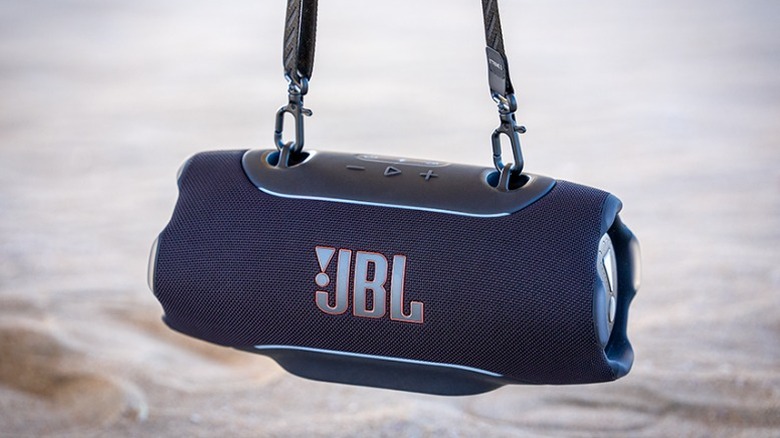
Of course, Harman Kardon isn't the only audio brand that's a part of Harman International. JBL is another subsidiary that got snatched up when Samsung bought the corporation. You've likely heard of JBL, as it is another prominent American audio company that specializes in a wide range of speakers, headphones, earbuds, and sound systems. The company got its name from its founder, James Bullough Lansing, when he first launched the company in Los Angeles, California, back in 1946. It made its name with speakers that were carefully engineered to supply clean, precise audio. It remained an independent company until it was acquired by Harman International in 1969, which was then bought by Samsung in 2017. While the company's initial focus was on professional audio equipment, it shifted to consumer products as early as the 1950s, before wireless Bluetooth audio became an increasingly important part of its lineup in the early 2000s.
The company is now perhaps best known for its pill-shaped Bluetooth speakers, such as the JBL Charge 6 and the Flip 5, though it has also branched out into larger portable speakers, such as the PartyBox Encore Essential 2, the PartyBox 110, and the PartyBox Stage 320, which are all designed for large, outdoor gatherings such as parties, live music, and sporting events. In terms of personal audio, the JBL Vibe Beam 2 Noise Canceling Earbuds and Tune 780NC Wireless Noise Canceling Headphones are also popular choices. JBL has benefited from all of the same collective assets as Harman Kardon under Samsung's ownership, sharing tech, resources, and distribution.
SmartThings
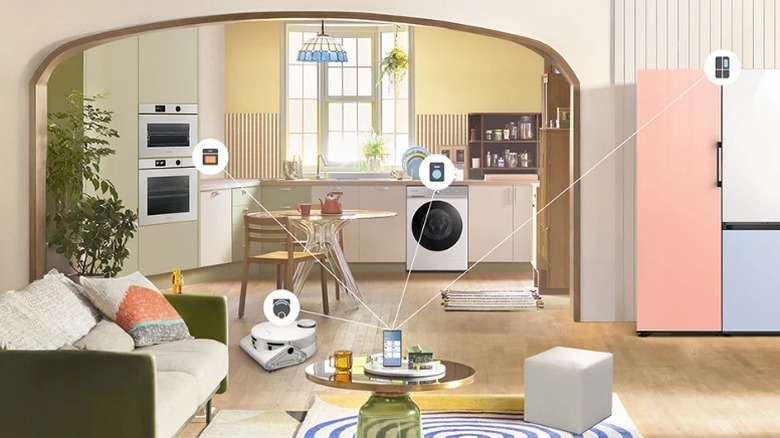
The third and final Samsung-owned brand that we'll mention on this list is SmartThings. This isn't another Harman brand, however. SmartThings was initially founded by Alex Hawkinson in Colorado back in 2012. He reportedly came up with the idea to make a "smart home" from a wide collection of networked devices after a power outage caused extensive damage to his family home. He formed a company and initiated a Kickstarter campaign to finance his ideas, garnering over $1.2 million from 5,700 backers. The company saw an explosion in popularity after this and launched its first collection of commercial products at CES two years later. It was at this point in 2014 that SmartThings was acquired by Samsung and was set up to operate as an independent company under the umbrella of Samsung's Open Innovation Center Group. The organization relocated to a new headquarters in Palo Alto, California, and retained its creative autonomy, all while gaining access to Samsung's global infrastructure.
The company has launched dozens of smart products over the years, and there are still a handful of them, like the 3rd Gen SmartThings Hub and the SmartThings Indoor Security Camera, that you can find floating around on the internet. That no longer appears to be the company's primary focus, however. These days, SmartThings leans more toward the software side of things, with a single app available on Android or iOS that is designed to network devices from multiple partner brands. You can get a smart home hub from Aeotec, lighting from Philips, plugs from Eve, a Ring doorbell, and a Google Nest Thermostat, and connect all of them through the SmartThings app.
ZKW Group
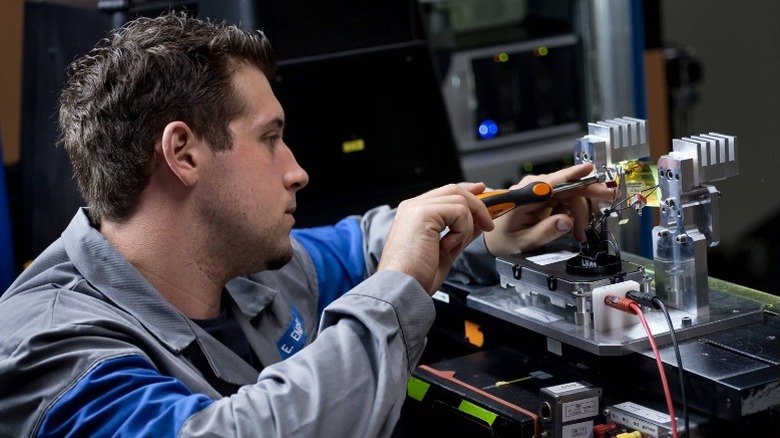
You may not have heard of the next brand unless you are pretty deeply invested in the automotive world. ZKW Group is an automotive parts supplier based in Austria that is owned by another top South Korean tech conglomerate: LG. It specializes in designing and manufacturing premium lighting and electronic components. It currently serves several major automotive manufacturers, including Ford, GM, Infiniti, Jaguar, Lincoln, Mercedes-Benz, Volvo, Volkswagen, Audi, BMW, Cadillac, Porsche, Rolls-Royce, and over a dozen others.
ZKW's primary specialty is making high-tech headlights that are designed to increase safety by functioning in coordination with modern driver intelligence systems. The company also has plans to make big strides in these technologies. "In the future, we will drive innovation in miniature lasers, micro-electromechanical systems (MEMS), organic light-emitting diodes (OLEDs) and special LED configurations," ZKW says on its website. "The aim is to develop and manufacture innovative electronic solutions for headlights in order to provide the best possible support for the ZKW Group as a system manufacturer of premium lighting systems."
The company was originally founded by a man named Karl Zizala in Vienna in 1938 as a metal fabricator for trucks and motorcycles, and it didn't actually shift its focus to lighting and electronics until the late '80s and early '90s following the company's purchase by the Mommert family in 1982. It continued under this structure until April 2018, when the entire company was acquired by LG (70% LG Electronics and 30% LG Corporation). Following this, LG incorporated its own rear light manufacturing division into the ZKW Group, combining its automotive lighting programs into a single business and branding structure.
Boston Dynamics
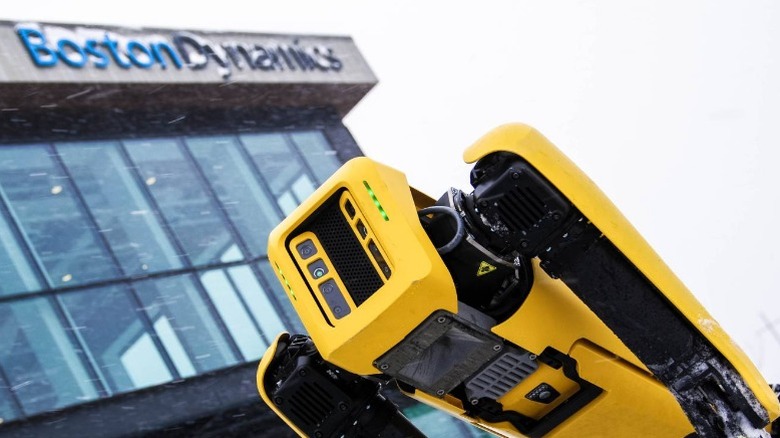
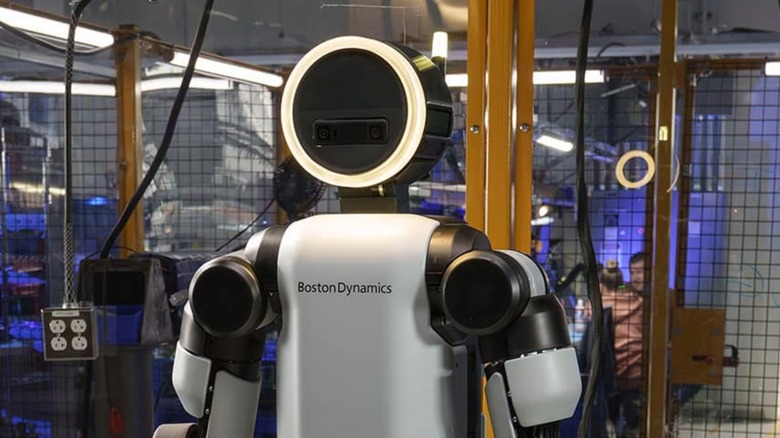
Boston Dynamics has been one of the biggest names in robotics for decades. The company has made several technological leaps over the years that have garnered a lot of media attention. Some of the most noteworthy models include Spot, the four-legged robot that was designed for industrial inspection and safety monitoring in hazardous environments; Stretch, a mobile robotic arm designed for warehouse box handling and truck loading and unloading operations; and Atlas, the AI-powered walking humanoid robot that is designed to handle heavy-duty industrial lifting and factory work.
Boston Dynamics was founded in Massachusetts by Marc Raibert and a group of other engineers as a spinoff from the robotics program at MIT in 1992. It remained independent until Google acquired it in 2013. SoftBank later purchased the company from Alphabet in 2017 before Hyundai Motor Group acquired an 80% controlling interest in a deal completed in 2021 that valued Boston Dynamics at $1.1 billion.
Hyundai is most well known as a South Korean automotive company, but it has been branching out into tech more and more over the years. In addition to developing new hybrid and EV tech, autonomous driving, and hydrogen fuel cell automotive technology, the company established its own Robotics Lab division in 2019, just before it acquired Boston Dynamics as a further investment in the field of robotics. Hyundai Motor Group has announced that it is currently working on wearable robots like the CEX (Chairless Exoskeleton) and VEX (Vest Exoskeleton), mobility systems like the MobED and PnD (Plug & Drive), and service models like the DAL-e AI-powered customer service robot, DAL-e Delivery autonomous delivery robot, and the Automatic Charging Robot (ACR). It is unclear, however, if this work is being performed by Boston Dynamics, by Hyundai's own lab, or by a collaboration between the two.