

Should You Sharpen Both Sides Of A Leatherman Blade (Or Any Other Multi-Tool)?
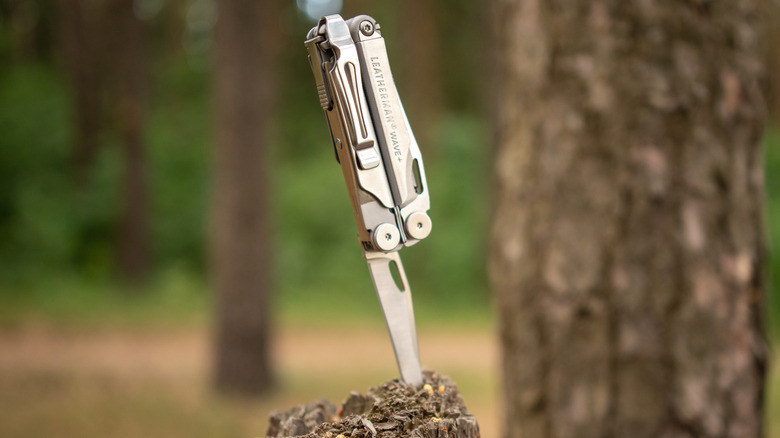
Leatherman Tool Group makes a wide variety of multi-tools available in different configurations for different use cases, including cutting materials. When it comes to maintaining the blade on a Leatherman multi-tool, not all blades require sharpening on both sides. It's important to know the differences in blade type, so you can properly keep a sharp edge while also protecting your blade at the same time.
A plain-edge blade is designed to be sharpened from both sides, with Leatherman recommending a 16-degree angle on each side of the blade, for a total angle of 32 degrees. But blades with serrated edges should be handled differently. Serrated blades should only be sharpened along the beveled edge rather than the flat side. These blades require a sharpening system designed to work with serrations that also doesn't alter their shape.
When it comes to other multi-tools, the same basic rules still apply. A conventional straight blade can be maintained with a small sharpening stone, while a serrated blade requires a different approach because each tooth must be addressed separately. For serrated edges, a round sharpening tool can make it easier to work with different-sized teeth. However, the specific angle you use and how you sharpen the blade can vary based on the blade and the manufacturer's design. When in doubt, consult your owner's manual for the best way to maintain the edge of your blade.
How to properly maintain a Leatherman multi-tool
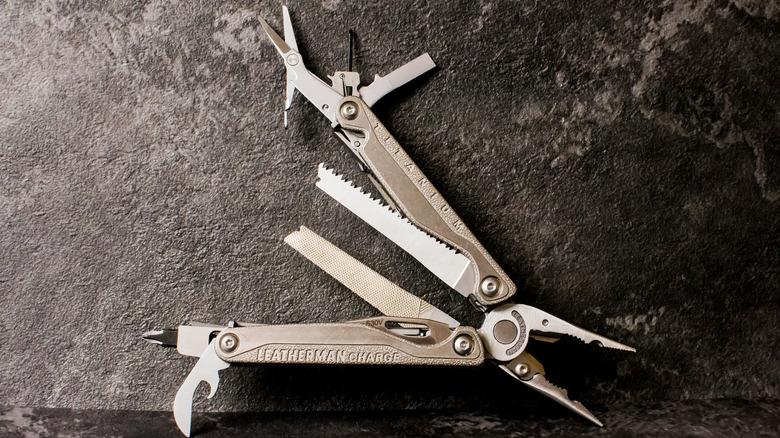
Maintaining the blade on a Leatherman multi-tool takes more than just keeping it sharp. Regular cleaning is also necessary to keep the blade in good condition. This means washing away any buildup, including dirt or sticky material, with a mild solution of detergent and water. If the blade is stained, you can use a polishing cloth, Scotchbrite pad or soft-bristle brush. For tar or other similar substances, turpentine can be used. But beware of products like acetone, as it can damage plastic parts of the multi-tool.
It's important to keep the blade and other parts of the multi-tool lubricated as well. You can use a low-viscosity oil like WD-40 or Liquid Wrench to help force moisture out of the joints and keep the moving parts working properly. For pivoting and wear areas, it's a good idea to use a Teflon-based lubricant. Leatherman recommends re-lubricating the multi-tool as needed and using a light oil if the tool gets exposed to salt water.
The reason that salt water can be a problem is because it can cause corrosion over time. Leatherman's blades are made of stainless steel, which is resistant to corrosion, but that feature has its limits. Both rust and corrosion can still affect the multi-tool if it's not properly maintained. Regular cleaning, drying, and lubrication can help prevent rust and corrosion while also keeping the tool functioning properly over time.