

What Does PFD Stand For In Boating & Is It The Same As A Life Jacket?
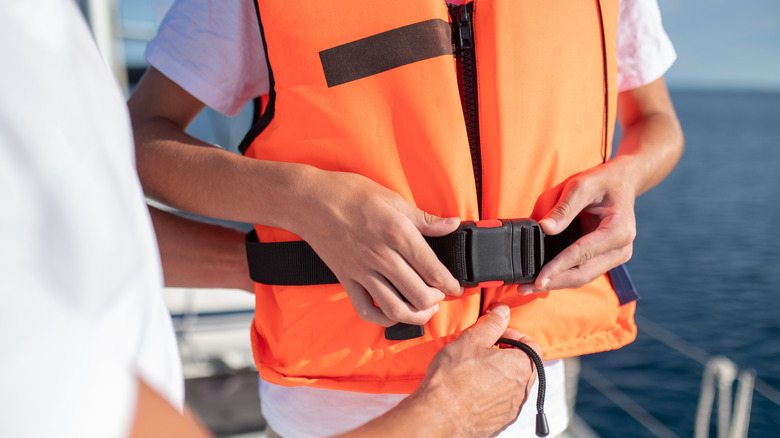
Boating safety is all about preparation. You need to ensure your vessel is equipped with certain boating items and tools before venturing out. Gear that can help you and your passengers stay afloat if an accident occurs should always be a top priority. However, confusion regarding the relevant terminology might cause you to wonder whether your boat is properly stocked. For instance, maybe your boat has sufficient life jackets for everyone onboard. Is that the same as a boat having the right PFD for everyone?
PFD stands for Personal Flotation Device. Per the U.S. Coast Guard, a PFD can consist of a life jacket. However, a life jacket isn't the only form a PFD can take. For example, another type of PFD the Coast Guard recognizes is a ring-shaped buoy that can be thrown to someone in the water.
Generally, PFDs are buoyancy aids. A life jacket is just one version of a PFD. To qualify as a PFD, a buoyancy aid needs to undergo evaluation and testing via a laboratory with proper Coast Guard recognition. Standard ring buoys are the only exception, as they can qualify as PFDs as long as they satisfy certain legal criteria.
Factors to consider when choosing life jackets and PFDs for your boat
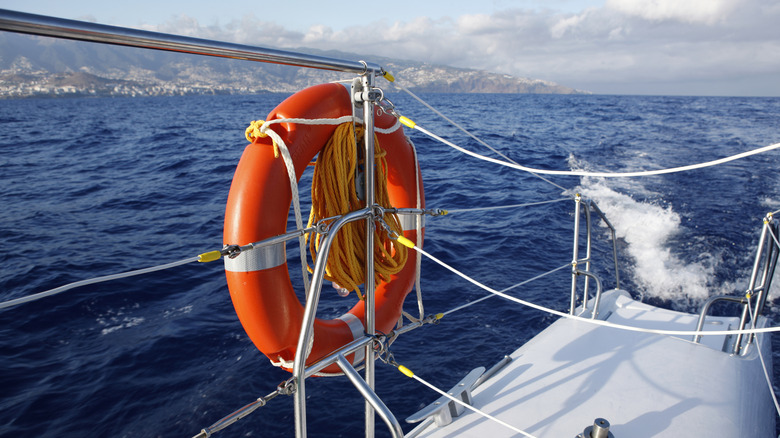
Along with defining the different types of PFDs, the Coast Guard also offers guidance for choosing which types of PFDs and life jackets you should equip your boat with. First, it's vital to check local laws and boating regulations. Depending on your jurisdiction, wearing a life jacket that meets various standards might be a legal requirement during certain boating and aquatic activities.
The Coast Guard recommends familiarizing yourself with the key differences between life jackets and other types of buoyancy aids. A life jacket is designed to keep a wearer's face and mouth above water without any significant effort on the wearer's part. A buoyancy aid, like a ring buoy, may require the user to swim or otherwise position themselves so their head is out of the water.
While abiding by applicable laws is always important, the Coast Guard also points out that the ideal PFD is one you'll actually use. It's critical to check for fit, comfort, and other such factors when deciding which PFDs to stock your boat with.
Just remember that equipping your vehicle with the right gear is only one element of boating safety. You also need to learn about no-wake zones, the one-third rule, and various other topics to ensure you're prepared to travel the water responsibly. When it comes to boating, preparation and research can save lives.