

What Is The 'Circle Of Death' In Boating?

A boat may be a recreational vehicle but it is still a complex machine and needs to be treated accordingly. For example, just as you wouldn't let go of the steering wheel when driving a car, you should never step away from the steering wheel or mechanism when a boat is moving. Doing so can lead to what's called the "circle of death" in boating communities. This type of accident occurs when a boat with an unattended steering wheel or mechanism continuously travels in a circle, potentially causing life-threatening injuries to victims in the water.
Basically, if a boat is moving when someone leaves the steering wheel or outboard handle unattended, torque can force the motor to the left. The boat swerves to the right as a result. Depending on where someone is standing on the boat when this happens, the force of the swerve could throw them off the deck and into the water.
That's already a dangerous situation. It can become fatal when the boat continues to move in a circle, possibly striking any victims in its path — including the original person who fell off.
Guarding against the circle of death when operating a boat
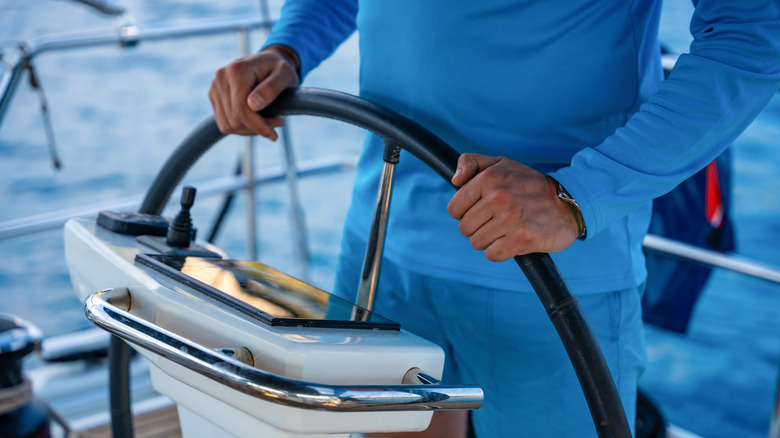
The key to preventing the circle of death is to always keep your hands on the steering wheel when the boat is in operation. You should never let anyone without the proper training or experience steer the boat. Similarly, anyone who is even mildly intoxicated should never be allowed to steer, as their state increases their chances of making mistakes that can cost lives.
You should also pay attention to signs that your steering wheel or system needs repairs. A common sign of steering wheel issues is feeling the need to apply more force than you usually do to keep the steering mechanism under your control.
To ensure your boat trips are always enjoyable, familiarize yourself with all relevant safety protocols. Along with understanding how to avoid accidents like the circle of death, you should also understand concepts like no-wake zones and the one-third rule. The more you understand about boat safety, the more confident and calm you're likely to feel out on the water.