

Why Does Wired Android Auto Still Use Your Phone's Bluetooth?
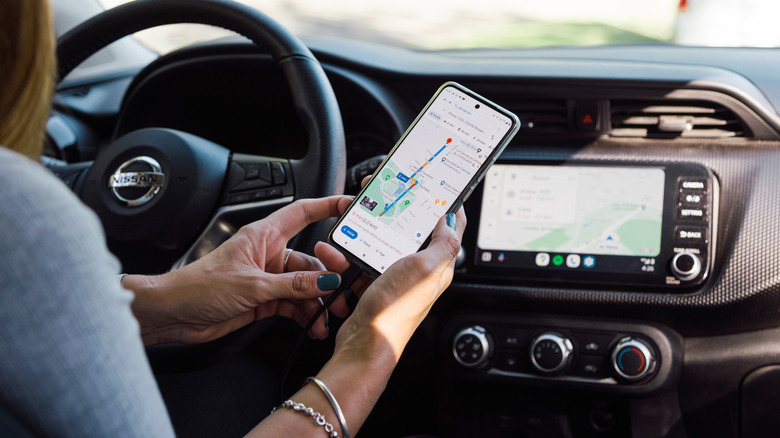
The debate between wired and wireless Android Auto has been going on for years. While the former provides a more stable connection and sometimes better audio quality, the latter offers convenience. The choice ultimately comes down to what you prioritize most. But even when on a wired connection, Android Auto still uses your phone's Bluetooth connection.
This may seem surprising, and a little confusing at first, given that the wired connection, or your cable, to be more precise, handles everything well, whether it's navigation or music. Still, Android Auto relies on the HFP (Hands-Free Profile) Bluetooth protocol for phone calls. It's a deliberate design choice, and almost all cars do that. That's because it has several benefits, and a few downsides, too.
Your car's head unit sends phone calls over Bluetooth through a mono audio channel. Every component complements the setup. The controls over the steering wheel allow you to accept or reject calls, the built-in microphone captures and transmits what you say, and the speakers help you hear the other person. Everything happens using the HFP Bluetooth protocol, which is designed for both remote control of hands-free devices and voice transmission. Keep in mind that this doesn't mean the wired connection can't handle phone calls. It certainly can, but using Bluetooth for phone calls solves a key problem.
The setup isn't perfect, but it's more viable
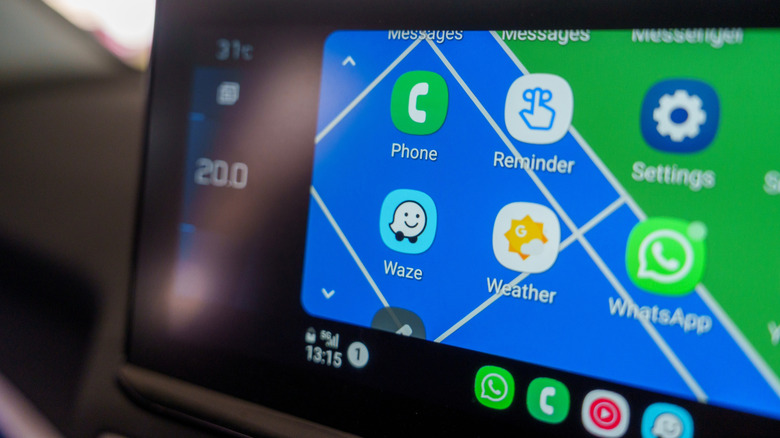
At this point, the more important question is why Google chose the Bluetooth HFP protocol for phone calls instead of the USB cable itself, which handles pretty much everything else. There is a major reason for that: it helps avoid call drops. If you have a cable that doesn't connect perfectly to the car's USB port, you may sometimes find that Android Auto loses its connection. This can even happen on a perfectly good setup, although in this case, everything happens instantly. If cellular calls were routed through the USB cable, this would have a direct impact. So, by switching calls to Bluetooth, Android Auto fixes this major annoyance.
Android Auto also has downsides to relying on the Bluetooth HFP protocol. The biggest drawback is the instant drop in audio quality. You may have noticed that the audio quality on phone calls is comparatively poorer than when playing music on wired Android Auto. That's because the Hands-Free Profile is a low-bandwidth protocol. Subsequently, the audio quality suffers. Besides, with Android Auto running, other devices may have trouble connecting via Bluetooth, which is another potential drawback.
That said, Google finds the HFP protocol for calls over wired Android Auto to be the simplest and most practical option. It could also be that, by taking this route, Google didn't have to develop a separate protocol for handling calls and force automakers to re-engineer their head units, especially as everything worked fine over HFP. The bottom line is that Bluetooth is an integral part of your wired Android Auto setup, so it's important to pay attention to its settings and permissions.