

How To Clean Your Dishwasher Filter – And How Often You Should
We may receive a commission on purchases made from links.
For many households, a dishwasher can cut the effort of cleaning up after spending a lot of time cooking and eating. While most dishwashers have an average lifespan of about ten years, how you maintain it can shorten or lengthen that lifespan, and one way to make it last longer is to clean the filter. Dishwasher filters help protect your pump and maintain water quality by keeping food particles from being thrown around. If you don't maintain it, it can lead to minor problems, like reduced effectiveness, or more serious concerns like bacterial growth and mold.
Since every model is different, you'll want to check your appliance's manual for detailed instructions. If you don't have it on hand, you might be able to find care instructions on the manufacturer's website. However, there are universal signs to look for. One of the most obvious ways to know if your dishwasher filter needs cleaning is if your dishes come back looking not-so-clean, such as visible food particles and grimy surfaces. Other signs that your filter isn't up to standard are hard water stains on glassware, weird sounds, and strange odors.
Depending on your dishwasher, you might have either a self-cleaning filter with a built-in grinder or a manual filter. Some brands, like Maytag, claim that some of their dishwashers that come with stainless steel choppers don't require routine maintenance anymore. But if you have a model with a manual filter, here's how to clean it.
How to clean your dishwasher filter
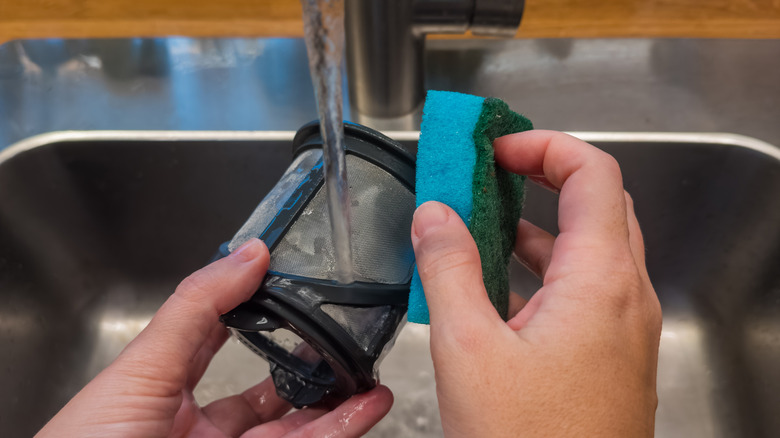
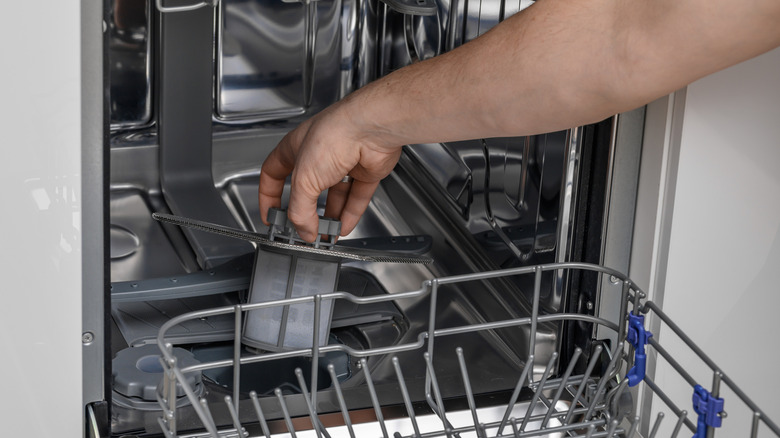
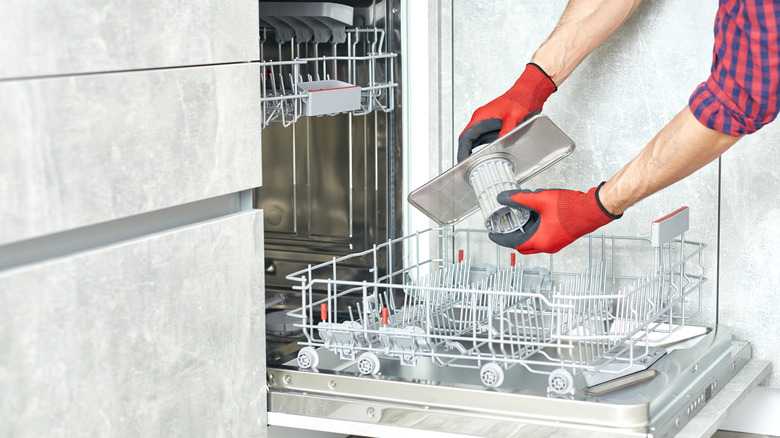
Before you clean your dishwasher filter, you'll want to remove all the dishes. Next, put on gloves, locate the filter, and remove it. The location and removal method vary by model, but it's usually found at the bottom of your unit. Some Samsung dishwasher models will also come with multiple filters. Once you've taken out the filter, remove any debris by rinsing it with water under a faucet or using a sponge or soft brush to scrub any tough deposits. Some manufacturers caution against using rough cleaning tools, like a wire brush, to avoid damaging it. Next, put the filter back in the dishwasher. It's highly discouraged to run your dishwasher while the filter is not in place.
While you're at it, you can also clean other components in your dishwasher, like the pump, tub, and hoses. In some cases, these can also accumulate limescale and grime, which you can mitigate with dishwasher cleaning tablets. On Amazon, you can get the 12-month supply of the Affresh Dishwasher Cleaner for just $14.99. All you have to do is pop a tablet in, with or without dishes, every month. As of September 2026, more than 80,900 reviewers have rated it 4.6 stars on average. Some brands, like Samsung, also recommend cleaning the spray arm. If you notice your dishwasher filter is broken during the cleaning process, many dishwasher brands will often sell replacements that are easy to reinstall.
How often should you clean your dishwasher?
With a regular dishwasher filter-cleaning schedule, you never have to pull out dirty dishes and waste a dishwasher load. In general, the right frequency of cleaning your dishwasher can vary depending on how often you use it and how you use it. Should you only run your dishwasher once to thrice a week, Maytag said you likely don't need to clean the filter until the two-month mark, even if you don't scrape or rinse it.
If you live in a large household and run it multiple times a day, it will definitely need cleaning sooner rather than later. For example, Whirlpool mentions that if you wash your dishes before loading and run up to 14 loads a week (or twice a day), you can get away with cleaning the filter annually. However, if you only scrape your plates, even at the maximum of 14 loads a week, the recommended frequency is quarterly. On the other hand, you only need to clean your filter twice a year if you scrape and rinse with the same number of loads. Lastly, if you throw it in without scraping or rinsing, you may need to clean it every week.
But if you've already cleaned it thoroughly and your dishes are still coming out gross, it may be a sign of a bigger problem, and you might want to consider the possibility of repairing or replacing your dishwasher.