

What Does 'Yacht Certified' Mean On A Boat?
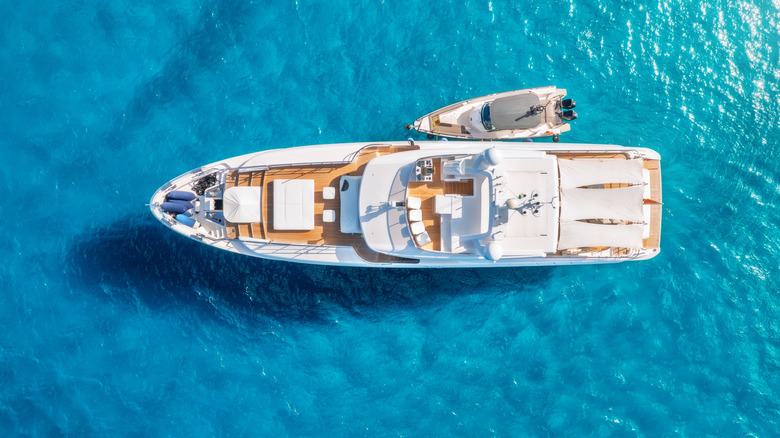
When you think of a "yacht," you probably think of a large, opulent vessel owned and operated by the ultra-wealthy. Certainly, there are superyachts that fit that bill, but the yacht title actually applies to a very wide array of sea vessels, ranging across sizes and shapes. Exactly what, then, determines whether a ship is just a ship or a full-on yacht? If you were to ask the National Marine Manufacturers Association (NMMA), the answer would be whether or not the vessel in question is Yacht Certified.
Yacht Certification is a set of standards put forth by the NMMA in conjunction with the United States Coast Guard and the American Boats & Yachts Council (ABYC) that denote consumer-grade seafaring vessels of superior build and quality. Technically speaking, a ship without Yacht Certification could still be considered a yacht in the most literal sense, but it wouldn't be a very good yacht, nor would it have the official backing of the NMMA.
Certification means meeting the standards of the NMMA
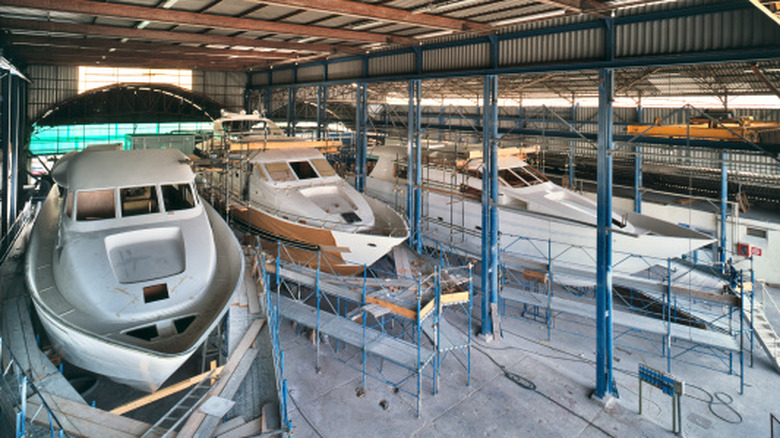
The Yacht Certification program was originally started back in 2000 by the NMMA as a means of improving recreational boat quality. Hard requirements on the standards of boat construction are put forth by the United States Congress and enforced by the U.S. Coast Guard, but the boating industry is responsible for its own business beyond that. Thus, the Yacht Certification program was created to encourage all marine manufacturers to strive for something better than the bare minimum.
A boat manufacturer could sell its vessels in the United States without having them be Yacht Certified so long as they met the standards enforced by the Coast Guard. However, the standards required for Yacht Certification are much higher than the minimum standards, which means that if you, as a consumer, purchase a Yacht Certified vessel, it's safe to assume you'll be getting a vessel of higher, more reliable quality.
As for how a vessel gets Yacht Certified, that's largely dependent on the manufacturer. The manufacturer needs to be registered with the NMMA and meet all requirements in both the manufacturing and construction process to receive certification. Any brands that meet these standards are cataloged for a model year in the NMMA's list of certified boat and yacht manufacturers, at least until going through the next year's annual inspection.
Being certified generally means the boat is of a higher quality

So, what can you expect from a vessel that has received Yacht Certification? According to the NMMA and ABYC, there are over 30 categories of manufacturing standards that go into determining a vessel's eligibility for Yacht Certification. These categories include, but are not limited to, fuel systems, ventilation, how many passengers the boat can safely carry, how physically large it is, its total horsepower, its navigation lights, and much more.
To possess Yacht Certification is a sign that a manufacturer has gone above and beyond to offer a competitive, reliable degree of quality in their products. Indeed, according to studies by the ABYC and Coast Guard, the higher-quality boats that receive Yacht Certification are between 43 and 47% less likely to be involved in certain types of boating accidents, which in turn results in a 26 to 58% reduction in overall operational fatality risk in comparison to non-certified vessels. Certified boats are also much less likely to be recalled due to safety issues.
In short, manufacturers meeting Yacht Certification standards is a net positive for just about everyone. Consumers get better, safer boats; manufacturers make more money; and the industry preserves its positive reputation.