

What Is The 12-Person Rule On A Yacht?
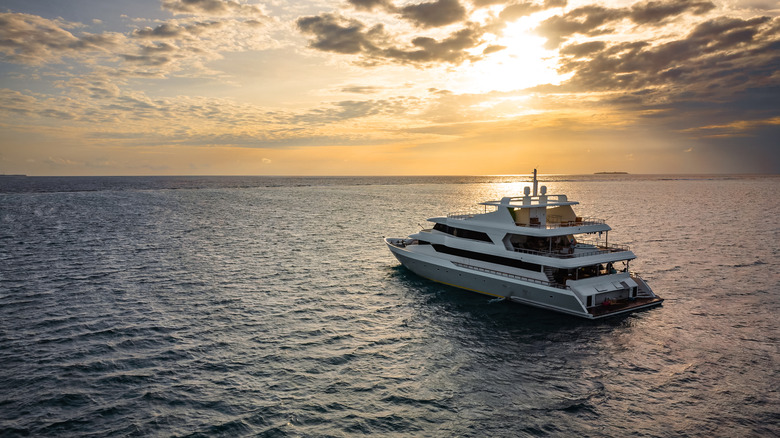
Watching an episode of "Below Deck," seeing crew and charter guests maneuvering around the close quarters of a luxury yacht, it often looks like there are more people on board than there actually are. In reality, a luxury yacht charter has to follow international maritime law and keep the guest list to 12 persons or fewer, not including crew. This 12-person cap determines both how the vessel is classified and the safety standards it must meet before disembarking.
Once a vessel carries more than 12 passengers, International Convention for the Safety of Life at Sea (SOLAS) regulations dictate that it can no longer be considered a yacht. Instead, it has to be classified as a passenger ship. That comes with a much more demanding set of operational requirements than a yacht. It's in the luxury yachting company's best interest, then, to keep the charter to no more than 12 guests plus crew. All yachts, even the biggest or most expensive yachts ever sold, have to abide by the rule.
The difference between a yacht and a passenger ship
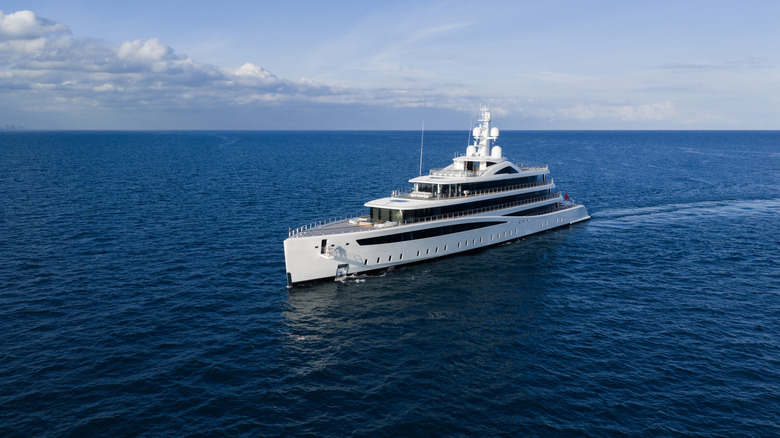
This 12-passenger limit isn't arbitrary. The first SOLAS Convention was adopted in 1914, and it has been updated several times since, including in response to major maritime disasters such as the Titanic. The modern version of the treaty continues to serve as the foundation for global maritime safety standards. Icebergs may not sink ships anymore, but the rules still stand.
Passenger ships are subject to a range of stricter standards covering aspects such as fire protection, lifesaving equipment, structural integrity, emergency procedures, inspections, radio communications, stability, and crew qualifications, among others. Complying with those requirements also comes with significantly higher construction costs and operating expenses. It doesn't matter how large the yacht is, either; it's limited to 12 people tops if it wants to avoid the extra cost and headache of passenger ship regulations.
Because it's an international maritime rule, it also applies regardless of destination. Regardless of whether a yacht is cruising through the Caribbean, the Mediterranean, or another popular charter region, the rule applies.