

What Does Vinegar Do To Stainless Steel Appliances?
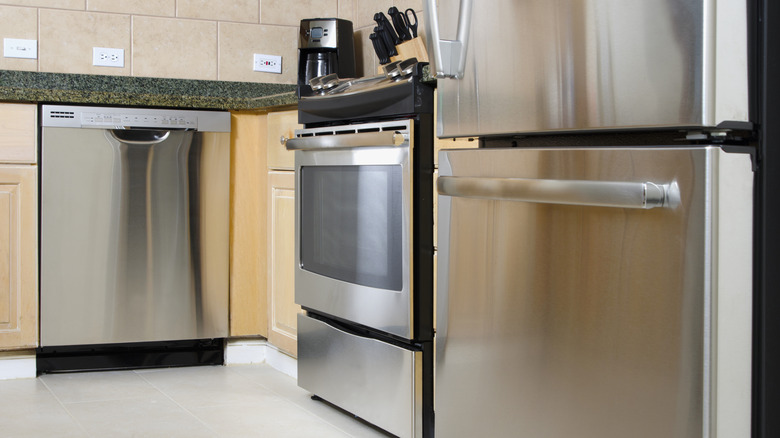
Stainless-steel appliances can look quite sleek and stylish when you first get them, with their smooth and shiny surfaces looking striking in any part of your home, especially the kitchen. Unfortunately, and also especially in the kitchen, appliances are always subject to all manner of rigors, and even the sleek surface of stainless steel isn't immune to smudges and marring.
When the topic of cleaning appliances and surfaces comes up, a debate usually begins about what, exactly, you should be using to do the job, with some users having a preference for naturally sourced solutions. When it comes to organic cleaning products, vinegar is a frequent choice, as its acidic nature makes it naturally efficient at scrubbing out stubborn stains and debris. However, while you can use vinegar to clean your stainless-steel appliances, and might sometimes do so in a pinch, there are distinct risks. That same acidic nature could end up dissolving the important protective layers that ensure the steel's signature sheen.
Overexposure to vinegar can strip protective layers from stainless steel
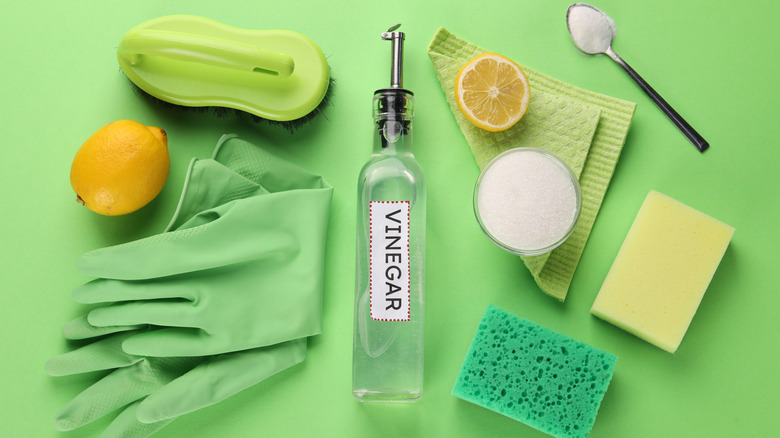
Vinegar is considered an acidic substance, and cleaning-grade white vinegar typically has a pH level of around 2.5. With that level of acidity, vinegar can dissolve the bonds that keep stains adhered to surfaces and wipe them off, as well as kill bacteria for sanitization purposes. This is what makes vinegar such a good household cleaning solution, especially for things like hard water stains, soap scum, or rusty residue.
However, it's that same dissolution power that poses a problem to all kinds of surfaces, including the screen of your computer, the surfaces of your tires, the inside of your engine, and yes, stainless-steel appliances. Stainless-steel appliances have a special protective finish applied to them, which makes their surface highly resistant against scratches and marring, not to mention rust-inducing oxidation. When you clean a stainless-steel surface with vinegar, the acidity dissolves and strips that protective finish. Not only can this result in unseemly streaks along an appliance's surface, but it also gradually becomes more susceptible to scratches and dings. Erosion of the protective finish also leaves your appliances more vulnerable to oxidation, which means you could start seeing patches of rust if they're placed in a particularly wet or humid spot.
Diluted vinegar works in a pinch, but dedicated cleaners are better
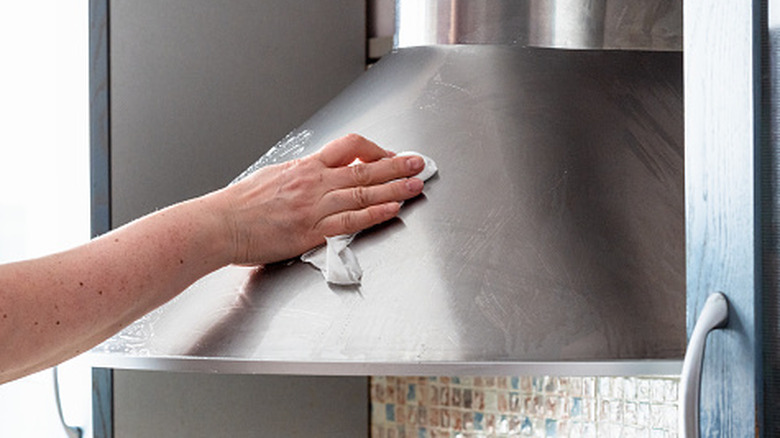
If you're absolutely determined to clean a stainless-steel appliance with vinegar, at the very least, you shouldn't use undiluted vinegar. A safer method is to add distilled white vinegar to a spray bottle with warm water, spray it on the appliance, then wipe it off immediately to ensure the vinegar solution doesn't damage the surface from sitting too long. You can use paper towels, though a clean microfiber cloth would be the optimal choice to ensure you get all the cleaning solution off without causing any scratches. After that, polish the surface with olive oil, lemon oil, or even flour to help preserve the protective layer and make it nice and shiny.
While the natural avenue is possible, there's no guarantee that even the slightest bit of vinegar won't still damage your appliance's finish gradually over time. For the safest possible cleaning, the best course of action is to use a dedicated stainless-steel cleaning solution, something specially formulated to clean and polish stainless steel without damaging the finish. You can find these kinds of cleaners at most hardware stores like Lowe's or Home Depot, and they're available in aerosols, sprays, and wipes. The only concern is that, since these are chemical cleaners, you should ensure you have proper ventilation in the area before you use them, as they can be harmful or irritating to your sinuses or eyes.