

How Many Batteries Do You Really Need For Your Milwaukee Tools?
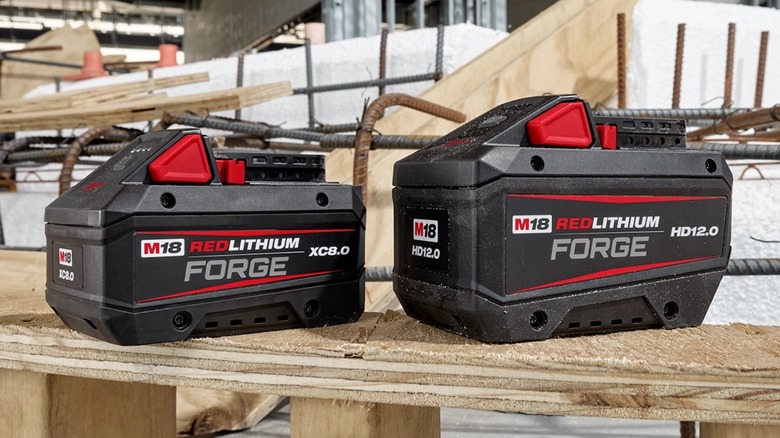
Milwaukee has one of the biggest selections of cordless power tools of any major brand on the market. The company has over 250 tools in its M18 line alone. This is one of the many reasons that the brand is so popular. There are tons of options to choose from, giving users a tool for every job. The cornerstone of this technology is the brand's Redlithium batteries. These highly efficient lithium-ion battery packs are essential to the operation of each and every one of the brand's cordless tools. That means that anyone who wants to start building up their tool collection is also going to need a reasonable number of batteries to power them.
Some people who are first getting into collecting Milwaukee tools might be a little confused about how many of these batteries they really need. A lot of people in the world of power tools will tell you that there is no such thing as having too many, but lithium-ion batteries aren't exactly cheap. There are many reasons why Milwaukee's power tool batteries are so expensive, including the cost of materials, the tech that goes into them, and brand-name premiums. So, understandably, you might be hesitant to go out and buy up a ton of them. You might also be a little confused about voltage and capacity requirements, which can have a major impact on what tools you can power and how efficiently you can operate them once they're attached. Learning a bit more about these batteries and how they work can help you make a more informed decision about how many you should buy on your next trip to the hardware store.
You need at least one battery for every platform that you plan to use
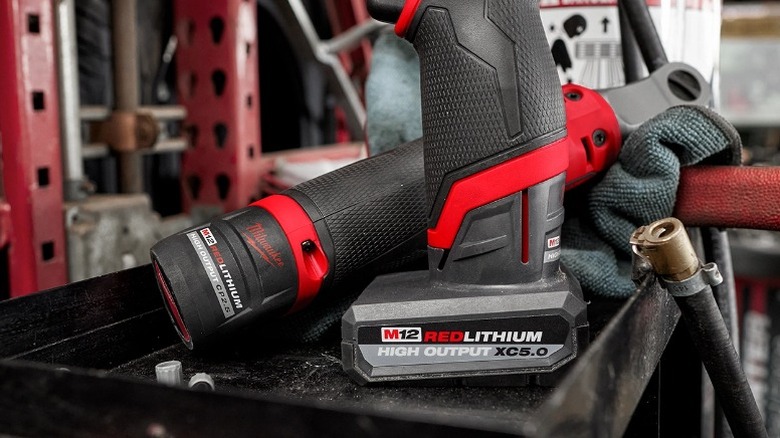
Milwaukee currently has batteries for its Redlithium USB 3.0, M12, M18, and MX Fuel lines. Each line has its own associated products, which are designed to use batteries from that same line. You cannot, for instance, use an M18 battery in an M12 tool, and vice versa. This is something to consider before investing in batteries. You will need a minimum of one battery from each line that you plan to use.
The Redlithium USB 3.0 batteries are small, low-voltage cells that are almost exclusively designed for a small selection of portable lighting solutions. Most people probably won't need to concern themselves with it. The true starting point is the M12 line. This is a collection of power tools that primarily consists of compact, affordable products that are suitable for light-duty work. They are great for basic household DIY tasks, but might not be ideal for heavier workloads. The M18 power tool system makes up the bulk of Milwaukee's product line and is the one that most people will likely want to invest in.
You'll find several tools in this line that are capable of everything from basic DIY to heavy-duty construction and repair. A small selection of M18 tools also requires two batteries to operate, like the M18 Fuel Dual Battery Blower or the M18 Fuel Nexus 9-Gallon Dual Battery Wet/Dry Vacuum. Finally, there's the MX Fuel line. These are heavy-duty power packs that are designed for pro-grade tools. You won't find basic drills and sanders here; instead, you'll find heavy construction, demolition, and plumbing equipment. The first step is to choose the line, or lines, that best suit your needs and to make sure that you acquire a minimum of one appropriate battery per line.
It's good to have multiple capacities for different kinds of tools
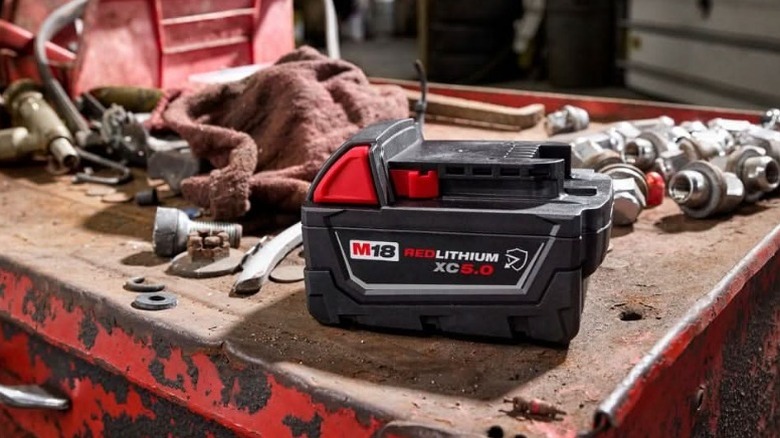
Once you know which product line best suits your needs, you can consider how many batteries you need. There is no single correct answer here, as it can vary based on the number of tools you plan to use on a given project, your budget, and your personal preference. That said, there are a few rules of thumb that can help you get a better idea about how many you might want.
Lower-capacity batteries like the 1.5Ah and 2.0Ah models are lightweight and easy to maneuver, but higher-capacity batteries generally provide longer runtimes, and some can also deliver more power. Most seem to find that the 5.0Ah High Output batteries are the sweet spot for balancing power and weight in M12 handheld tools like drills, drivers, sanders, and saws. Keeping three of these on hand is a great starting point, as they will unlock a broad selection of M12 tools and allow you to power two tools at the same time while keeping a third in reserve in case you run out of juice. You may need more if the jobs you take on require more tools in action at any given time.
That said, there are certain situations that benefit from having a higher-capacity battery on hand as well. Milwaukee makes a handful of power-hungry tools that you'll want 12Ah batteries for, such as its M18 Fuel 21-inch Auger Propelled Dual Battery Single Stage Snow Blower or its M18 Fuel 1-inch D-Handle High Torque Impact Wrench. These will eat through small-capacity batteries quickly.