

How Much A Set Of New Tires Cost In The 1960s
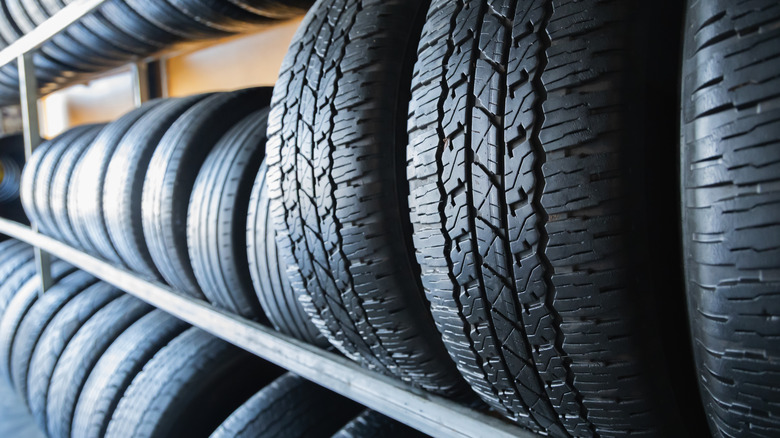
Tires are one of those car expenses that we'd probably rather not think about, and while there are plenty of tire myths to stop believing, being an inevitable motoring expense isn't one of them. And, while we might baulk when shelling out for tires, tires are more than just rubber and can significantly reduce the risk of being in an accident. So, like it or not, replacing worn tires is not really optional — which is unfortunate, given that they also represent one of the largest vehicle maintenance expenses.
But just how much did tires cost in the 1960s, and how do those prices compare to today's? Around the beginning of the decade, Morris County Library's historic prices listing tells us that buying a tire from Sears in 1962 would cost you between $55.76 and $75.76 a set. By 1966, figures from Modern Tire Dealer (MTD) quoted prices of $32.70 for a tire, or $130.80 per set. For today's prices, we can refer to data compiled by Search Tires; this shows that the median American consumer paid $212 per tire in 2026, or $848 a set.
What this data doesn't tell us is how big a proportion of income the 1960s figure represents, and how it compares to the current day. We'll break this down in full later, but in practical terms, a set of tires in 1966 cost more than a week's wage for the average worker. You'll be pleased to know that today, a set of tires only costs about three days' wages for the same worker.
1960s tire prices
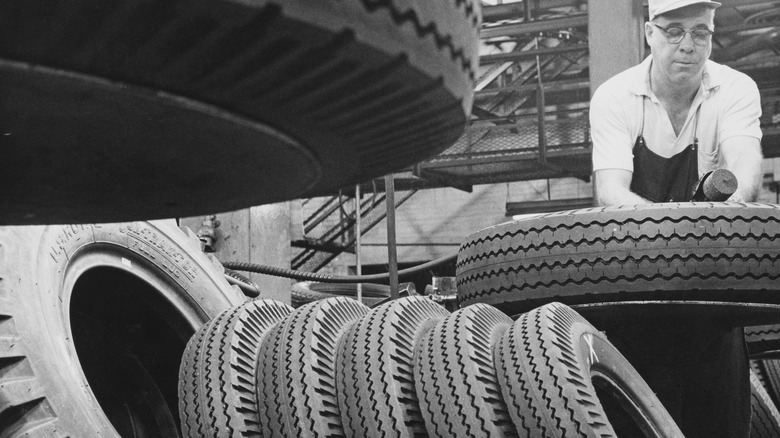
We can use the Modern Tire Dealers (MTD) figures from 1966, as these give us a solid base for mid-decade prices. The tire sizes priced by MTD are the 6.95x14 and the 7.35x14. These were common tires of the day and were found on many of the mainstream family sedans of the era, including cars like the Chevy Chevelle, Ford Fairlane, Pontiac Tempest, Dodge Coronet, and Plymouth Belvedere. The year also predates the era when differently engineered radial tires began to dominate, so it will give us a fairer comparison of what the common tire of the day cost.
According to MTD's figures, a 6.95x14 tire cost $31.53 in 1966, and a 7.35x14 tire cost $32.70. From this, we can work out that a set of the more expensive tires would have cost us $130.80 in 1966. When we run this figure through an inflation calculator, it converts to $1,347.50 in 2026 dollars, far more than the median price of $848 for a set of tires.
This seems to confirm that the price of tires has actually fallen relatively. Let's explore how this changes the real "bite" tires take from a driver's budget more fully.
How 1960s prices compare to today's
To get a better understanding of what these figures mean for car owners, we'll use the $130.80 a set figure, which we'll compare against the 2026 median tire price of $848 a set. A quick visit to the calculator reveals that in the period since 1966, the price of tires has risen by 548%, but this still isn't the true picture.
To get a fuller picture of what this figure means to motoring budgets, we can add some more context by looking at the average salary of both periods. Data from the US Bureau of Labor Statistics shows that the average weekly pay for workers in August 2026 was $1,298.60; in 1966 this was $105.11. So, while the tire "inflation" figure may seem alarming, it's more than tempered by the fact that in the same period that tire prices rose by over 500%, wages rose by 1,135%. In other words, wages grew more than twice as fast as tire prices, which is good news for the motorist.
However, the news isn't so good when we do a similar exercise for cars. In the mid-1960s, the average price of a new car was around $2,650. According to Kelley Blue Book, the average price of a new car in July 2026 was $49,855. Using the same calculation method, that's an increase of about 1,781% — far higher than both tire inflation and wage growth over the same period. Ultimately, while tires have become more affordable relative to income, the vehicles that use them have become dramatically more expensive.