

Should You Clean A Refrigerator With Bleach?

We may receive a commission on purchases made from links.
While many experts expect refrigerators to last over a decade, you can extend their lifespan by using and caring for them properly. Apart from configuring it the right way, like organizing your food and setting it at the right temperature, you also need to clean it. By cleaning your refrigerator, you can spot issues before they become problems and keep your food from being contaminated by bacteria. But aside from creating a routine, what you use to clean your refrigerator also matters.
Although bleach is a common household cleaner, it has its share of cons when used on kitchen appliances. When mixed with a common citrus-based ingredient, limonene, the bleach mix could produce toxic chemicals that can cause health problems in people and animals. Given this, it's unsurprising that many refrigerator manufacturers, like LG, say you should never use bleach to clean their refrigerators.
According to the Centers for Disease Control and Prevention (CDC), you can use bleach to clean a refrigerator, but only under certain conditions. First, it's meant to be an add-on after you've already wiped it down with something else, like soapy water. Second, you need to heavily dilute the bleach at a ratio of 1 tbsp per gallon. However, it's still best to follow your manufacturer's recommendations, since they know the materials best. But how exactly does it impact your appliances?
How bleach can damage your refrigerator (and your health)
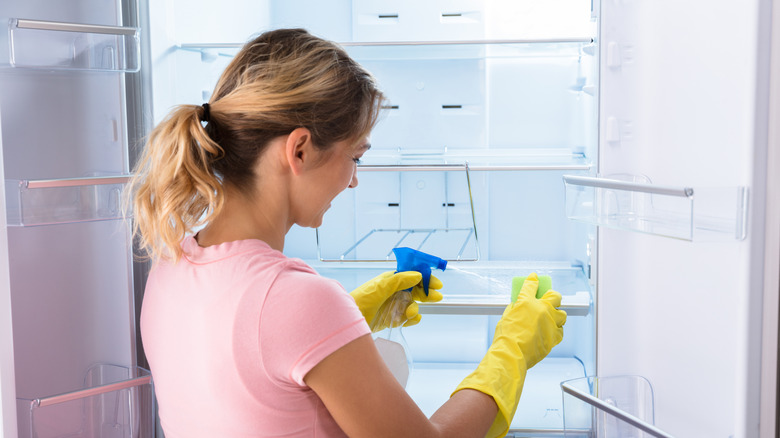
When it comes to the refrigerator's exterior, Samsung warns against using bleach because it's a fire hazard. Even if you don't cause it to burst into flames, it can still damage the surface. Samsung says it can ruin the stainless steel coating, alongside other harsh chemicals like acetone, ammonia, and benzene. Similarly, Whirlpool adds that you should also avoid petroleum-based products, cleaning waxes, and window sprays. The good news is that if you used bleach to clean your stainless steel refrigerator exterior, JYSTEEL says it likely won't cause problems as long as you rinsed it properly. However, it says repeated use or leaving bleach on too long can cause more permanent issues.
On the other hand, Hoover says that you should also avoid bleach on your fridge's interior. Beyond its impact on your appliances, Whirlpool highlights how bleach can accidentally contaminate your food. Although the FDA recommends using bleach to sanitize kitchen equipment and surfaces, it can cause problems if accidentally ingested. In fact, the FDA even issued a warning about drinking bleach, as some companies marketed a version of it as a treatment for viral infections. The National Capital Poison Center says that even lower concentrations can irritate your mouth or gastrointestinal tract. So, what should you use to clean your refrigerator instead?
Tips for cleaning your refrigerator
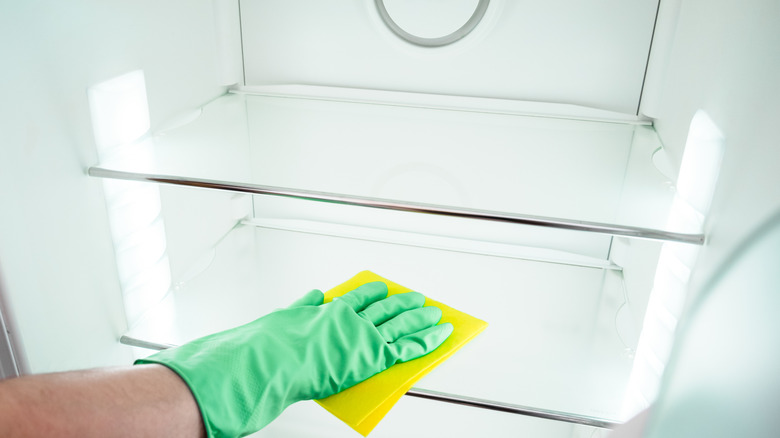
These days, refrigerators have many different components, so the frequency and method of cleaning them will vary. For example, we've mentioned before that the condenser coils need to be vacuumed or cleaned with a hand brush every year or so if you want to keep your electricity bills low. While many refrigerator brands like Samsung recommend using mild detergent to deep-clean the interior, cleaning wipes can also work for the days in between. For $22.95, there's the ACTIVE Home Appliance Surface Cleaner Wipes that you can safely use on the refrigerator shelves, drawers, and seals. Aside from your refrigerator, you can also use it to clean washing machines, dishwashers, coffee makers, ovens, and ranges. As of September 2026, it has generated an average rating of 4.2 stars from 3,500 Amazon reviewers.
If you did end up damaging your refrigerator's exterior with bleach, JYSTEEL recommends rinsing it with water and drying it with a cloth. If you notice any developing rust, use a dedicated stainless steel cleaner. On Amazon, you can get the unscented 22 Fl. Oz. Weiman Stainless Steel Cleaner, which includes a cleaning cloth, for $17.98. Made with refrigerators in mind, it's an Amazon's Choice product that more than 18,900 reviewers have rated 4.7 stars on average. Lastly, if you have a built-in fridge water dispenser, you'll need to clean the water tank or the water supply attached to the wall.